THE ADVENTURE COLLECTIVE® · Independent discovery and booking for outdoor travel

An 8-hour alpine day hike from Mikro Papigko to Drakolimni (Dragon Lake) on Mount Tymfi. Expect steep climbs, glacial cirques, and close views of Balkan chamois — a high-mountain classic in Epirus.
An 8-hour alpine day hike from Mikro Papigko to Drakolimni (Dragon Lake) on Mount Tymfi. Expect steep climbs, glacial cirques, and close views of Balkan chamois — a high-mountain classic in Epirus.
You set off from the stone alleys of Mikro Papigko before the sun fully warms the slate roofs, the village shrinking behind you as the trail climbs into open rock and wind-swept scree.
Verified experiences and guided adventures in the surrounding area.
Operated by Alpine Zone · Mikro Papigko, Epirus
You set off from the stone alleys of Mikro Papigko before the sun fully warms the slate roofs, the village shrinking behind you as the trail climbs into open rock and wind-swept scree.
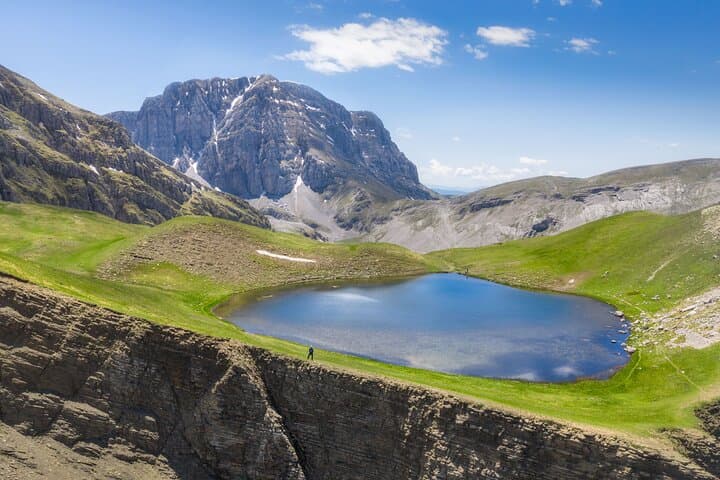
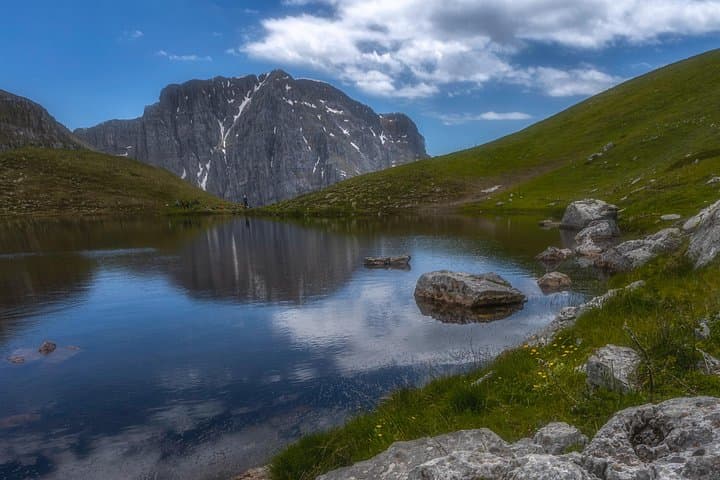
The path threads past the Astraka mountain refuge, where shepherding and centuries of Zagori stonework meet the hard bones of the range. Geologically, Drakolimni sits in a glacial cirque at about 2,050 m, carved by ice during the last glaciation; the terrain shifts quickly from beech-shaded track to exposed moraine and jagged ridgelines that flex with the light.
Culturally the route crosses traditional grazing lands—watch for dry-stone walls and shepherds’ cairns—and looks out to the Towers of Papigo and across to Albania’s Nemertsika and Greece’s Smolikas. Wildlife here is bold: chamois pick their way on the cliffs and raptors circle the canyons.
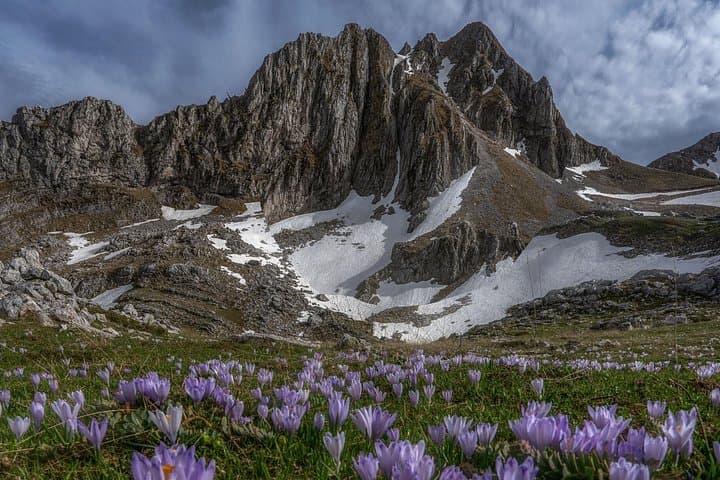
Expect an all-day outing: roughly 8 hours round-trip depending on pace, with sustained uphill and loose rock near the lake. Summer brings long daylight but little shade; spring can hide patches of snow; autumn colors the larches around Xerolimni; winter demands crampons and alpine experience.
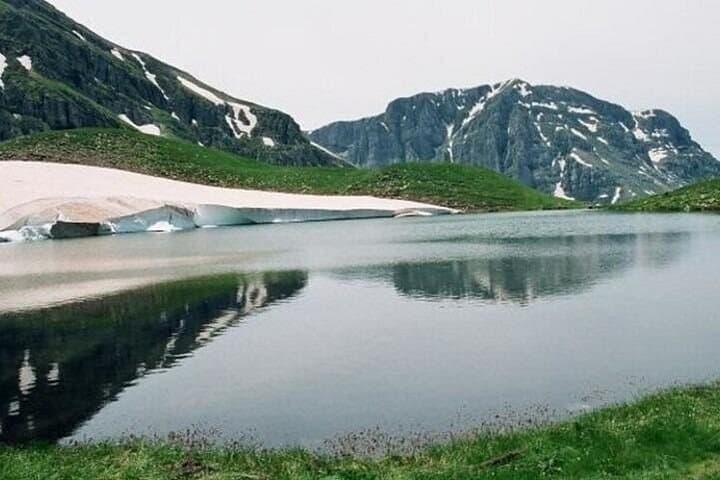
Practical essentials: break your day into steady efforts, carry 2–3 L water, a windproof layer, and enough calories for a high-altitude snack. Trekking poles reduce knee strain on steep descents. Respect fragile alpine plants—stay on the trail—and give wildlife space. Reach Drakolimni and the view rewards the climb: a compact, icy bowl ringed by peaks, a place that makes the effort feel earned.
challenging.
6–9 hours (round-trip, depending on pace).
Good cardiovascular fitness with experience on sustained uphill hiking; comfortable with steep and uneven terrain for several hours.
Expect about 6–9 hours round-trip depending on fitness and breaks; the guide-listed duration is roughly 8 hours.
While some operators label it accessible, the sustained elevation gain and loose terrain make it best for hikers with good fitness and prior mountain experience.
Yes—Balkan chamois are commonly seen near the lake and raptors like golden eagles patrol the canyons; keep distance and avoid feeding animals.
A licensed guide is recommended for safety and navigation; the route lies within a protected area so follow local regulations and leave no trace.
The lake occupies a glacial cirque carved during the Pleistocene; the trail crosses lands historically used by Zagori shepherds and linked to local stone-building traditions.
The alpine environment is fragile—stay on marked trails, avoid trampling vegetation, and pack out all waste; local protections limit disturbance to wildlife.
Alpine Zone operates guided outdoor trips and adventures with an emphasis on safety, stewardship, and memorable experiences.
You set off from the stone alleys of Mikro Papigko before the sun fully warms the slate roofs, the village shrinking behind you as the trail climbs into open rock and wind-swept scree.
You set off from the stone alleys of Mikro Papigko before the sun fully warms the slate roofs, the village shrinking behind you as the trail climbs into open rock and wind-swept scree.
The path threads past the Astraka mountain refuge, where shepherding and centuries of Zagori stonework meet the hard bones of the range. Geologically, Drakolimni sits in a glacial cirque at about 2,050 m, carved by ice during the last glaciation; the terrain shifts quickly from beech-shaded track to exposed moraine and jagged ridgelines that flex with the light.
Culturally the route crosses traditional grazing lands—watch for dry-stone walls and shepherds’ cairns—and looks out to the Towers of Papigo and across to Albania’s Nemertsika and Greece’s Smolikas. Wildlife here is bold: chamois pick their way on the cliffs and raptors circle the canyons.
Expect an all-day outing: roughly 8 hours round-trip depending on pace, with sustained uphill and loose rock near the lake. Summer brings long daylight but little shade; spring can hide patches of snow; autumn colors the larches around Xerolimni; winter demands crampons and alpine experience.
Practical essentials: break your day into steady efforts, carry 2–3 L water, a windproof layer, and enough calories for a high-altitude snack. Trekking poles reduce knee strain on steep descents. Respect fragile alpine plants—stay on the trail—and give wildlife space. Reach Drakolimni and the view rewards the climb: a compact, icy bowl ringed by peaks, a place that makes the effort feel earned.