THE ADVENTURE COLLECTIVE® · Independent discovery and booking for outdoor travel

Walk a historic Etruscan route through the Mugello Apennines to an abandoned village, passing an old quarry, a disused station and a dark tunnel. This five-hour guided hike pairs rugged ridgelines with Tuscan food and Chianti at a scenic break.
Walk a historic Etruscan route through the Mugello Apennines to an abandoned village, passing an old quarry, a disused station and a dark tunnel. This five-hour guided hike pairs rugged ridgelines with Tuscan food and Chianti at a scenic break.
You push through a chest-high understory and the path opens onto a clearing where an abandoned stone house squats like a pause in time. The air here has the sharp, dry scent of olive and wild grass; behind you the ridgeline of the Apennines pins the horizon while the Faentina railway threads the valley below.
Verified experiences and guided adventures in the surrounding area.
Operated by mugellove · Borgo San Lorenzo, Tuscany
You push through a chest-high understory and the path opens onto a clearing where an abandoned stone house squats like a pause in time. The air here has the sharp, dry scent of olive and wild grass; behind you the ridgeline of the Apennines pins the horizon while the Faentina railway threads the valley below.
This hike follows a route used since Etruscan times to connect inland settlements, later walked by Romans and medieval peasants under the Count Guidi. Geologically the Mugello sector of the northern Apennines is folded sedimentary rock—ridges of sandstone and marl cut by small quarries that once fed local building and road projects. Scattered ruins, an old quarry, an abandoned station and a tubular stone tunnel give the route a lived-in, historic edge: agricultural terraces, olive and cherry trees, and feral grasses speaking to decades of human shaping.
Expect a mix of dirt singletrack, intermittent cobbled stretches of historic road, and rocky switchbacks. The tour usually includes a stop at the quarry to sample local salumi and Chianti—Tuscany’s food culture is as integral to the day as the views. Plan for changing mountain weather, and note the abandoned tunnel can be dark and uneven underfoot.
Practical details: the guided itinerary runs about five hours, roughly 8–12 km with 400–600 m of cumulative ascent depending on route variations. Sturdy hiking shoes, 1–2 liters of water, layered clothing, and a headlamp for the tunnel will keep the day safe and enjoyable. Morning starts offer cooler air and the best light for valley views; leave no trace and respect fragile ruins as you move between past and present.
moderate.
5 hours.
Moderate cardiovascular fitness and sure-footedness for uneven terrain; comfortable with sustained uphill walking.
The guided outing is about five hours total, typically 8–12 km round-trip with roughly 400–600 m of cumulative elevation gain depending on the exact route.
The tunnel is passable but unlit and uneven; organizers usually allow passage but recommend a headlamp and caution—avoid if you have mobility issues.
The excursion commonly includes typical Tuscan snacks—local salumi and bread—and a tasting of Chianti wine at the quarry break as part of the experience.
Not ideal for small children or those with significant mobility limitations due to uneven terrain, short climbs and potentially unstable ruins; participants should have moderate fitness.
The trail follows an ancient corridor used by Etruscans, later traversed by Romans and medieval nobles like Count Guidi; many stone structures date to small farming communities active until the mid-20th century.
Trails pass through sensitive rural and archaeological areas—stick to paths, pack out waste, and avoid entering unstable structures to minimize impact.
mugellove operates guided outdoor trips and adventures with an emphasis on safety, stewardship, and memorable experiences.
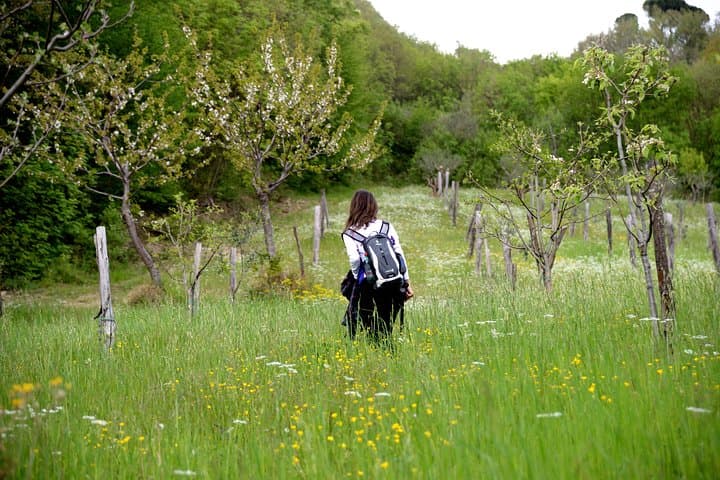
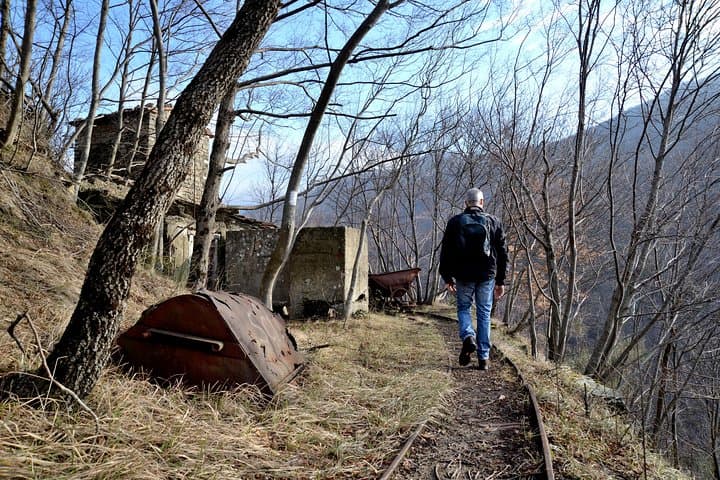
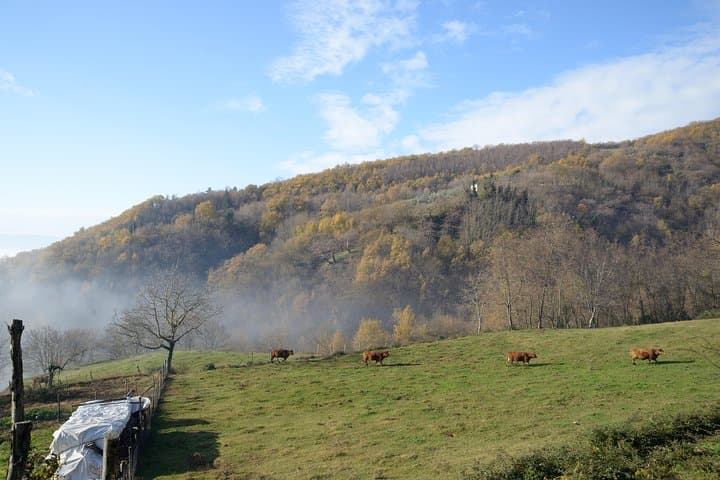
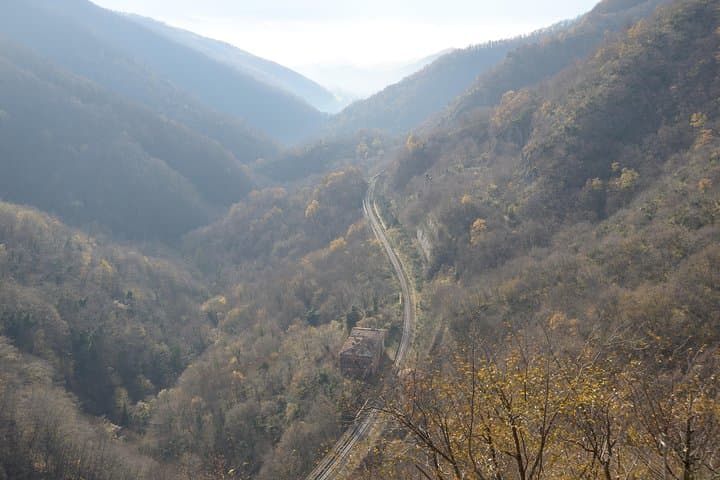
You push through a chest-high understory and the path opens onto a clearing where an abandoned stone house squats like a pause in time. The air here has the sharp, dry scent of olive and wild grass; behind you the ridgeline of the Apennines pins the horizon while the Faentina railway threads the valley below.
You push through a chest-high understory and the path opens onto a clearing where an abandoned stone house squats like a pause in time. The air here has the sharp, dry scent of olive and wild grass; behind you the ridgeline of the Apennines pins the horizon while the Faentina railway threads the valley below.
This hike follows a route used since Etruscan times to connect inland settlements, later walked by Romans and medieval peasants under the Count Guidi. Geologically the Mugello sector of the northern Apennines is folded sedimentary rock—ridges of sandstone and marl cut by small quarries that once fed local building and road projects. Scattered ruins, an old quarry, an abandoned station and a tubular stone tunnel give the route a lived-in, historic edge: agricultural terraces, olive and cherry trees, and feral grasses speaking to decades of human shaping.
Expect a mix of dirt singletrack, intermittent cobbled stretches of historic road, and rocky switchbacks. The tour usually includes a stop at the quarry to sample local salumi and Chianti—Tuscany’s food culture is as integral to the day as the views. Plan for changing mountain weather, and note the abandoned tunnel can be dark and uneven underfoot.
Practical details: the guided itinerary runs about five hours, roughly 8–12 km with 400–600 m of cumulative ascent depending on route variations. Sturdy hiking shoes, 1–2 liters of water, layered clothing, and a headlamp for the tunnel will keep the day safe and enjoyable. Morning starts offer cooler air and the best light for valley views; leave no trace and respect fragile ruins as you move between past and present.