THE ADVENTURE COLLECTIVE® · Independent discovery and booking for outdoor travel

Climb by cable car, 4x4 and foot to Etna’s summit craters at 3,340 m. This practical guide outlines what to expect on the volcanic terrain, key sights like La Voragine and the Valle del Bove, and how to prepare for changing conditions.
Climb by cable car, 4x4 and foot to Etna’s summit craters at 3,340 m. This practical guide outlines what to expect on the volcanic terrain, key sights like La Voragine and the Valle del Bove, and how to prepare for changing conditions.
A sharp wind meets you above the tree line as the cable car delivers you into a lunar landscape. From Rifugio Sapienza (1,900 m) the route climbs by lift, 4x4 and then foot, pushing through black scoria and recent pahoehoe where each step leaves a dark print. The summit craters at 3,340 m sit raw and open — La Voragine and Bocca Nuova cut dramatic bowls in the skyline, while the Southeast Crater hisses faintly, reminding hikers they are on an active giant.
Verified experiences and guided adventures in the surrounding area.
Operated by Sicilying SRL · Nicolosi, Sicily
A sharp wind meets you above the tree line as the cable car delivers you into a lunar landscape. From Rifugio Sapienza (1,900 m) the route climbs by lift, 4x4 and then foot, pushing through black scoria and recent pahoehoe where each step leaves a dark print. The summit craters at 3,340 m sit raw and open — La Voragine and Bocca Nuova cut dramatic bowls in the skyline, while the Southeast Crater hisses faintly, reminding hikers they are on an active giant.
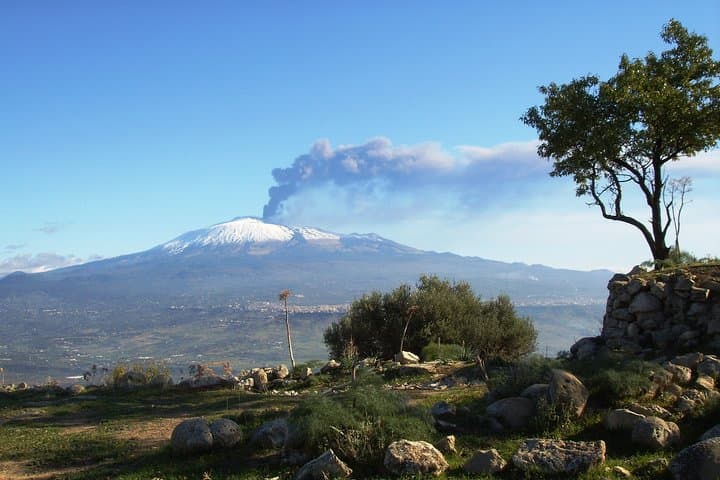
Geology dominates: Etna is a layered stratovolcano whose frequent eruptions have stacked lava and ash into complex flanks. Human history follows closely — vineyards and small towns at lower elevations owe soil and livelihood to past flows, and Etna is a UNESCO World Heritage site for its geological significance and cultural ties to Sicilian life.
Expect varied terrain: hard basalt, loose volcanic ash, and steep sandy descents that feel like sliding down a beach turned black. The guide will interpret craters and recent lava events (2001, 2002/2003) and route you around unstable edges. Weather shifts fast; visibility can change from bright sun to low cloud and gusts.
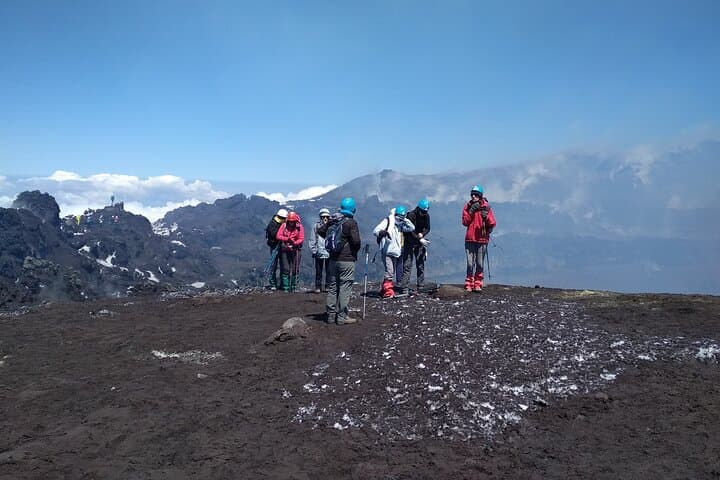
Practical guidance: plan for a 6‑hour outing with altitude up to 3,340 m, layered clothing, sun protection and sturdy boots. Use trekking poles for ash and sand sections. The tour includes a volcanological guide, helmet and some equipment, but bring a windproof layer and personal hydration. Start early, respect fenced areas, and allow time for the cable car return; conditions determine final routing.
moderate.
6 hours.
Suitable for moderately fit people comfortable with 2–3 hours of uphill hiking at altitude; balance and ankle stability helpful.
The itinerary goes to the summit craters around 3,340 meters, with panoramic views along the crater rim.
No technical mountaineering skills are required, but participants should be comfortable walking on scree, ash and uneven volcanic rock.
The operator monitors volcanic activity; routes may be altered or the tour cancelled for safety, with refunds or rebooking per the cancellation policy.
The tour typically includes a lunch break and some items (helmet, volcanological guide, sometimes poles or jacket); check the booking details for the exact inclusions.
Etna has shaped local culture for millennia; frequent eruptions built the layered flanks and the volcano was inscribed as a UNESCO World Heritage site for its geological and cultural influence.
High‑altitude vegetation is fragile and slow‑growing; stay on established paths and pack out all waste. Operators limit groups to reduce trail erosion and disturbance.
Sicilying SRL operates guided outdoor trips and adventures with an emphasis on safety, stewardship, and memorable experiences.
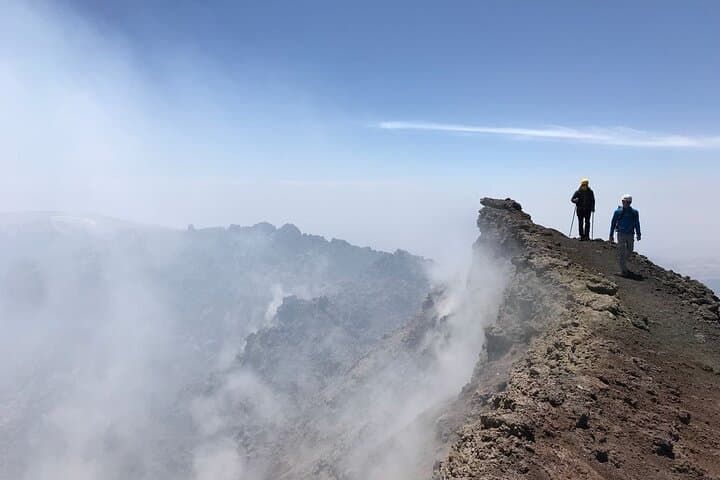
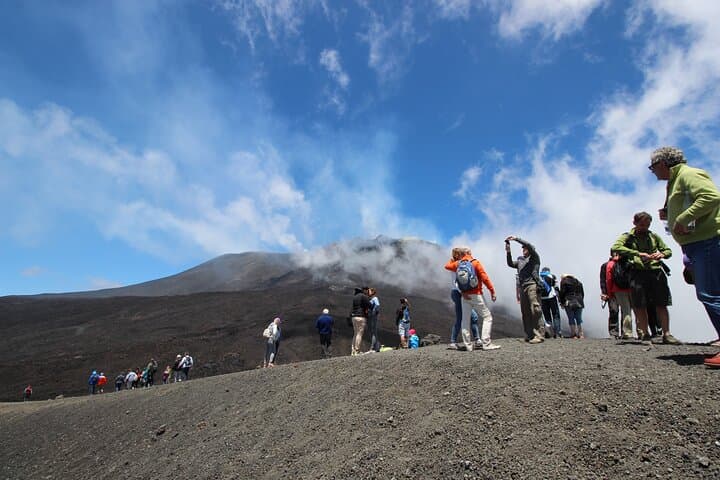
A sharp wind meets you above the tree line as the cable car delivers you into a lunar landscape. From Rifugio Sapienza (1,900 m) the route climbs by lift, 4x4 and then foot, pushing through black scoria and recent pahoehoe where each step leaves a dark print. The summit craters at 3,340 m sit raw and open — La Voragine and Bocca Nuova cut dramatic bowls in the skyline, while the Southeast Crater hisses faintly, reminding hikers they are on an active giant.
A sharp wind meets you above the tree line as the cable car delivers you into a lunar landscape. From Rifugio Sapienza (1,900 m) the route climbs by lift, 4x4 and then foot, pushing through black scoria and recent pahoehoe where each step leaves a dark print. The summit craters at 3,340 m sit raw and open — La Voragine and Bocca Nuova cut dramatic bowls in the skyline, while the Southeast Crater hisses faintly, reminding hikers they are on an active giant.
Geology dominates: Etna is a layered stratovolcano whose frequent eruptions have stacked lava and ash into complex flanks. Human history follows closely — vineyards and small towns at lower elevations owe soil and livelihood to past flows, and Etna is a UNESCO World Heritage site for its geological significance and cultural ties to Sicilian life.
Expect varied terrain: hard basalt, loose volcanic ash, and steep sandy descents that feel like sliding down a beach turned black. The guide will interpret craters and recent lava events (2001, 2002/2003) and route you around unstable edges. Weather shifts fast; visibility can change from bright sun to low cloud and gusts.
Practical guidance: plan for a 6‑hour outing with altitude up to 3,340 m, layered clothing, sun protection and sturdy boots. Use trekking poles for ash and sand sections. The tour includes a volcanological guide, helmet and some equipment, but bring a windproof layer and personal hydration. Start early, respect fenced areas, and allow time for the cable car return; conditions determine final routing.