THE ADVENTURE COLLECTIVE® · Independent discovery and booking for outdoor travel

Explore Thailand’s highest peak on the Pha Dok Seaw trek: misty mountain ridgelines, powerful waterfalls, and authentic hill-tribe markets all in a long but accessible day from Chiang Mai. Read practical tips on gear, timing, and cultural etiquette to make the most of the route.
Explore Thailand’s highest peak on the Pha Dok Seaw trek: misty mountain ridgelines, powerful waterfalls, and authentic hill-tribe markets all in a long but accessible day from Chiang Mai. Read practical tips on gear, timing, and cultural etiquette to make the most of the route.
You step out of the minivan into mountain air that pushes coolness into your lungs—the summit of Doi Inthanon sits like a slow-moving cloud bank, and the trees seem to lean toward the valley to watch the day unfold.
Verified experiences and guided adventures in the surrounding area.
Operated by TREVOPEDIA · Chiang Mai, Chiang Mai Province
You step out of the minivan into mountain air that pushes coolness into your lungs—the summit of Doi Inthanon sits like a slow-moving cloud bank, and the trees seem to lean toward the valley to watch the day unfold.
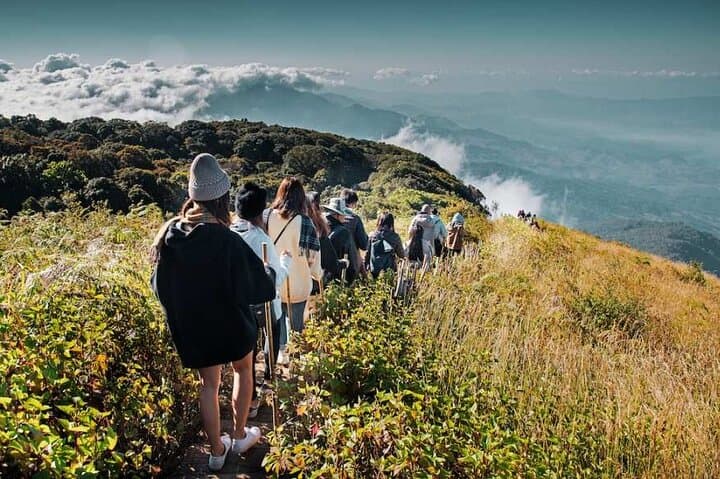
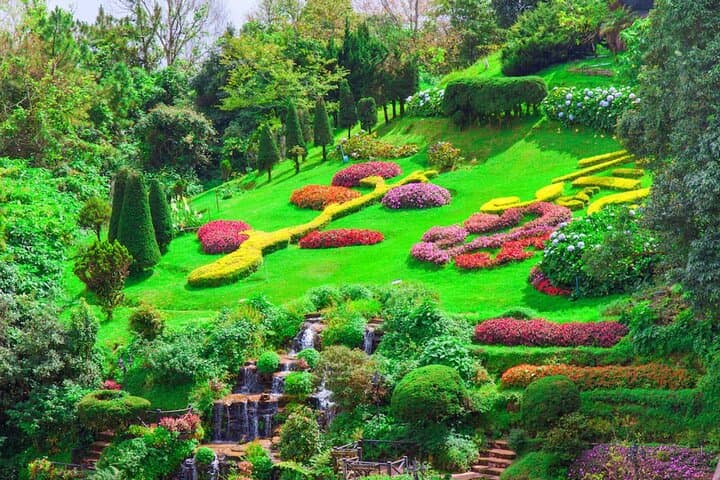
This full-day trek follows Pha Dok Seaw (with Kew Mae Pan as an alternate route), threading through montane evergreen forest and rhododendron stands. Geologically the massif is the northern terminus of Thailand’s Shan Plateau, its granite and sandstone beds uplifted by ancient tectonic forces and carved by seasonal monsoons into steep ridgelines and deep gullies. The Twin Royal Pagodas near the peak mark modern history: built in the late 20th century to honor the king and queen, their gardens give way to views that spill down to terraced fields and misted valleys.
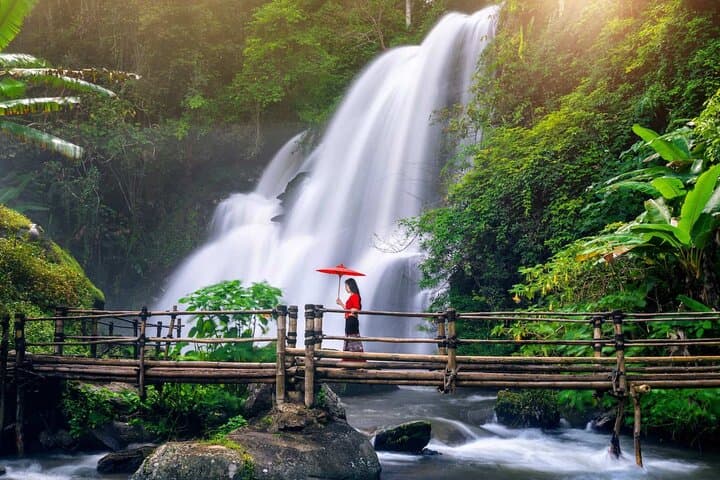
Culturally the route meets Hmong and Karen communities where morning markets sell fresh highland vegetables and embroidered textiles crafted by hand; conversations are as much a part of the hike as the switchbacks. Along the way Wachirathan and Sirithan waterfalls demand attention—water that dares you to stand too close to the spray.
Practical guidance: expect a 9–10 hour day with varied terrain—packed dirt trails, boardwalks on peatier sections, and stone steps at viewpoints. Dress in layers, bring 2–3 liters of water, cash for markets, and shoes with good grip. Respect temple dress codes and local customs, stay on marked trails to protect fragile montane vegetation, and plan for fast-changing weather near the summit.
moderate.
9–10 hours.
Good endurance for a long day hike; ability to manage sustained uphill and downhill sections and handle uneven terrain.
The full-day tour, including transfers, runs about 9–10 hours—most of that covers travel and guided trekking time.
Yes; trails are well-marked and the tour is rated accessible for most fitness levels, but expect sustained uphill sections and uneven ground.
Yes—this tour typically includes park entrance fees and lunch, but bring small cash for market purchases or snacks.
At about 2,565 meters the altitude is moderate; light shortness of breath is possible—pacing, hydration, and warm layers reduce discomfort.
Doi Inthanon, Thailand's highest point, became a national park in 1972; the Twin Royal Pagodas were built in the late 1980s–1990s to honor the king and queen and attract conservation attention.
The park is a protected area—entrance fees support trail maintenance and local conservation; stay on trails and avoid feeding wildlife to minimize impact.
TREVOPEDIA operates guided outdoor trips and adventures with an emphasis on safety, stewardship, and memorable experiences.

You step out of the minivan into mountain air that pushes coolness into your lungs—the summit of Doi Inthanon sits like a slow-moving cloud bank, and the trees seem to lean toward the valley to watch the day unfold.
You step out of the minivan into mountain air that pushes coolness into your lungs—the summit of Doi Inthanon sits like a slow-moving cloud bank, and the trees seem to lean toward the valley to watch the day unfold.
This full-day trek follows Pha Dok Seaw (with Kew Mae Pan as an alternate route), threading through montane evergreen forest and rhododendron stands. Geologically the massif is the northern terminus of Thailand’s Shan Plateau, its granite and sandstone beds uplifted by ancient tectonic forces and carved by seasonal monsoons into steep ridgelines and deep gullies. The Twin Royal Pagodas near the peak mark modern history: built in the late 20th century to honor the king and queen, their gardens give way to views that spill down to terraced fields and misted valleys.
Culturally the route meets Hmong and Karen communities where morning markets sell fresh highland vegetables and embroidered textiles crafted by hand; conversations are as much a part of the hike as the switchbacks. Along the way Wachirathan and Sirithan waterfalls demand attention—water that dares you to stand too close to the spray.
Practical guidance: expect a 9–10 hour day with varied terrain—packed dirt trails, boardwalks on peatier sections, and stone steps at viewpoints. Dress in layers, bring 2–3 liters of water, cash for markets, and shoes with good grip. Respect temple dress codes and local customs, stay on marked trails to protect fragile montane vegetation, and plan for fast-changing weather near the summit.