THE ADVENTURE COLLECTIVE® · Independent discovery and booking for outdoor travel

See goats balancing in argan trees on a short, photo-friendly outing from Agadir or Taghazout. This half-day tour combines easy walking, cultural context at local argan cooperatives, and excellent opportunities for striking wildlife photography.
See goats balancing in argan trees on a short, photo-friendly outing from Agadir or Taghazout. This half-day tour combines easy walking, cultural context at local argan cooperatives, and excellent opportunities for striking wildlife photography.
Early light hits low, gnarly argan branches and a small shadow hops from limb to limb: goats poised like practiced acrobats, mouths busy on the fruit as you raise your camera. The drive from Agadir or Taghazout is short—tracks and low scrub give way to grouped argan stands where the animals climb without hesitation, creating moments that feel staged for film but are entirely natural.
Verified experiences and guided adventures in the surrounding area.
Operated by MarrakechAttraction.com · Agadir, Souss-Massa
Early light hits low, gnarly argan branches and a small shadow hops from limb to limb: goats poised like practiced acrobats, mouths busy on the fruit as you raise your camera. The drive from Agadir or Taghazout is short—tracks and low scrub give way to grouped argan stands where the animals climb without hesitation, creating moments that feel staged for film but are entirely natural.
The argan (Argania spinosa) is a drought-tolerant tree endemic to southwest Morocco; its dense, wind-sculpted trunks and thorny branches evolved to hold soil on looser slopes. Berber communities have harvested argan fruit for centuries to produce prized argan oil, and goats learned to exploit the crop, contributing to a local cultural scene rooted in cooperative production and seasonal harvesting.
Expect a relaxed, photo-focused excursion: door-to-door pickup, a short walk on dirt tracks, and 60–90 minutes at viewing spots. The terrain is flat to gently rolling—no climbing required—but soft, uneven surfaces mean steady footing. Plan shoots for morning or late afternoon when goats are most active and the light is warm. Respect handlers and cooperatives; avoid feeding or trying to provoke animals for photos.
Practical pointers: bring a telephoto lens or a 70–200mm zoom, sun protection, and cash for small purchases at women’s argan cooperatives. If you’re traveling with children or mobility needs, the tour can accommodate most guests but confirm pickup details in advance. This is an easy, highly photogenic half-day outing that pairs cultural insight with a rare wildlife moment.
easy.
3 hours.
Suitable for most fitness levels; involves short, flat walks on uneven dirt tracks and standing for photos.
Guides know reliable groves where goats often climb, but sightings are natural behavior and can't be guaranteed; morning and late afternoon visits increase chances.
Yes—paths are generally short and flat; the operator lists stroller and wheelchair accessibility, but confirm pickup and drop-off logistics when booking.
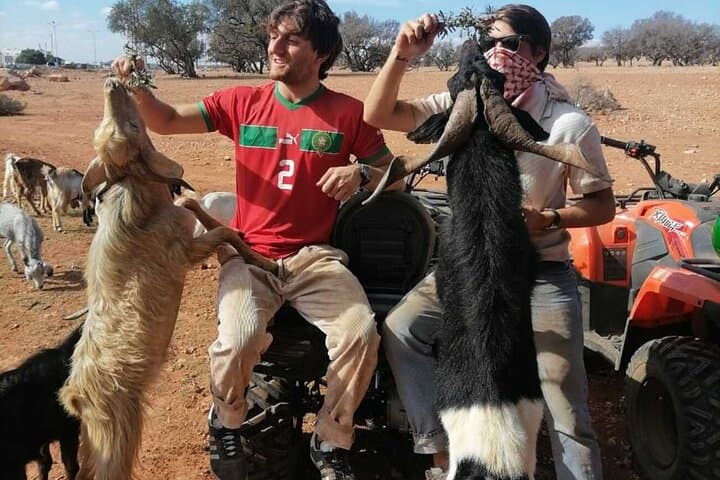
Some stops may offer supervised, brief interactions when animals are comfortable, but this depends on availability and the guide’s discretion—always follow safety guidance.
Yes—round-trip hotel pickup and drop-off from Agadir and Taghazout areas are typically included; confirm your exact pickup point at booking.
Argan trees have sustained Berber communities for generations; argan oil production remains a women-led cooperative tradition central to local livelihoods.
Argan forests are a protected landscape in parts of southwest Morocco; visitors should avoid feeding animals, support local cooperatives, and stay on established tracks to limit erosion.
MarrakechAttraction.com operates guided outdoor trips and adventures with an emphasis on safety, stewardship, and memorable experiences.
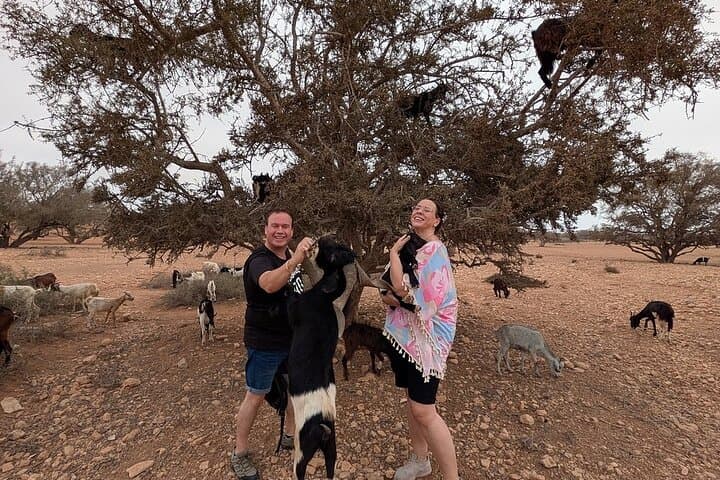


Early light hits low, gnarly argan branches and a small shadow hops from limb to limb: goats poised like practiced acrobats, mouths busy on the fruit as you raise your camera. The drive from Agadir or Taghazout is short—tracks and low scrub give way to grouped argan stands where the animals climb without hesitation, creating moments that feel staged for film but are entirely natural.
Early light hits low, gnarly argan branches and a small shadow hops from limb to limb: goats poised like practiced acrobats, mouths busy on the fruit as you raise your camera. The drive from Agadir or Taghazout is short—tracks and low scrub give way to grouped argan stands where the animals climb without hesitation, creating moments that feel staged for film but are entirely natural.
The argan (Argania spinosa) is a drought-tolerant tree endemic to southwest Morocco; its dense, wind-sculpted trunks and thorny branches evolved to hold soil on looser slopes. Berber communities have harvested argan fruit for centuries to produce prized argan oil, and goats learned to exploit the crop, contributing to a local cultural scene rooted in cooperative production and seasonal harvesting.
Expect a relaxed, photo-focused excursion: door-to-door pickup, a short walk on dirt tracks, and 60–90 minutes at viewing spots. The terrain is flat to gently rolling—no climbing required—but soft, uneven surfaces mean steady footing. Plan shoots for morning or late afternoon when goats are most active and the light is warm. Respect handlers and cooperatives; avoid feeding or trying to provoke animals for photos.
Practical pointers: bring a telephoto lens or a 70–200mm zoom, sun protection, and cash for small purchases at women’s argan cooperatives. If you’re traveling with children or mobility needs, the tour can accommodate most guests but confirm pickup details in advance. This is an easy, highly photogenic half-day outing that pairs cultural insight with a rare wildlife moment.