THE ADVENTURE COLLECTIVE® · Independent discovery and booking for outdoor travel

Climb into the araucaria canopy near Serra do Tabuleiro on a 90‑minute guided route that pairs playful acrobatics with close wildlife viewing. Suited for families and beginners, the experience emphasizes safety, minimal impact, and sweeping coastal mountain views.
Climb into the araucaria canopy near Serra do Tabuleiro on a 90‑minute guided route that pairs playful acrobatics with close wildlife viewing. Suited for families and beginners, the experience emphasizes safety, minimal impact, and sweeping coastal mountain views.
A narrow trail gives way to a stand of tall araucaria pines and the air changes — cooler, resin-scented, alive with bird calls. Participants clip into harnesses, test carabiners, and step onto a sequence of elevated platforms that thread through the canopy above Santo Amaro da Imperatriz. The climb is part acrobatics, part close-looking: roots and trunks become handholds, branches put a roof over your head, and the distant silhouette of Serra do Tabuleiro watches from the coast.
Verified experiences and guided adventures in the surrounding area.
Operated by Apuama Rafting · Santo Amaro da Imperatriz, Santa Catarina
A narrow trail gives way to a stand of tall araucaria pines and the air changes — cooler, resin-scented, alive with bird calls. Participants clip into harnesses, test carabiners, and step onto a sequence of elevated platforms that thread through the canopy above Santo Amaro da Imperatriz. The climb is part acrobatics, part close-looking: roots and trunks become handholds, branches put a roof over your head, and the distant silhouette of Serra do Tabuleiro watches from the coast.
Araucaria forests are relics of southern Brazil’s highland ecology; researchers have long used rope techniques here to study epiphytes and birdlife. Geologically, the Serra do Tabuleiro massif is a granite outcrop that captures orographic rainfall, feeding springs and creating the humid pockets where these pines thrive. Locally, this is working-country terrain — small farms, thermal springs nearby, and a culture that balances recreation with resource use.
Practically, the activity is a guided, 90-minute private route that blends low-impact acrobatics and contemplative canopy time. Operators supply helmet, harness, pulleys and carabiners; guests must meet the height (≥1.30 m) and weight (≤110 kg) limits and be free of major back, heart, or pregnancy-related restrictions. Footwear should be sturdy and closed-toe; dress in breathable layers for quick changes in shade and sun. Hydrate before you go, arrive 15–20 minutes early for safety briefing, and expect light scrambling and brief climbs rather than long hikes.
For families and first-time climbers, it’s an accessible way to experience the araucaria canopy, to hear wind moving like a deliberate current through the crowns, and to leave without a heavy footprint on the forest floor.
easy.
1.5 hours.
Light aerobic fitness; able to climb small ladders and stand on platforms for short periods.
Participants must be at least 1.30 m tall and weigh no more than 110 kg; the course is family‑friendly and suitable for children who meet those limits.
No — guides provide all technical equipment and instruction; the route is designed for beginners and mixed‑ability groups.
Full refund available if you cancel at least 24 hours before the scheduled time; operators may cancel for bad weather and issue refunds.
Araucaria forests were more extensive in higher elevations historically and supported Indigenous groups and early settlers; today they are a valued ecological remnant in southern Brazil.
Operators emphasize low‑impact routes and group size limits to protect root zones and understory plants; visitors are asked not to remove any flora or disturb wildlife.
Apuama Rafting operates guided outdoor trips and adventures with an emphasis on safety, stewardship, and memorable experiences.
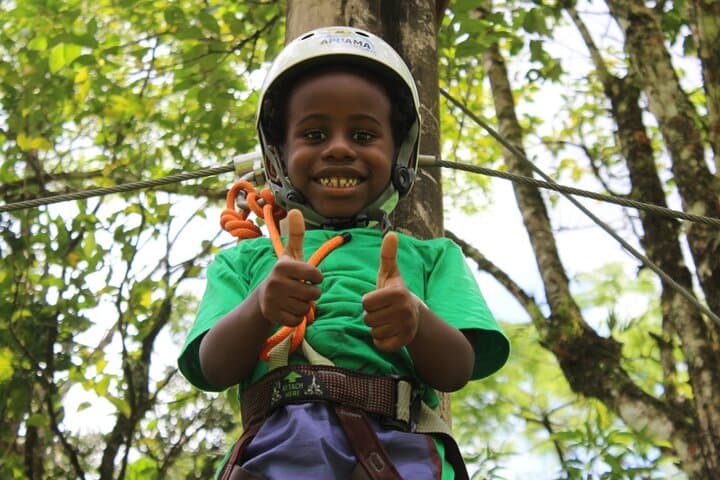
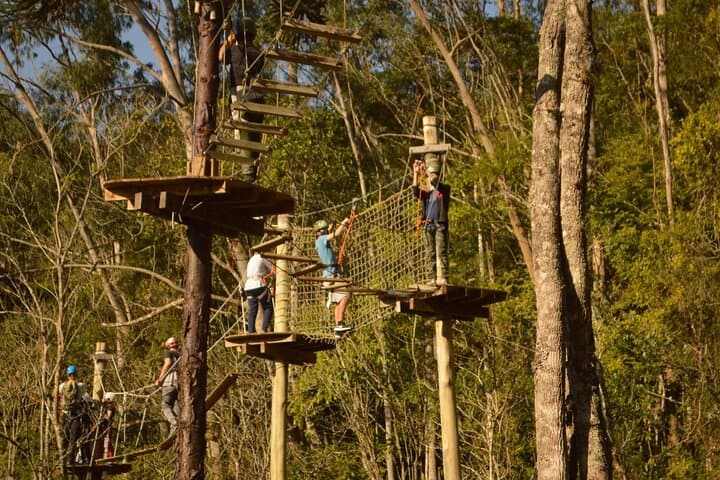
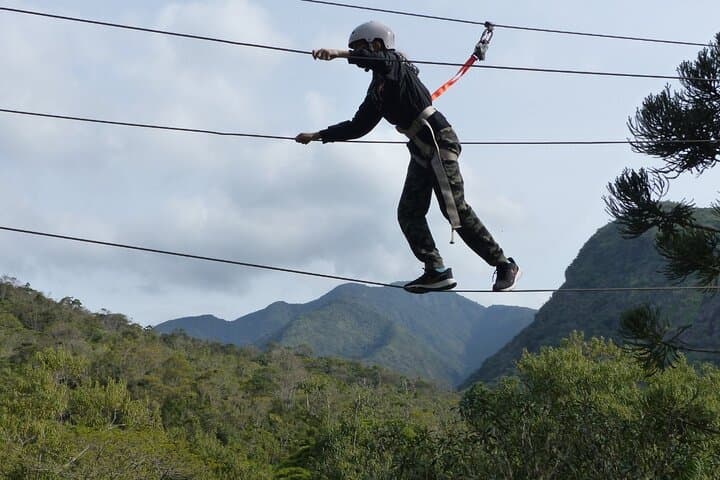
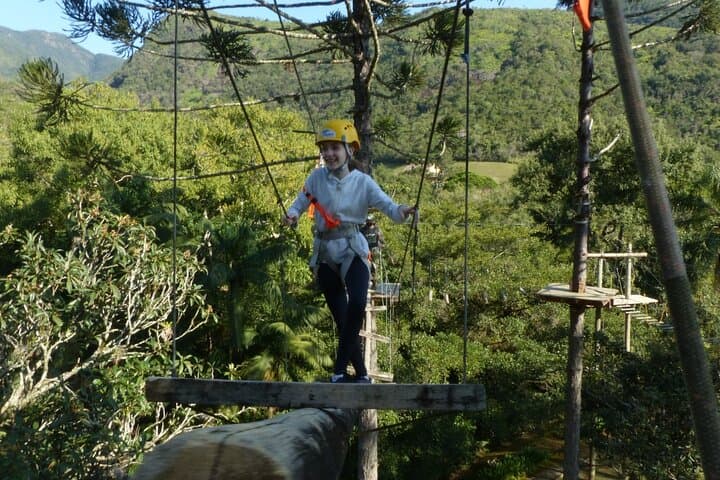
A narrow trail gives way to a stand of tall araucaria pines and the air changes — cooler, resin-scented, alive with bird calls. Participants clip into harnesses, test carabiners, and step onto a sequence of elevated platforms that thread through the canopy above Santo Amaro da Imperatriz. The climb is part acrobatics, part close-looking: roots and trunks become handholds, branches put a roof over your head, and the distant silhouette of Serra do Tabuleiro watches from the coast.
A narrow trail gives way to a stand of tall araucaria pines and the air changes — cooler, resin-scented, alive with bird calls. Participants clip into harnesses, test carabiners, and step onto a sequence of elevated platforms that thread through the canopy above Santo Amaro da Imperatriz. The climb is part acrobatics, part close-looking: roots and trunks become handholds, branches put a roof over your head, and the distant silhouette of Serra do Tabuleiro watches from the coast.
Araucaria forests are relics of southern Brazil’s highland ecology; researchers have long used rope techniques here to study epiphytes and birdlife. Geologically, the Serra do Tabuleiro massif is a granite outcrop that captures orographic rainfall, feeding springs and creating the humid pockets where these pines thrive. Locally, this is working-country terrain — small farms, thermal springs nearby, and a culture that balances recreation with resource use.
Practically, the activity is a guided, 90-minute private route that blends low-impact acrobatics and contemplative canopy time. Operators supply helmet, harness, pulleys and carabiners; guests must meet the height (≥1.30 m) and weight (≤110 kg) limits and be free of major back, heart, or pregnancy-related restrictions. Footwear should be sturdy and closed-toe; dress in breathable layers for quick changes in shade and sun. Hydrate before you go, arrive 15–20 minutes early for safety briefing, and expect light scrambling and brief climbs rather than long hikes.
For families and first-time climbers, it’s an accessible way to experience the araucaria canopy, to hear wind moving like a deliberate current through the crowns, and to leave without a heavy footprint on the forest floor.