THE ADVENTURE COLLECTIVE® · Independent discovery and booking for outdoor travel

A compact five-hour tour that pairs Harrison's Cave with Bathsheba's surf and St. Nicholas Abbey's plantation grounds. Ideal for travelers who want geology, coastal drama and colonial history in a single day.
A compact five-hour tour that pairs Harrison's Cave with Bathsheba's surf and St. Nicholas Abbey's plantation grounds. Ideal for travelers who want geology, coastal drama and colonial history in a single day.
The bus rounds a bend and the island opens: limestone hills drop into forested gullies, Atlantic surf drums on the eastern coast, and a Jacobean manor sits above sugar fields. This five-hour loop moves from the cool, cavernous quiet of Harrison's Cave into the raw surf of Bathsheba and then through plantation history at Morgan Lewis Windmill and St. Nicholas Abbey.
Verified experiences and guided adventures in the surrounding area.
Operated by Beautiful (Barbados) Tours and Excursions Ltd · Welchman Hall, Saint Thomas
The bus rounds a bend and the island opens: limestone hills drop into forested gullies, Atlantic surf drums on the eastern coast, and a Jacobean manor sits above sugar fields. This five-hour loop moves from the cool, cavernous quiet of Harrison's Cave into the raw surf of Bathsheba and then through plantation history at Morgan Lewis Windmill and St. Nicholas Abbey.
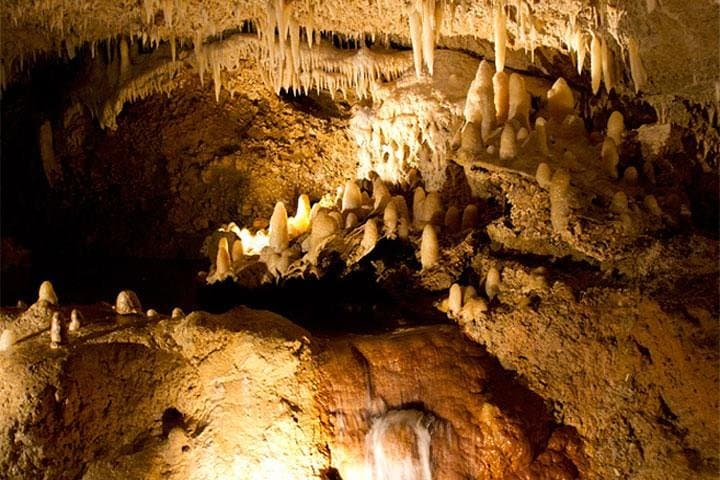
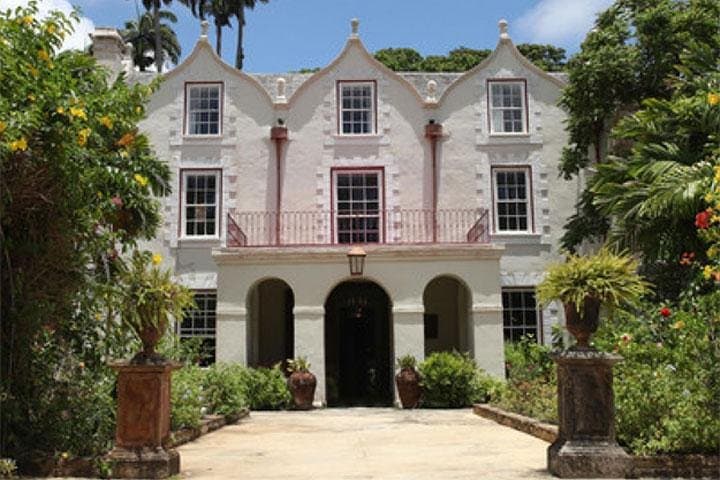
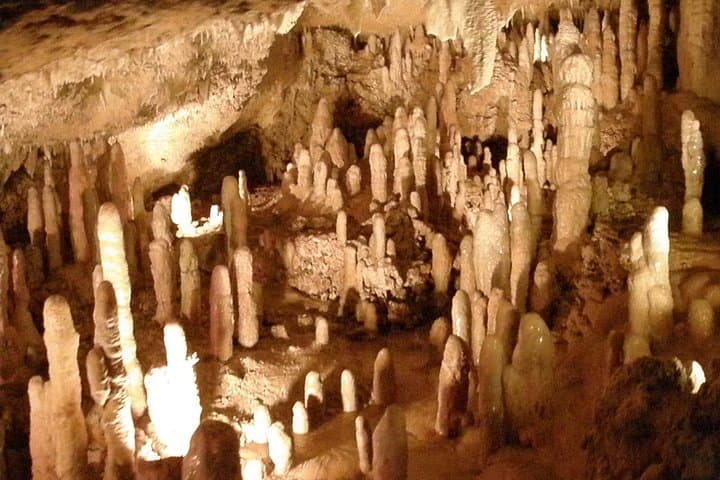
Harrison's Cave is a classic karst system—limestone dissolved over millennia—now presented with walkways and a tram that takes visitors past stalactites, stalagmites and skylit pools. Bathsheba, on the windward shore, shows Barbados' geology in motion: waves and rock carving the coastline into the famous Soup Bowl surf breaks. The Morgan Lewis Windmill (1727) and St. Nicholas Abbey (mid-17th century) recall the island's sugar economy and colonial architecture; Cherry Tree Hill offers a wind-swept vantage some 850 feet above sea level.
Expect a mix of short walks, boardwalks and seated transit in an air-conditioned vehicle; the tour includes entrance fees, bottled water and lunch. Visitors complete a mandatory Harrison's Cave waiver in advance. Wear sturdy, closed shoes for cave paths, a light rain layer for sudden showers, and reef-safe sunscreen for coastal stops. Photography is plentiful—bring a compact camera and a small daypack for essentials.
Practical notes: pickup windows run 8:00–10:00 a.m.; guides often operate Monday, Wednesday and Friday and may require a two-person minimum. The route balances geology, culture and coastal drama—suitable for travelers who want a concentrated introduction to Barbados' inland and eastern landscapes.
easy.
5 hours.
Suitable for most fitness levels; involves short, easy walks, some stairs and standing in caves and at viewpoints.
Yes. Harrison's Cave requires a pre-visit waiver completed online; the operator will provide the link and you will not be allowed entry without it.
The tour is family-friendly and rated easy, but the cave and some historic sites have stairs and uneven surfaces—those with mobility issues should contact the operator about access accommodations.
Entrance fees for listed attractions, bottled water, lunch, hotel pickup and drop-off, a local guide, and air-conditioned transport are included as described in the booking details.
No. Selections for the St. Nicholas Abbey options (house tour, trail, or combo) must be made at booking; once set you cannot change on the day of the tour.
The island’s sugar economy shaped much of the route: windmills like Morgan Lewis (built 1727) and plantation houses such as St. Nicholas Abbey (mid-1600s) reflect Barbados' colonial and agricultural past.
Harrison's Cave management and local trusts work to protect karst features and fragile cave formations; visitors are asked to stay on paths, avoid touching formations, and use reef-safe products on coastal stops.
Beautiful (Barbados) Tours and Excursions Ltd operates guided outdoor trips and adventures with an emphasis on safety, stewardship, and memorable experiences.

The bus rounds a bend and the island opens: limestone hills drop into forested gullies, Atlantic surf drums on the eastern coast, and a Jacobean manor sits above sugar fields. This five-hour loop moves from the cool, cavernous quiet of Harrison's Cave into the raw surf of Bathsheba and then through plantation history at Morgan Lewis Windmill and St. Nicholas Abbey.
The bus rounds a bend and the island opens: limestone hills drop into forested gullies, Atlantic surf drums on the eastern coast, and a Jacobean manor sits above sugar fields. This five-hour loop moves from the cool, cavernous quiet of Harrison's Cave into the raw surf of Bathsheba and then through plantation history at Morgan Lewis Windmill and St. Nicholas Abbey.
Harrison's Cave is a classic karst system—limestone dissolved over millennia—now presented with walkways and a tram that takes visitors past stalactites, stalagmites and skylit pools. Bathsheba, on the windward shore, shows Barbados' geology in motion: waves and rock carving the coastline into the famous Soup Bowl surf breaks. The Morgan Lewis Windmill (1727) and St. Nicholas Abbey (mid-17th century) recall the island's sugar economy and colonial architecture; Cherry Tree Hill offers a wind-swept vantage some 850 feet above sea level.
Expect a mix of short walks, boardwalks and seated transit in an air-conditioned vehicle; the tour includes entrance fees, bottled water and lunch. Visitors complete a mandatory Harrison's Cave waiver in advance. Wear sturdy, closed shoes for cave paths, a light rain layer for sudden showers, and reef-safe sunscreen for coastal stops. Photography is plentiful—bring a compact camera and a small daypack for essentials.
Practical notes: pickup windows run 8:00–10:00 a.m.; guides often operate Monday, Wednesday and Friday and may require a two-person minimum. The route balances geology, culture and coastal drama—suitable for travelers who want a concentrated introduction to Barbados' inland and eastern landscapes.