THE ADVENTURE COLLECTIVE® · Independent discovery and booking for outdoor travel

Walk between two of Rome’s oldest neighborhoods on a three-hour guided route that threads history, local life and waterfront views. This half-day tour focuses on the Jewish Ghetto and Trastevere, with stops at the Turtle Fountain, Ponte Sisto and Campo de’ Fiori.
Walk between two of Rome’s oldest neighborhoods on a three-hour guided route that threads history, local life and waterfront views. This half-day tour focuses on the Jewish Ghetto and Trastevere, with stops at the Turtle Fountain, Ponte Sisto and Campo de’ Fiori.
You step out of the shadow of ancient stones into a lane where the Tiber murmurs like a local, daring you to take another turn. The tour begins at Largo di Torre Argentina — the ruined theatre squares and cats that claim them feel almost theatrical — then threads through Piazza Mattei to the Fontana delle Tartarughe, whose marble seems to hold the city’s long conversations.
Verified experiences and guided adventures in the surrounding area.
Operated by Nicom Tours · Rome, Lazio
You step out of the shadow of ancient stones into a lane where the Tiber murmurs like a local, daring you to take another turn. The tour begins at Largo di Torre Argentina — the ruined theatre squares and cats that claim them feel almost theatrical — then threads through Piazza Mattei to the Fontana delle Tartarughe, whose marble seems to hold the city’s long conversations.
This route stitches together layers of history: the Jewish Ghetto, formally imposed in the 16th century, remains one of Europe’s oldest continuous Jewish neighborhoods; Trastevere, on the opposite bank, keeps a quieter medieval pulse with narrow alleys and churches built from volcanic tuff and Roman brick. Bridges such as the Ponte Sisto offer views where the river frames ochre facades and barges, and the stones underfoot tell of centuries of traffic, trade and ritual.
Expect stops at landmark sites (the synagogue from outside), lively squares and local food windows. Guides add cultural context — religious coexistence, wartime history, and everyday Roman life — while headsets make sure you don’t miss details in crowds.
Practical edge: bring comfortable, sturdy shoes for cobbles and occasional steps, a refillable water bottle, and a light layer for sudden coastal breezes. The three-hour pace is relaxed but steady; plan mornings or late afternoons in summer to avoid heat. Cash is handy for market snacks at Campo de’ Fiori, where the tour ends amid open-air stalls and street music.
moderate.
3 hours.
Moderate fitness: comfortable walking for three hours over cobbles and short staircases; not suitable for long-distance hikers.
Meet at Largo di Torre Argentina between Largo Argentina and Via dei Cestari; the tour concludes at Campo de' Fiori.
No — the tour provides exterior visits and commentary; entrance fees to museums or the synagogue are not included.
Strollers can be used but the route includes cobblestones and steps; full wheelchair accessibility is limited—contact the operator for specifics.
Yes; children are welcome, but participants should be able to walk for about three hours and navigate uneven pavement.
The Jewish Ghetto was established in 1555 and survived centuries of restriction and renewal; Trastevere preserves medieval street patterns and houses built on older Roman foundations.
Respect historic fabric by staying on paved paths, avoid touching fragile masonry, and support small local businesses rather than single-use plastics.
Nicom Tours operates guided outdoor trips and adventures with an emphasis on safety, stewardship, and memorable experiences.
You step out of the shadow of ancient stones into a lane where the Tiber murmurs like a local, daring you to take another turn. The tour begins at Largo di Torre Argentina — the ruined theatre squares and cats that claim them feel almost theatrical — then threads through Piazza Mattei to the Fontana delle Tartarughe, whose marble seems to hold the city’s long conversations.
You step out of the shadow of ancient stones into a lane where the Tiber murmurs like a local, daring you to take another turn. The tour begins at Largo di Torre Argentina — the ruined theatre squares and cats that claim them feel almost theatrical — then threads through Piazza Mattei to the Fontana delle Tartarughe, whose marble seems to hold the city’s long conversations.
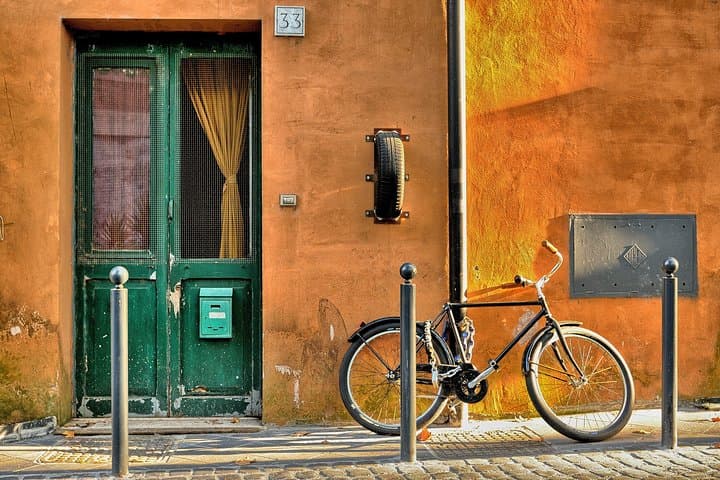
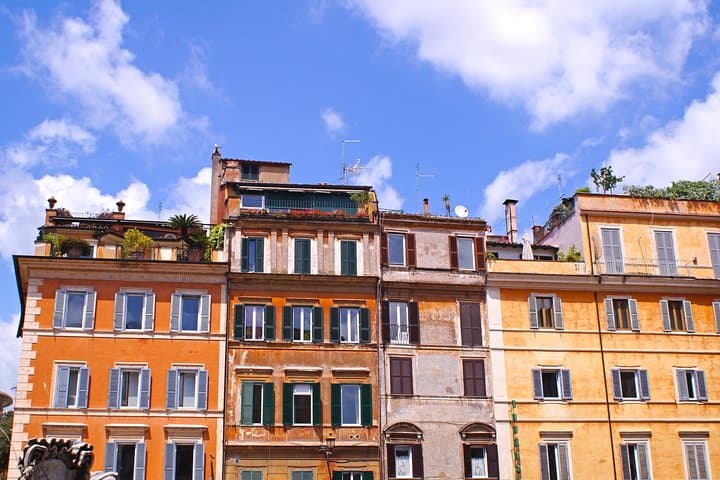
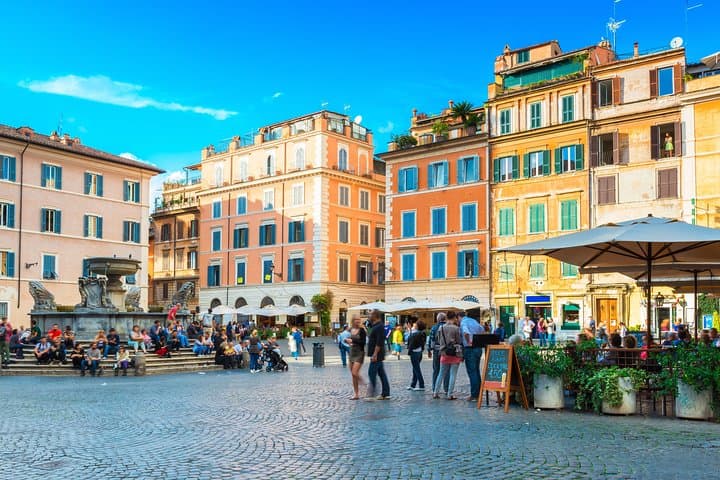
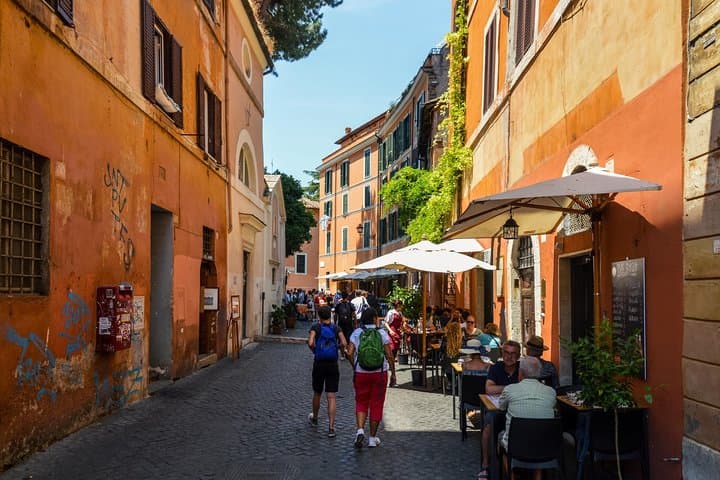
This route stitches together layers of history: the Jewish Ghetto, formally imposed in the 16th century, remains one of Europe’s oldest continuous Jewish neighborhoods; Trastevere, on the opposite bank, keeps a quieter medieval pulse with narrow alleys and churches built from volcanic tuff and Roman brick. Bridges such as the Ponte Sisto offer views where the river frames ochre facades and barges, and the stones underfoot tell of centuries of traffic, trade and ritual.
Expect stops at landmark sites (the synagogue from outside), lively squares and local food windows. Guides add cultural context — religious coexistence, wartime history, and everyday Roman life — while headsets make sure you don’t miss details in crowds.
Practical edge: bring comfortable, sturdy shoes for cobbles and occasional steps, a refillable water bottle, and a light layer for sudden coastal breezes. The three-hour pace is relaxed but steady; plan mornings or late afternoons in summer to avoid heat. Cash is handy for market snacks at Campo de’ Fiori, where the tour ends amid open-air stalls and street music.