THE ADVENTURE COLLECTIVE® · Independent discovery and booking for outdoor travel

Drive into the Carpathian fringe from Brașov for a guided evening at a forest observatory where trained rangers and guides help you watch free-ranging brown bears. Expect close views, strict rules, and a short, immersive wildlife encounter timed for peak activity.
Drive into the Carpathian fringe from Brașov for a guided evening at a forest observatory where trained rangers and guides help you watch free-ranging brown bears. Expect close views, strict rules, and a short, immersive wildlife encounter timed for peak activity.
Late afternoon light thins through spruce and beech as the minivan slips off the main road and into the low mountains around Brașov. Guests climb from hotel lobbies into a compact group with a driver-guide and forest ranger; the forest closes behind them and the sounds of civilization drop away. For two hours from an elevated observatory you watch brown bears move, feed and interact across a clearing — males testing one another’s space, sows with young edging toward shrubs.
Verified experiences and guided adventures in the surrounding area.
Operated by Discovery Transylvania · Brașov, Brașov County
Late afternoon light thins through spruce and beech as the minivan slips off the main road and into the low mountains around Brașov. Guests climb from hotel lobbies into a compact group with a driver-guide and forest ranger; the forest closes behind them and the sounds of civilization drop away. For two hours from an elevated observatory you watch brown bears move, feed and interact across a clearing — males testing one another’s space, sows with young edging toward shrubs.
Romania holds the largest brown bear population in Europe, concentrated in the Carpathian range that cradles Brașov. The geology here is older volcanic and metamorphic rock with deeply incised valleys that funnel food and movement corridors for wildlife. Local shepherding and forestry traditions shape a working landscape where villagers and rangers both respect seasonal rhythms: bears fatten in late summer and retreat for winter hibernation from November to April.
Practical guidance is straightforward. The outing is 3–4 hours total including transport; expect a 20–40 minute drive each way and a 2-hour observation window. Dress for cool, damp forest conditions—neutral, non-scented layers, waterproof boots and a warm hat. Binoculars and a telephoto lens improve photos; follow the ranger’s instructions exactly: no food, no perfumes, no bright colors. Physical demands are low but require standing and a short walk or jeep transfer to the hide. Early evening timing concentrates wildlife activity and reduces heat stress for animals. Respect viewing distance, minimize movement and keep voices low: the best encounters come to those who wait quietly.
moderate.
3–4 hours.
Moderate fitness; participants should be comfortable standing for two hours and walking short uneven sections.
Operators advertise very high sighting rates because hides are placed on known foraging routes and rangers use baiting or food sources to attract bears; sightings are extremely likely but never legally 'guaranteed' in nature.
Minimum age is 5; tours include ranger supervision and strict rules—families with children should be able to follow quiet, still behavior and keep a safe distance.
Pickup and drop-off from Brașov hotels, transport to the hide, a driver-guide, and a forest ranger escort are included.
Tours run May–November; bears hibernate November–April so tours are not organized during winter.
The Carpathians around Brașov have long been a crossroads of Romanian shepherding and forestry; human land use shaped the mosaic of pasture and forest that supports large mammals.
Conservation relies on regulated viewing, local ranger involvement and minimizing human food sources; visitors are asked to follow strict rules to reduce habituation and conflict.
Discovery Transylvania operates guided outdoor trips and adventures with an emphasis on safety, stewardship, and memorable experiences.
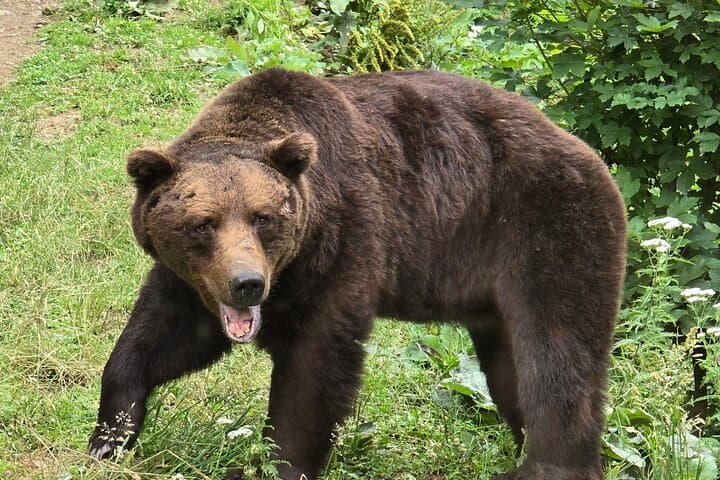


Late afternoon light thins through spruce and beech as the minivan slips off the main road and into the low mountains around Brașov. Guests climb from hotel lobbies into a compact group with a driver-guide and forest ranger; the forest closes behind them and the sounds of civilization drop away. For two hours from an elevated observatory you watch brown bears move, feed and interact across a clearing — males testing one another’s space, sows with young edging toward shrubs.
Late afternoon light thins through spruce and beech as the minivan slips off the main road and into the low mountains around Brașov. Guests climb from hotel lobbies into a compact group with a driver-guide and forest ranger; the forest closes behind them and the sounds of civilization drop away. For two hours from an elevated observatory you watch brown bears move, feed and interact across a clearing — males testing one another’s space, sows with young edging toward shrubs.
Romania holds the largest brown bear population in Europe, concentrated in the Carpathian range that cradles Brașov. The geology here is older volcanic and metamorphic rock with deeply incised valleys that funnel food and movement corridors for wildlife. Local shepherding and forestry traditions shape a working landscape where villagers and rangers both respect seasonal rhythms: bears fatten in late summer and retreat for winter hibernation from November to April.
Practical guidance is straightforward. The outing is 3–4 hours total including transport; expect a 20–40 minute drive each way and a 2-hour observation window. Dress for cool, damp forest conditions—neutral, non-scented layers, waterproof boots and a warm hat. Binoculars and a telephoto lens improve photos; follow the ranger’s instructions exactly: no food, no perfumes, no bright colors. Physical demands are low but require standing and a short walk or jeep transfer to the hide. Early evening timing concentrates wildlife activity and reduces heat stress for animals. Respect viewing distance, minimize movement and keep voices low: the best encounters come to those who wait quietly.