THE ADVENTURE COLLECTIVE® · Independent discovery and booking for outdoor travel

Drive one of the world’s most dramatic mountain roads and pair it with Sibiu’s medieval charm on this private two-day tour from Bucharest. Expect engineered alpine passes, cliffside fortresses and compact Saxon squares, with short hikes and scenic stops.
Drive one of the world’s most dramatic mountain roads and pair it with Sibiu’s medieval charm on this private two-day tour from Bucharest. Expect engineered alpine passes, cliffside fortresses and compact Saxon squares, with short hikes and scenic stops.
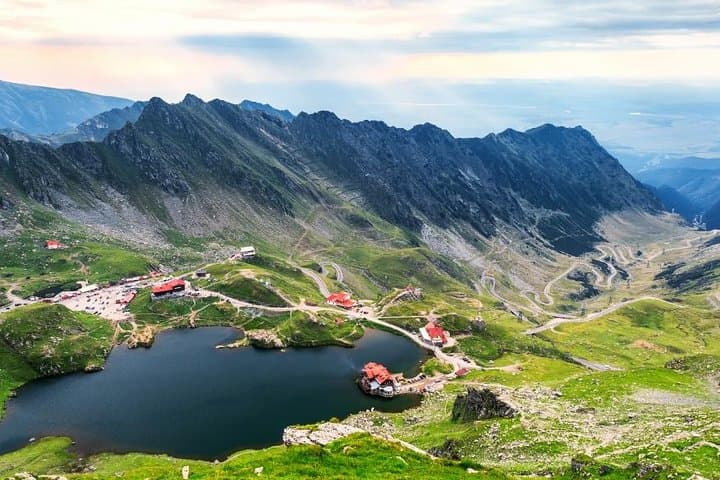
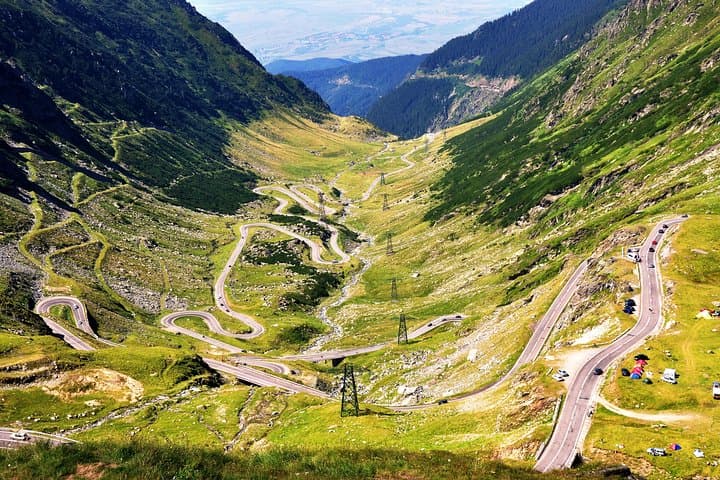
You crest the pass and the road peels away beneath you — tight hairpins, granite shoulders and a valley that seems to inhale the clouds. The Transfagarasan opens like a living map: sheer cliffs, tunnels cut through hard rock and the occasional shepherding bell that reminds you this is still working landscape, not just a highlight on a route.
Verified experiences and guided adventures in the surrounding area.
Operated by Nicolas Experience Tours · Bucharest, Bucharest
You crest the pass and the road peels away beneath you — tight hairpins, granite shoulders and a valley that seems to inhale the clouds. The Transfagarasan opens like a living map: sheer cliffs, tunnels cut through hard rock and the occasional shepherding bell that reminds you this is still working landscape, not just a highlight on a route.
This two-day private tour threads history and geology together. Curtea de Argeș was once a Wallachian seat of power; its monastery bears medieval stonework and stories of princely rule. The Transfagarasan itself slices the Făgăraș range, carved in the 1970s as a strategic alpine corridor — today it's celebrated for its engineered curves and glacial-carved basins like Balea Lake. Poenari Fortress perches on a rocky spur above Arefu; reach it by a demanding stairway and you feel the region's mix of defensive necessity and dramatic topography.
Sibiu offers a different cadence: a compact medieval core, Renaissance squares and an approachable museum scene that explains Saxon settlement and trade routes. Cozia Monastery and Călimănești springs add a cultural and restorative finish.
Practical guidance: the itinerary is largely vehicle-based with short walks, but Poenari involves steep stairs and uneven surfaces. The Transfagarasan is seasonal; check opening dates before you book. Carry layered clothing for alpine winds, a small daypack, and cash for minor entrance fees. Time your trip early in the day for light that sharpens the ridgelines and to avoid peak tourist flows.
easy.
2 days.
Suitable for travelers in average fitness; includes vehicle transfers with short walks and one steep stair climb at Poenari.
The high road is usually open from late June to October depending on winter snow; exact opening dates vary year to year, so check local updates before booking.
Most of the tour is by private car with short walking stops; the Poenari Fortress requires a steep staircase, while Sibiu’s center is best explored on foot with flat cobblestone streets.
Yes — vehicle transfers reduce strain, but the Poenari stairs and some uneven surfaces may be impractical for very young children or those with limited mobility; request itinerary adjustments if needed.
Entrance fees for some sites may accept cards, but small rural attractions and vendors often prefer cash, so carry some Romanian leu (RON).
Curtea de Argeș was an early Wallachian capital with medieval religious architecture; the Transfagarasan was engineered in the 1970s and later praised internationally for its dramatic route.
High-elevation meadows on and near the Transfagarasan are ecologically sensitive—stay on roads and marked paths, pack out waste and avoid disturbing grazing livestock.
Nicolas Experience Tours operates guided outdoor trips and adventures with an emphasis on safety, stewardship, and memorable experiences.

You crest the pass and the road peels away beneath you — tight hairpins, granite shoulders and a valley that seems to inhale the clouds. The Transfagarasan opens like a living map: sheer cliffs, tunnels cut through hard rock and the occasional shepherding bell that reminds you this is still working landscape, not just a highlight on a route.
You crest the pass and the road peels away beneath you — tight hairpins, granite shoulders and a valley that seems to inhale the clouds. The Transfagarasan opens like a living map: sheer cliffs, tunnels cut through hard rock and the occasional shepherding bell that reminds you this is still working landscape, not just a highlight on a route.
This two-day private tour threads history and geology together. Curtea de Argeș was once a Wallachian seat of power; its monastery bears medieval stonework and stories of princely rule. The Transfagarasan itself slices the Făgăraș range, carved in the 1970s as a strategic alpine corridor — today it's celebrated for its engineered curves and glacial-carved basins like Balea Lake. Poenari Fortress perches on a rocky spur above Arefu; reach it by a demanding stairway and you feel the region's mix of defensive necessity and dramatic topography.
Sibiu offers a different cadence: a compact medieval core, Renaissance squares and an approachable museum scene that explains Saxon settlement and trade routes. Cozia Monastery and Călimănești springs add a cultural and restorative finish.
Practical guidance: the itinerary is largely vehicle-based with short walks, but Poenari involves steep stairs and uneven surfaces. The Transfagarasan is seasonal; check opening dates before you book. Carry layered clothing for alpine winds, a small daypack, and cash for minor entrance fees. Time your trip early in the day for light that sharpens the ridgelines and to avoid peak tourist flows.