THE ADVENTURE COLLECTIVE® · Independent discovery and booking for outdoor travel

Experience one of Romania’s most dramatic drives on a full-day trip along the Transfagarasan with stops at Balea Waterfall and Balea Lake. This guide covers the route’s history, what to expect on the road, seasonal access notes and practical tips for a safe, scenic day in the Făgăraș Mountains.
Experience one of Romania’s most dramatic drives on a full-day trip along the Transfagarasan with stops at Balea Waterfall and Balea Lake. This guide covers the route’s history, what to expect on the road, seasonal access notes and practical tips for a safe, scenic day in the Făgăraș Mountains.
You crest the ridge and the road unfurls beneath your tires—tight hairpins, sheer drops and long, sunlit switchbacks that dare you to slow down. The Transfagarasan cuts across the Făgăraș Mountains, climbing to roughly 2,042 m and opening views of glacier-polished cirques and a lake that sits like a cold blue eye at the spine of the range.
Verified experiences and guided adventures in the surrounding area.
Operated by Brasov Travel · Sibiu, Sibiu County
You crest the ridge and the road unfurls beneath your tires—tight hairpins, sheer drops and long, sunlit switchbacks that dare you to slow down. The Transfagarasan cuts across the Făgăraș Mountains, climbing to roughly 2,042 m and opening views of glacier-polished cirques and a lake that sits like a cold blue eye at the spine of the range.
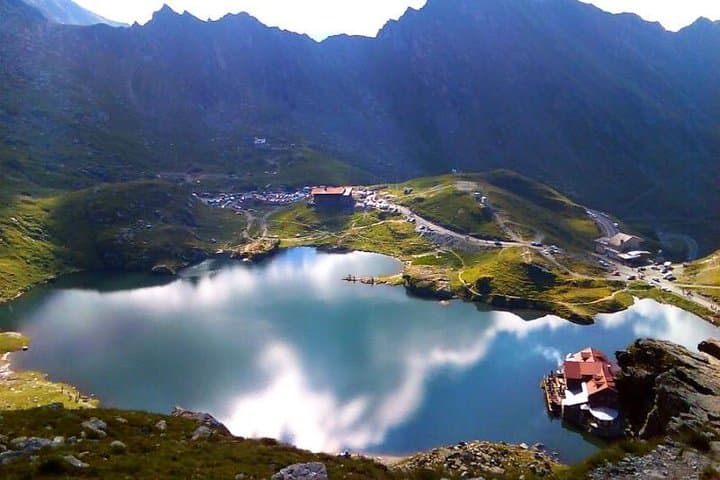
The road itself was born as a strategic military route in the 1970s and now links historic Transylvania with Wallachia. Geologically the Făgăraș massif is composed of crystalline schists and granite intrusions, carved by ice into sharp ridgelines; Moldoveanu, Romania’s highest peak at 2,544 m, looms in the backdrop. Balea Lake, formed in a glacial hollow, measures roughly 360 by 240 meters and freezes solid in winter; nearby Balea Waterfall drops about 60 meters and thunders most strongly in spring melt.
On a practical level: this is a full-day drive-and-walk excursion. In summer the road is open and crowded; in winter the route is closed and access to Balea Lake is via cable car from the waterfall. Expect limited services at altitude, quick weather shifts, and variable cellular coverage. Bring layered clothing for alpine conditions, sturdy shoes for short walks on rocky paths, and enough water and snacks for the day. Allow time for photo stops—some of the best panoramas happen where the pavement narrows and the view insists you pause.
easy.
8 hours.
Suitable for travelers of average fitness since most movement is short walks and vehicle travel; be comfortable with brief uphill sections and steps.
The high Transfăgărășan is typically open from late June to early October depending on snow; outside that window, access to Balea Lake is by cable car from the waterfall.
Walks consist of short, mostly easy trails and viewpoint paths; expect uneven ground and some steps near the waterfall and lake shore.
Yes, experienced drivers can drive the route in summer, but be prepared for narrow sections, tight curves and heavy tourist traffic; guided tours handle parking and navigation for you.
Basic services and seasonal kiosks exist in summer; however, facilities are limited at altitude—pack essentials and plan accordingly.
The Transfăgărășan was constructed during the 1970s under a national infrastructure program with strategic military origins; nearby Făgăraș Fortress dates to medieval defensive needs in the region.
High-altitude ecosystems here are fragile—stick to marked paths, avoid trampling alpine vegetation, and carry out all waste to minimize impact.
Brasov Travel operates guided outdoor trips and adventures with an emphasis on safety, stewardship, and memorable experiences.
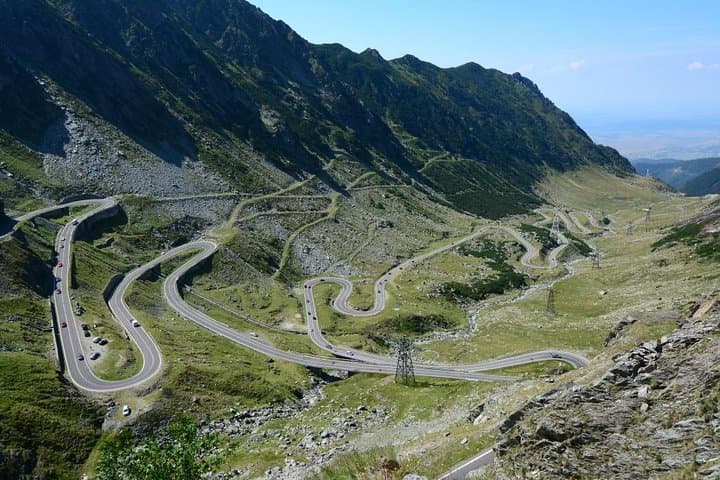
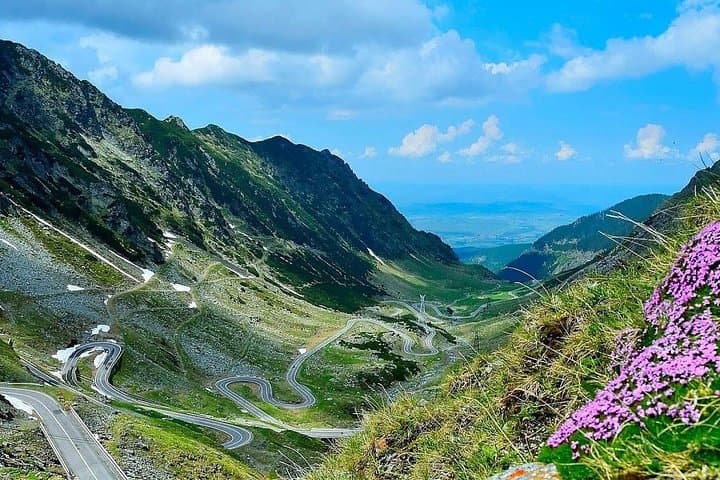
You crest the ridge and the road unfurls beneath your tires—tight hairpins, sheer drops and long, sunlit switchbacks that dare you to slow down. The Transfagarasan cuts across the Făgăraș Mountains, climbing to roughly 2,042 m and opening views of glacier-polished cirques and a lake that sits like a cold blue eye at the spine of the range.
You crest the ridge and the road unfurls beneath your tires—tight hairpins, sheer drops and long, sunlit switchbacks that dare you to slow down. The Transfagarasan cuts across the Făgăraș Mountains, climbing to roughly 2,042 m and opening views of glacier-polished cirques and a lake that sits like a cold blue eye at the spine of the range.
The road itself was born as a strategic military route in the 1970s and now links historic Transylvania with Wallachia. Geologically the Făgăraș massif is composed of crystalline schists and granite intrusions, carved by ice into sharp ridgelines; Moldoveanu, Romania’s highest peak at 2,544 m, looms in the backdrop. Balea Lake, formed in a glacial hollow, measures roughly 360 by 240 meters and freezes solid in winter; nearby Balea Waterfall drops about 60 meters and thunders most strongly in spring melt.
On a practical level: this is a full-day drive-and-walk excursion. In summer the road is open and crowded; in winter the route is closed and access to Balea Lake is via cable car from the waterfall. Expect limited services at altitude, quick weather shifts, and variable cellular coverage. Bring layered clothing for alpine conditions, sturdy shoes for short walks on rocky paths, and enough water and snacks for the day. Allow time for photo stops—some of the best panoramas happen where the pavement narrows and the view insists you pause.