THE ADVENTURE COLLECTIVE® · Independent discovery and booking for outdoor travel

Drive one of the world’s most dramatic mountain roads on a private 2-day tour from Bucharest. Combine Transfagarasan’s high passes, a castle climb, Vidraru Dam views, and Sibiu’s historic center with flexible pacing and an English-speaking guide.
Drive one of the world’s most dramatic mountain roads on a private 2-day tour from Bucharest. Combine Transfagarasan’s high passes, a castle climb, Vidraru Dam views, and Sibiu’s historic center with flexible pacing and an English-speaking guide.
You pull out of Bucharest and the city noise gives way to rising pines and switchbacks; the car hums and the Transfagarasan unfolds like a ribbon of asphalt daring you onward. On day one the road climbs toward Vidraru Dam, the valley air sharp with river spray, and the fortress ruins at Poenari loom above in stone and legend. Night finds you in Sibiu’s cobbled squares where lantern-lit façades keep centuries of market stories.
Verified experiences and guided adventures in the surrounding area.
Operated by Romania Private Guide · Bucharest, Bucharest
You pull out of Bucharest and the city noise gives way to rising pines and switchbacks; the car hums and the Transfagarasan unfolds like a ribbon of asphalt daring you onward. On day one the road climbs toward Vidraru Dam, the valley air sharp with river spray, and the fortress ruins at Poenari loom above in stone and legend. Night finds you in Sibiu’s cobbled squares where lantern-lit façades keep centuries of market stories.
This route stitches together Wallachian and Transylvanian history: Curtea de Argeș’ medieval princely church, Mircea the Elder’s Cozia Monastery, and Poenari, often linked in popular culture to Dracula myths. Geologically, the Făgăraș range—part of the Southern Carpathians—presents steep granite and metamorphic ridges carved by glacial action; Vidraru Reservoir sits in a narrow gorge cut by the Argeș River.
Locals prize the thermal springs at Călimănești and Sibiu’s Large Square for its Renaissance-era urban planning. Expect a mix of driving and short hikes (Poenari’s 1,480 steps), roadside pullouts with panoramic views, and modest walking tours through historic centers.
Practical guidance: travel light in a daypack, wear sturdy shoes for uneven cobbles and fortress stairs, and schedule your Transfagarasan pass for summer months when the road is clear. Bring a refillable water bottle and a windproof layer—the mountain weather shifts quickly. With a private guide and car, the itinerary is flexible; prioritize daylight for the high road and let the guide adjust timing for crowds, closures, or photo stops.
moderate.
2 days (approx. 48 hours).
Suitable for travelers comfortable with long car travel and short to moderate walks, plus a stair climb to Poenari; minimal endurance required.
The high mountain route is usually open in mid-summer through early autumn (roughly July–October), but exact dates vary with snow—confirm locally before travel.
Yes—most of the trip is by private vehicle and short sightseeing walks are low-impact; Poenari’s stairs are optional and can be skipped for those with mobility concerns.
Standard inclusions list a private car and guide; specific entrance fees and meals are typically not included—confirm details with the operator when booking.
Yes—this private tour emphasizes flexibility, so your guide can adjust timing, stop choices, and pacing based on preferences and conditions.
Curtea de Argeș was an early Wallachian princely seat; Cozia Monastery dates to the late 14th century and holds royal tombs.
The Făgăraș range is ecologically sensitive—stick to marked viewpoints, avoid littering, and support local guides who follow low-impact practices.
Romania Private Guide operates guided outdoor trips and adventures with an emphasis on safety, stewardship, and memorable experiences.
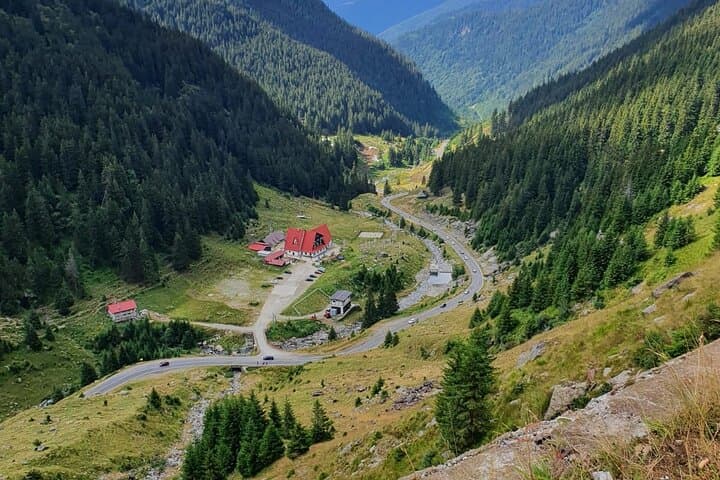
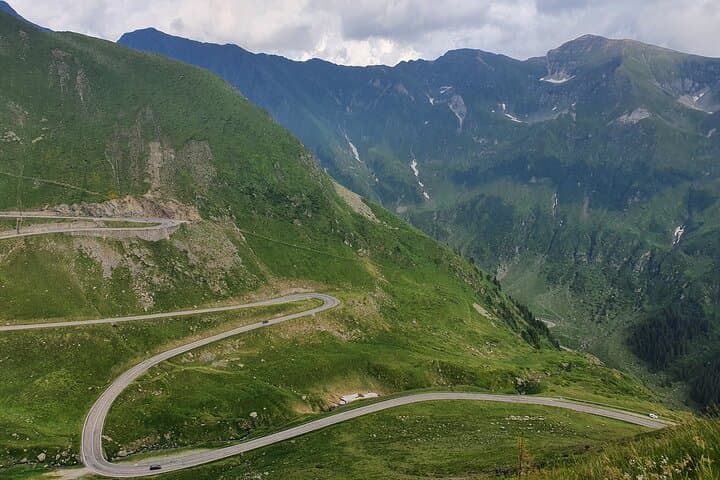
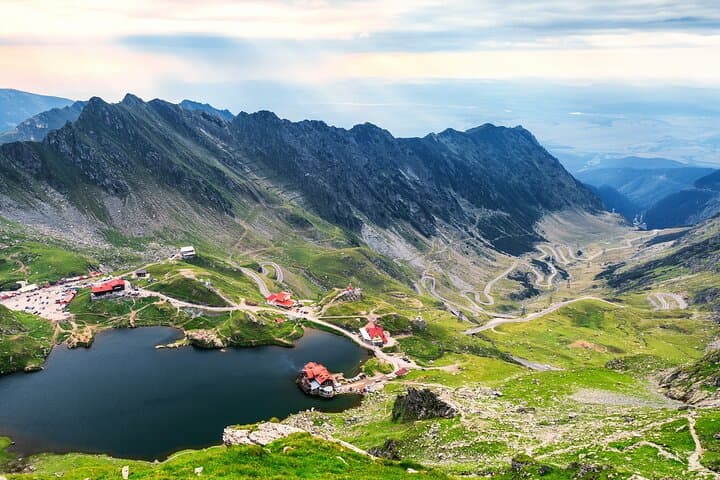

You pull out of Bucharest and the city noise gives way to rising pines and switchbacks; the car hums and the Transfagarasan unfolds like a ribbon of asphalt daring you onward. On day one the road climbs toward Vidraru Dam, the valley air sharp with river spray, and the fortress ruins at Poenari loom above in stone and legend. Night finds you in Sibiu’s cobbled squares where lantern-lit façades keep centuries of market stories.
You pull out of Bucharest and the city noise gives way to rising pines and switchbacks; the car hums and the Transfagarasan unfolds like a ribbon of asphalt daring you onward. On day one the road climbs toward Vidraru Dam, the valley air sharp with river spray, and the fortress ruins at Poenari loom above in stone and legend. Night finds you in Sibiu’s cobbled squares where lantern-lit façades keep centuries of market stories.
This route stitches together Wallachian and Transylvanian history: Curtea de Argeș’ medieval princely church, Mircea the Elder’s Cozia Monastery, and Poenari, often linked in popular culture to Dracula myths. Geologically, the Făgăraș range—part of the Southern Carpathians—presents steep granite and metamorphic ridges carved by glacial action; Vidraru Reservoir sits in a narrow gorge cut by the Argeș River.
Locals prize the thermal springs at Călimănești and Sibiu’s Large Square for its Renaissance-era urban planning. Expect a mix of driving and short hikes (Poenari’s 1,480 steps), roadside pullouts with panoramic views, and modest walking tours through historic centers.
Practical guidance: travel light in a daypack, wear sturdy shoes for uneven cobbles and fortress stairs, and schedule your Transfagarasan pass for summer months when the road is clear. Bring a refillable water bottle and a windproof layer—the mountain weather shifts quickly. With a private guide and car, the itinerary is flexible; prioritize daylight for the high road and let the guide adjust timing for crowds, closures, or photo stops.