THE ADVENTURE COLLECTIVE® · Independent discovery and booking for outdoor travel

Step onto the Appian Way and train with replica swords at the Gladiator School of Rome. This two-hour hands-on lesson near the Colosseum pairs historical context and safe combat drills for visitors aged six and up.
Step onto the Appian Way and train with replica swords at the Gladiator School of Rome. This two-hour hands-on lesson near the Colosseum pairs historical context and safe combat drills for visitors aged six and up.
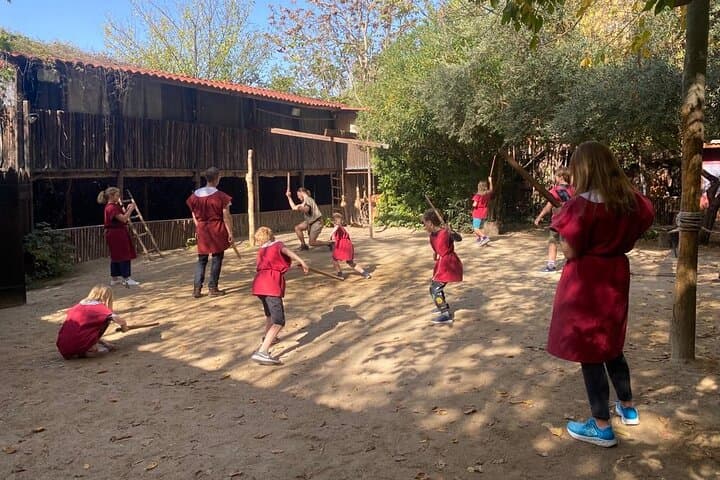
You step onto packed ancient stone as instructors in period garb help you tighten a leather belt; the Appian Way’s sun-bleached paving stones hum with history and the Colosseum looms across the city like an impatient crowd. The Gladiator School of Rome turns this slice of Imperial road into a hands-on classroom where visitors don tunics and a wooden training sword (rudis) to learn basic striking, parry drills, and footwork.
Verified experiences and guided adventures in the surrounding area.
Operated by Scuola Gladiatori Roma · Rome, Lazio
You step onto packed ancient stone as instructors in period garb help you tighten a leather belt; the Appian Way’s sun-bleached paving stones hum with history and the Colosseum looms across the city like an impatient crowd. The Gladiator School of Rome turns this slice of Imperial road into a hands-on classroom where visitors don tunics and a wooden training sword (rudis) to learn basic striking, parry drills, and footwork.
Gladiatorial combat emerged from Rome’s funerary and public spectacles; lessons here draw on that living history and on archaeological finds displayed in the onsite museum. Geology is visible beneath your feet — volcanic basalt and Roman concrete fragments form the durable streets that moved legions and merchants. Culturally, the experience blends performance, historical research, and physical training led by members of Rome’s Historic Group.
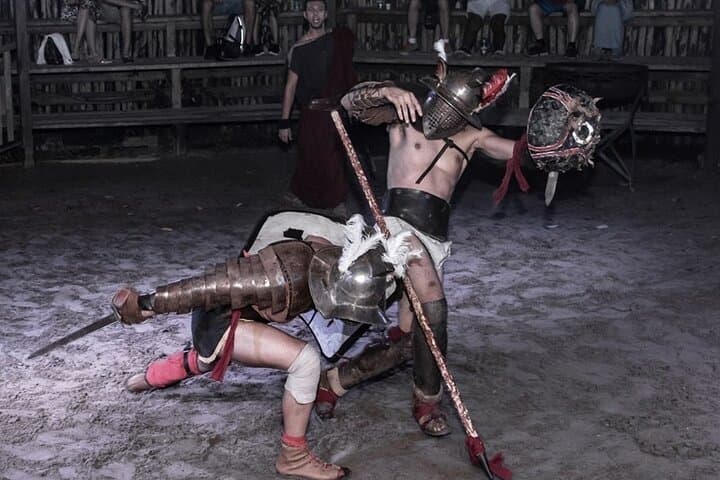
Practically, the two‑hour session is staged for mixed fitness levels and children from six up; instructors prioritize safe technique and use replica kit. Expect a short warm-up, paired drills, and an optional tournament for those who want it, plus a certificate and museum access at the end.
Plan to arrive early, wear closed-toe shoes, and bring a water bottle; shade is limited along parts of the Appian Way. Photography from the viewing platform is allowed, but artifacts in the museum are fragile — follow staff guidance. This is an active, tactile way to connect with Roman history without needing prior combat experience.
easy.
2 hours.
Suitable for most activity levels; participants should be able to walk and perform light aerobic movement.
No—classes are designed for beginners and focus on safe, basic techniques using replica training swords.
Yes—minimum age is six; younger participants will receive age-appropriate instruction and supervision.
Yes—costume and training weapons (rudis) are supplied for the duration of the lesson and included in the booking.
Sessions generally run in light rain; check the operator’s cancellation policy for severe weather and refund rules.
The Appian Way was a strategic Roman road; gladiatorial games evolved from funerary rites and public spectacles that became formalized entertainment in the Imperial era.
The area is archaeologically sensitive—stick to marked paths, avoid touching ruins, and follow museum rules to help preserve artifacts and stonework.
Scuola Gladiatori Roma operates guided outdoor trips and adventures with an emphasis on safety, stewardship, and memorable experiences.


You step onto packed ancient stone as instructors in period garb help you tighten a leather belt; the Appian Way’s sun-bleached paving stones hum with history and the Colosseum looms across the city like an impatient crowd. The Gladiator School of Rome turns this slice of Imperial road into a hands-on classroom where visitors don tunics and a wooden training sword (rudis) to learn basic striking, parry drills, and footwork.
You step onto packed ancient stone as instructors in period garb help you tighten a leather belt; the Appian Way’s sun-bleached paving stones hum with history and the Colosseum looms across the city like an impatient crowd. The Gladiator School of Rome turns this slice of Imperial road into a hands-on classroom where visitors don tunics and a wooden training sword (rudis) to learn basic striking, parry drills, and footwork.
Gladiatorial combat emerged from Rome’s funerary and public spectacles; lessons here draw on that living history and on archaeological finds displayed in the onsite museum. Geology is visible beneath your feet — volcanic basalt and Roman concrete fragments form the durable streets that moved legions and merchants. Culturally, the experience blends performance, historical research, and physical training led by members of Rome’s Historic Group.
Practically, the two‑hour session is staged for mixed fitness levels and children from six up; instructors prioritize safe technique and use replica kit. Expect a short warm-up, paired drills, and an optional tournament for those who want it, plus a certificate and museum access at the end.
Plan to arrive early, wear closed-toe shoes, and bring a water bottle; shade is limited along parts of the Appian Way. Photography from the viewing platform is allowed, but artifacts in the museum are fragile — follow staff guidance. This is an active, tactile way to connect with Roman history without needing prior combat experience.