THE ADVENTURE COLLECTIVE® · Independent discovery and booking for outdoor travel

Learn Kyokushin fundamentals from a seasoned All-Japan competitor in a focused 90–120 minute Tokyo dojo class. This non-contact session teaches punches, kicks, blocks and safe sparring drills with clear step-by-step instruction.
Learn Kyokushin fundamentals from a seasoned All-Japan competitor in a focused 90–120 minute Tokyo dojo class. This non-contact session teaches punches, kicks, blocks and safe sparring drills with clear step-by-step instruction.
The room smells faintly of lacquered wood and sweat—footsteps hollow on a polished dojo floor as a small group lines up to bow. In central Tokyo an approachable Kyokushin class starts with breathing and slow, deliberate stretches, then moves into segmented punches, blocks and front kicks; the instructor demonstrates each technique with the economy of motion earned from competition.
Verified experiences and guided adventures in the surrounding area.
Operated by Karate Comic Ryo · Tokyo, Tokyo
The room smells faintly of lacquered wood and sweat—footsteps hollow on a polished dojo floor as a small group lines up to bow. In central Tokyo an approachable Kyokushin class starts with breathing and slow, deliberate stretches, then moves into segmented punches, blocks and front kicks; the instructor demonstrates each technique with the economy of motion earned from competition.
Karate began in Okinawa as a set of island self-defense practices and was systematized on the Japanese mainland in the 20th century. Kyokushin, founded by Masutatsu Oyama, is known for its emphasis on conditioning and realistic technique; this Tokyo session translates that lineage into a non-contact, beginner-friendly class taught by an experienced All-Japan level competitor.
Culturally, the session follows dojo etiquette—bowing, focused breathing and respect for partners—so newcomers get both physical training and a short primer in martial-arts culture. Practically, the lesson breaks moves into steps, adds partnered pad work and closes with safe, no-contact kumite drills for timing and distance.
Expect a medium-intensity workout: dynamic stretching, stance work, repetitive striking drills and basic defense patterns. Classes run about 90–120 minutes, capped at small groups for personal attention. Wear athletic clothing (or book the gi option), bring a towel and use public transport—Tokyo’s stations sit close to most dojos. If you have back, heart or pregnancy concerns, consult a physician first. For travelers wanting a compact, intense cultural workout, this session pairs authentic instruction with clear, practical coaching.
moderate.
90–120 minutes.
Moderate fitness—comfortable with bodyweight exercise, stretching and short bursts of power.
No—classes are designed for beginners through experienced students; techniques are taught step-by-step.
No—this session includes non-contact kumite drills and pad work to practice timing and defense safely.
Yes—there is an option to book the private/90min session with a karate gi; otherwise wear athletic clothing.
Group classes are capped (typically up to 8 participants); cancel at least 24 hours in advance for a full refund.
Karate’s roots trace to Okinawa; Kyokushin was established by Masutatsu Oyama and emphasizes conditioning and realistic technique, a legacy reflected in this class.
This activity has minimal environmental impact—support local dojos and use public transport to reduce carbon footprint and sustain community training spaces.
Karate Comic Ryo operates guided outdoor trips and adventures with an emphasis on safety, stewardship, and memorable experiences.
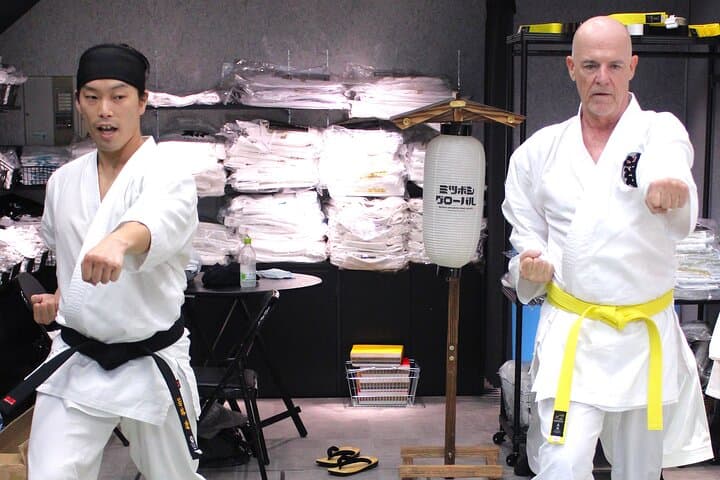
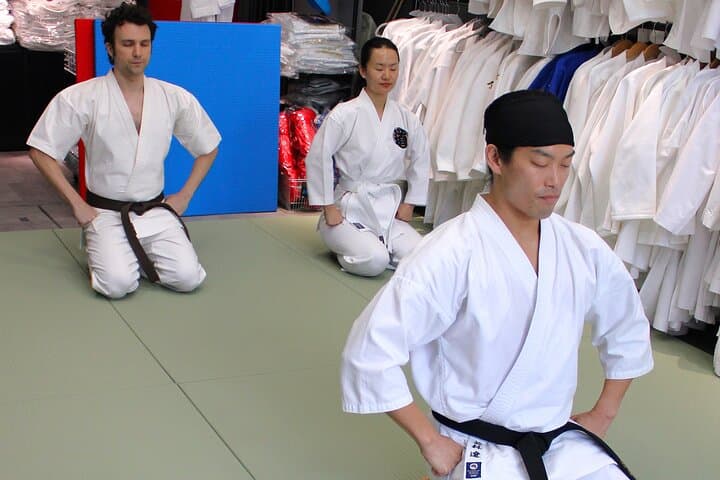
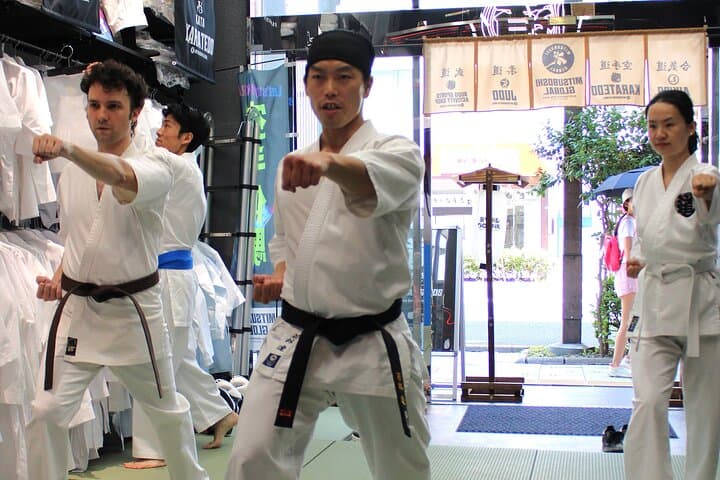
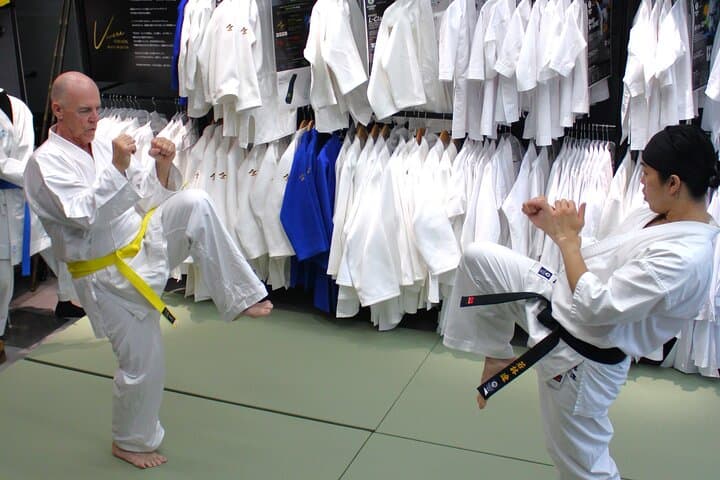
The room smells faintly of lacquered wood and sweat—footsteps hollow on a polished dojo floor as a small group lines up to bow. In central Tokyo an approachable Kyokushin class starts with breathing and slow, deliberate stretches, then moves into segmented punches, blocks and front kicks; the instructor demonstrates each technique with the economy of motion earned from competition.
The room smells faintly of lacquered wood and sweat—footsteps hollow on a polished dojo floor as a small group lines up to bow. In central Tokyo an approachable Kyokushin class starts with breathing and slow, deliberate stretches, then moves into segmented punches, blocks and front kicks; the instructor demonstrates each technique with the economy of motion earned from competition.
Karate began in Okinawa as a set of island self-defense practices and was systematized on the Japanese mainland in the 20th century. Kyokushin, founded by Masutatsu Oyama, is known for its emphasis on conditioning and realistic technique; this Tokyo session translates that lineage into a non-contact, beginner-friendly class taught by an experienced All-Japan level competitor.
Culturally, the session follows dojo etiquette—bowing, focused breathing and respect for partners—so newcomers get both physical training and a short primer in martial-arts culture. Practically, the lesson breaks moves into steps, adds partnered pad work and closes with safe, no-contact kumite drills for timing and distance.
Expect a medium-intensity workout: dynamic stretching, stance work, repetitive striking drills and basic defense patterns. Classes run about 90–120 minutes, capped at small groups for personal attention. Wear athletic clothing (or book the gi option), bring a towel and use public transport—Tokyo’s stations sit close to most dojos. If you have back, heart or pregnancy concerns, consult a physician first. For travelers wanting a compact, intense cultural workout, this session pairs authentic instruction with clear, practical coaching.