THE ADVENTURE COLLECTIVE® · Independent discovery and booking for outdoor travel

Join the Mastri Trabuccolanti on Molinella’s wooden fishing platform for a 50-minute, hands-on lesson in centuries-old Adriatic fishing. Turn winches, pull nets and share rustic snacks while learning why these structures defined coastal life on the Gargano.
Join the Mastri Trabuccolanti on Molinella’s wooden fishing platform for a 50-minute, hands-on lesson in centuries-old Adriatic fishing. Turn winches, pull nets and share rustic snacks while learning why these structures defined coastal life on the Gargano.
A wind off the Gargano pushes salt and spray across the wooden planks. On the Trabucco di Molinella, an arrangement of long arms, ropes and pulleys reaches into the Adriatic like a mechanical reed; the sea tests the rig and the fishermen answer with muscle memory honed across generations. Guests arrive not as spectators but as temporary crew—turning winches, hauling nets, feeling the subtle give of a catch as it rises through the water.
Verified experiences and guided adventures in the surrounding area.
Operated by Esperienza di pesca sul Trabucco · Vieste, Puglia
A wind off the Gargano pushes salt and spray across the wooden planks. On the Trabucco di Molinella, an arrangement of long arms, ropes and pulleys reaches into the Adriatic like a mechanical reed; the sea tests the rig and the fishermen answer with muscle memory honed across generations. Guests arrive not as spectators but as temporary crew—turning winches, hauling nets, feeling the subtle give of a catch as it rises through the water.
The trabucco (or trabocco) is less a platform than a living tool: a centuries-old coastal contraption born of necessity on this stretch of Puglia. Before engines and echo-sounders, communities along the Gargano coast engineered these wooden piers to trap schooling fish close to shore. Trabucco di Molinella retains that working logic and the stories—of families who read the sea by its color, of storms that rebuilt whole structures, of the quiet economy that linked shore and town.
Geology here is coastal karst—limestone cliffs worn into coves and headlands that funnel currents and concentrate fish. The trabucco sits where that current accelerates, and local fishermen—the Mastri Trabuccolanti—have adapted the design to these micro-currents. Culture remains tactile: the guide explains rigging terms in rough dialect, offers small bites of rustic pizza, taralli, olives and wine, and lets participants taste the rewards of their labor. The experience is intimate: groups are small and the tour lasts about 50 minutes, making it an excellent afternoon option before dinner in Vieste.
Practical matters are simple but important. Expect to stand on uneven wooden surfaces and get hands salty; non-slip shoes are a must. Morning light is calmest for photos and a gentler sea; afternoons can get breezeier. If you get seasick, sit upwind and focus on the horizon—the Mastri work fast and prioritise safety.
This is not sport fishing: it’s a cultural immersion. There are no motors, only levers, ropes and human coordination. Children can participate; most fitness levels are fine, though mobility limitations may make accessing the platform difficult. Weather can cancel tours—heavy seas or storms close the trabucco; the operator typically allows cancellation up to 24 hours before.
For travelers looking to connect with the Adriatic’s working past, Molinella’s trabucco is a rare, tactile lesson in low-tech sustainability—experience that blends a short, hands-on activity with a deeper sense of place. Bring a camera, steady shoes and curiosity; the sea will do the rest.
easy.
45–60 minutes.
Suitable for most fitness levels; requires standing and basic balance on wooden planks
The activity runs about 50 minutes, including demonstration, hands-on participation and a small refreshment.
No—guides show techniques and the Mastri Trabuccolanti supervise all handling of ropes and nets.
Yes—children and infants are allowed; expect to supervise small children closely on the platform.
Strong winds or rough seas can cancel the tour; the operator offers a full refund if canceled at least 24 hours prior.
Light snacks—rustic pizza, taralli, olives—and wine or soft drinks are included during the experience.
Access involves wooden planks and steps; those with limited mobility may find it difficult and should contact the operator in advance.
Trabucci are a centuries-old fishing technology on the Gargano, once central to local economies before mechanized fishing reshaped the coast.
The hands-on, non-motorized technique used on historic trabucchi is low-impact; visitors are asked to follow leave-no-trace practices to protect fragile coastal rock and marine habitats.
Esperienza di pesca sul Trabucco operates guided outdoor trips and adventures with an emphasis on safety, stewardship, and memorable experiences.
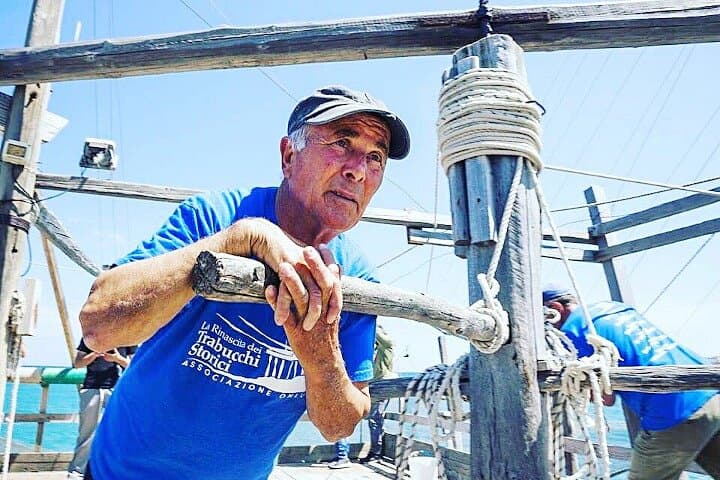
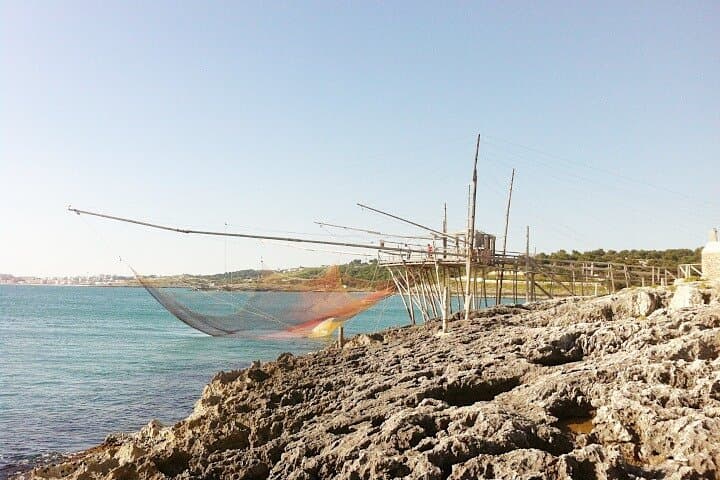
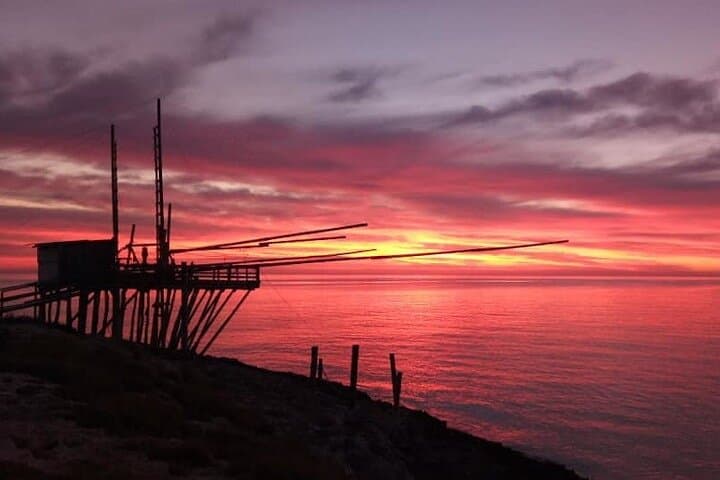
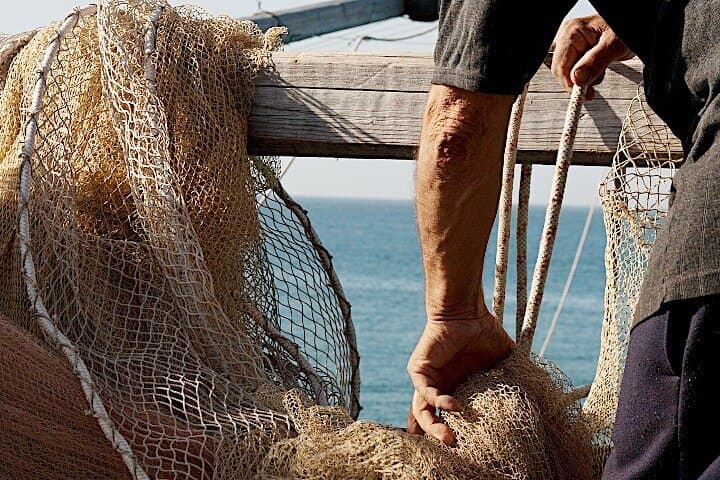
A wind off the Gargano pushes salt and spray across the wooden planks. On the Trabucco di Molinella, an arrangement of long arms, ropes and pulleys reaches into the Adriatic like a mechanical reed; the sea tests the rig and the fishermen answer with muscle memory honed across generations. Guests arrive not as spectators but as temporary crew—turning winches, hauling nets, feeling the subtle give of a catch as it rises through the water.
A wind off the Gargano pushes salt and spray across the wooden planks. On the Trabucco di Molinella, an arrangement of long arms, ropes and pulleys reaches into the Adriatic like a mechanical reed; the sea tests the rig and the fishermen answer with muscle memory honed across generations. Guests arrive not as spectators but as temporary crew—turning winches, hauling nets, feeling the subtle give of a catch as it rises through the water.
The trabucco (or trabocco) is less a platform than a living tool: a centuries-old coastal contraption born of necessity on this stretch of Puglia. Before engines and echo-sounders, communities along the Gargano coast engineered these wooden piers to trap schooling fish close to shore. Trabucco di Molinella retains that working logic and the stories—of families who read the sea by its color, of storms that rebuilt whole structures, of the quiet economy that linked shore and town.
Geology here is coastal karst—limestone cliffs worn into coves and headlands that funnel currents and concentrate fish. The trabucco sits where that current accelerates, and local fishermen—the Mastri Trabuccolanti—have adapted the design to these micro-currents. Culture remains tactile: the guide explains rigging terms in rough dialect, offers small bites of rustic pizza, taralli, olives and wine, and lets participants taste the rewards of their labor. The experience is intimate: groups are small and the tour lasts about 50 minutes, making it an excellent afternoon option before dinner in Vieste.
Practical matters are simple but important. Expect to stand on uneven wooden surfaces and get hands salty; non-slip shoes are a must. Morning light is calmest for photos and a gentler sea; afternoons can get breezeier. If you get seasick, sit upwind and focus on the horizon—the Mastri work fast and prioritise safety.
This is not sport fishing: it’s a cultural immersion. There are no motors, only levers, ropes and human coordination. Children can participate; most fitness levels are fine, though mobility limitations may make accessing the platform difficult. Weather can cancel tours—heavy seas or storms close the trabucco; the operator typically allows cancellation up to 24 hours before.
For travelers looking to connect with the Adriatic’s working past, Molinella’s trabucco is a rare, tactile lesson in low-tech sustainability—experience that blends a short, hands-on activity with a deeper sense of place. Bring a camera, steady shoes and curiosity; the sea will do the rest.