THE ADVENTURE COLLECTIVE® · Independent discovery and booking for outdoor travel

Experience Marrakech the traditional way: a one-hour horse-drawn carriage through iconic plazas and a relaxed visit to Menara Garden. This short cultural ride mixes gentle motion with historic sights—a compact, accessible way to see the city’s highlights.
Experience Marrakech the traditional way: a one-hour horse-drawn carriage through iconic plazas and a relaxed visit to Menara Garden. This short cultural ride mixes gentle motion with historic sights—a compact, accessible way to see the city’s highlights.
A late-afternoon sun paints the ochre city walls as a low-stepping carriage clops away from Jemaa el-Fnaa, the driver calling the route with the knowing cadence of a local guide. The carriage moves slowly past the Koutoubia’s minaret, through alleys where spice stalls scent the air, then out toward the open green of Menara Garden — a measured, elegant way to read Marrakech at walking pace without losing comfort.
Verified experiences and guided adventures in the surrounding area.
Operated by marrakech travel · Marrakech, Marrakech-Safi
A late-afternoon sun paints the ochre city walls as a low-stepping carriage clops away from Jemaa el-Fnaa, the driver calling the route with the knowing cadence of a local guide. The carriage moves slowly past the Koutoubia’s minaret, through alleys where spice stalls scent the air, then out toward the open green of Menara Garden — a measured, elegant way to read Marrakech at walking pace without losing comfort.
Marrakech’s public spaces reflect layers of history: Almoravid and Almohad foundations, Saadian-era palaces, and 19th-century expansions that shaped the city grid you’ll pass. Menara’s pavilion and reservoir date to the 12th century, set against the distant silhouette of the High Atlas; the flat, irrigated basin is as much engineered water-management system as it is a public park.
The ground under your wheels changes — cobbles in the medina, packed earth near the gardens — and the air takes on agricultural notes near olive groves where the Atlas Mountains seem to watch over the plain. Local culture is audible in the multilingual banter of guides and the calls from market vendors; drivers and garden keepers keep long-standing practical knowledge of routes, weather, and etiquette.
Practical guidance: book an operator who treats horses humanely and confirms pickup points in advance. Expect one hour of carriage time plus garden strolls; wear sturdy shoes for uneven surfaces and bring sun protection. Hydrate before and after the ride — Marrakech’s midday heat can surprise even brief outings — and allow time in your schedule to explore the medina on foot after the carriage drops you off.
easy.
3–5 hours.
Light activity: suitable for travelers who can manage short walks and brief standing periods.
The horse-drawn carriage portion is approximately one hour; the full experience with Menara Garden and transfers typically runs 3–5 hours depending on pickup and pace.
Yes—infants can ride but may need to sit on an adult’s lap; confirm infant seats or stroller access with the operator when booking.
Yes—most itineraries include free time to stroll the pavilion and pool area; expect packed-earth paths and some shade from olive trees.
Guides on this tour commonly speak French, English, and Arabic; verify language needs at booking if you require a different language.
Menara Garden dates to the 12th century under Almohad rule and was later enhanced as a royal orchard and irrigation reservoir; its pavilion and pool frame traditional water-management techniques.
Respect horse welfare by choosing licensed operators; Menara relies on managed irrigation—avoid littering and stick to paths to protect plantings.
marrakech travel operates guided outdoor trips and adventures with an emphasis on safety, stewardship, and memorable experiences.
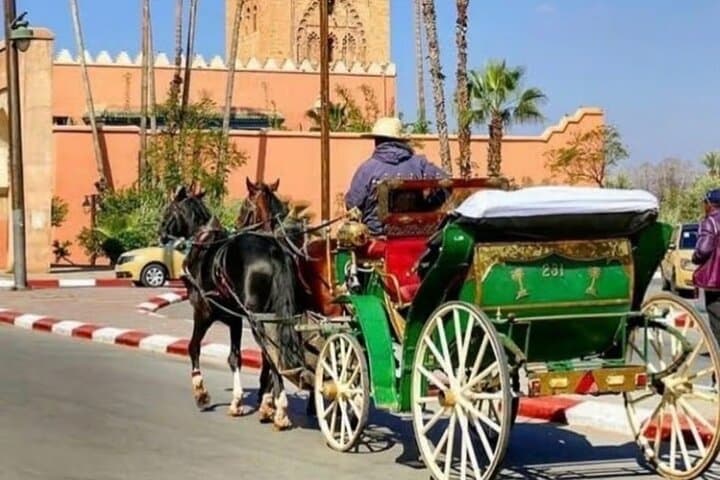
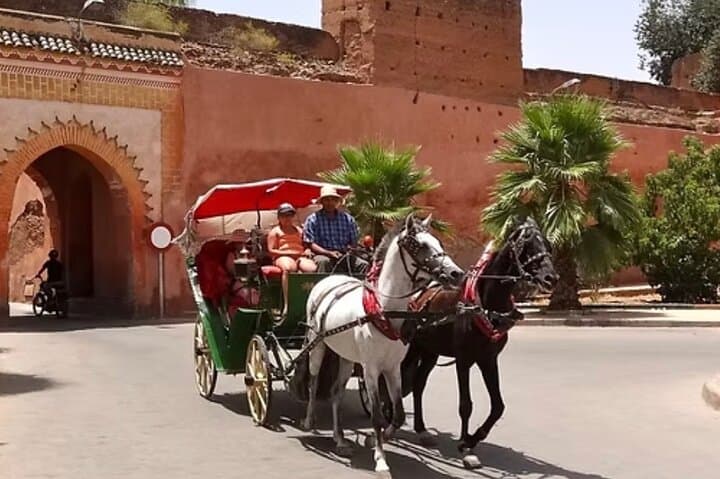
A late-afternoon sun paints the ochre city walls as a low-stepping carriage clops away from Jemaa el-Fnaa, the driver calling the route with the knowing cadence of a local guide. The carriage moves slowly past the Koutoubia’s minaret, through alleys where spice stalls scent the air, then out toward the open green of Menara Garden — a measured, elegant way to read Marrakech at walking pace without losing comfort.
A late-afternoon sun paints the ochre city walls as a low-stepping carriage clops away from Jemaa el-Fnaa, the driver calling the route with the knowing cadence of a local guide. The carriage moves slowly past the Koutoubia’s minaret, through alleys where spice stalls scent the air, then out toward the open green of Menara Garden — a measured, elegant way to read Marrakech at walking pace without losing comfort.
Marrakech’s public spaces reflect layers of history: Almoravid and Almohad foundations, Saadian-era palaces, and 19th-century expansions that shaped the city grid you’ll pass. Menara’s pavilion and reservoir date to the 12th century, set against the distant silhouette of the High Atlas; the flat, irrigated basin is as much engineered water-management system as it is a public park.
The ground under your wheels changes — cobbles in the medina, packed earth near the gardens — and the air takes on agricultural notes near olive groves where the Atlas Mountains seem to watch over the plain. Local culture is audible in the multilingual banter of guides and the calls from market vendors; drivers and garden keepers keep long-standing practical knowledge of routes, weather, and etiquette.
Practical guidance: book an operator who treats horses humanely and confirms pickup points in advance. Expect one hour of carriage time plus garden strolls; wear sturdy shoes for uneven surfaces and bring sun protection. Hydrate before and after the ride — Marrakech’s midday heat can surprise even brief outings — and allow time in your schedule to explore the medina on foot after the carriage drops you off.