THE ADVENTURE COLLECTIVE® · Independent discovery and booking for outdoor travel

Witness the rolling tide of wildebeest across Kenya’s most famous reserves on a seven-day safari that spans Amboseli, Masai Mara and Lake Nakuru. Expect river crossings, flamingo-carpeted lakes and early-morning game drives guided by local experts.
Witness the rolling tide of wildebeest across Kenya’s most famous reserves on a seven-day safari that spans Amboseli, Masai Mara and Lake Nakuru. Expect river crossings, flamingo-carpeted lakes and early-morning game drives guided by local experts.
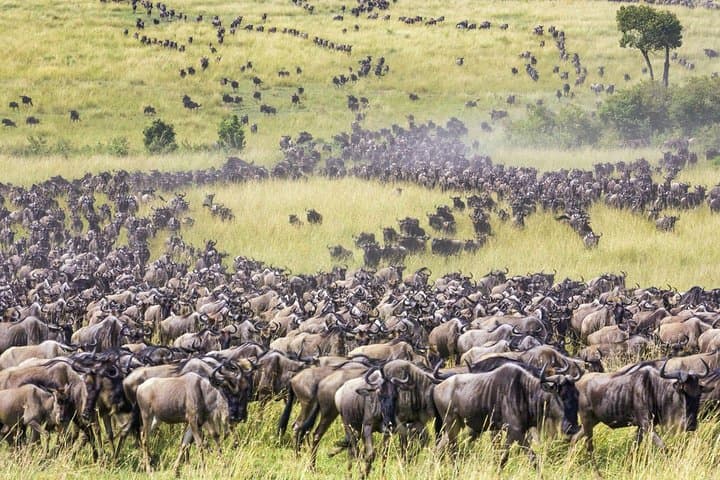
Dawn breaks over wide, serrated grass, and the horizon is a moving wall—thousands of wildebeest pushing toward the Mara River as if pulled by a single, ancient will.
Verified experiences and guided adventures in the surrounding area.
Operated by A Day in Africa Tours and Safaris · Narok, Narok County
Dawn breaks over wide, serrated grass, and the horizon is a moving wall—thousands of wildebeest pushing toward the Mara River as if pulled by a single, ancient will.
This seven-day safari threads Amboseli’s open plains, the river-streaked Masai Mara and the alkaline shores of Lake Nakuru. Geology sets the stage: the Rift Valley’s tilt creates the shallow lakes and seasonal rivers that dictate animal pathways. Culturally the land is Maasai country—pastoralists whose lives have long been entwined with migration routes and predator patterns.
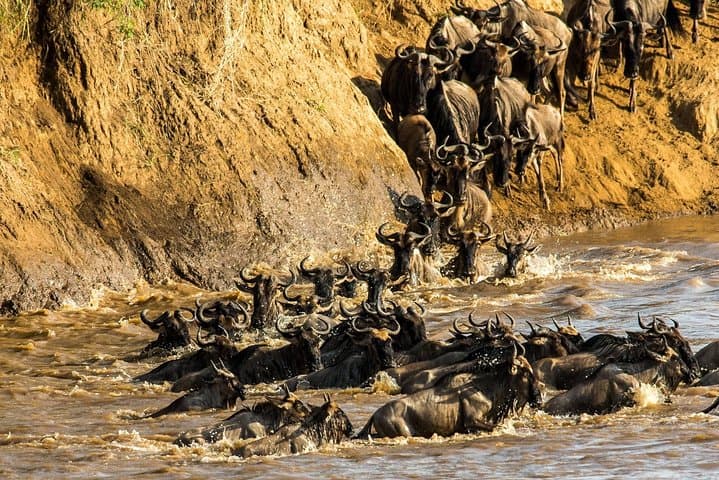
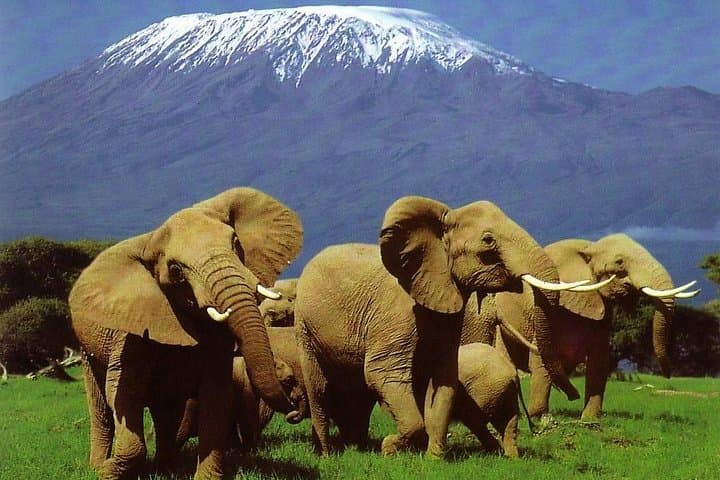
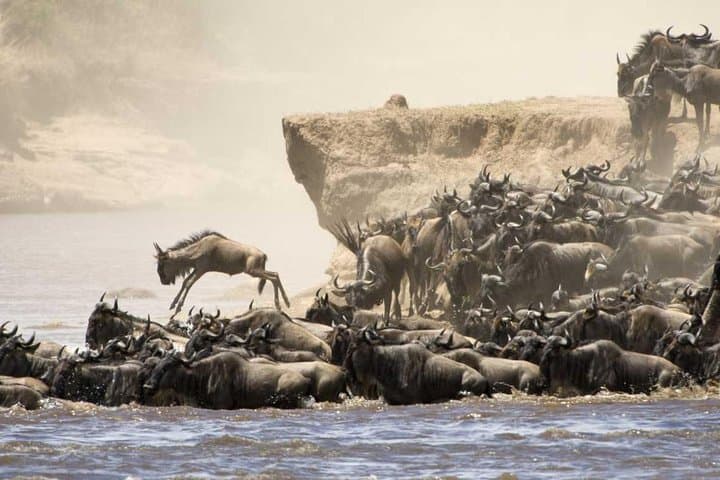
Amboseli delivers iconic Kilimanjaro-backed elephant sightings and broad savanna mosaics; Masai Mara offers the river crossings and big-cat concentrations that define the migration narrative; Lake Nakuru’s soda waters draw vast flocks of flamingos and protect a remnant population of black rhino. Expect game drives at first light and late afternoon, an emphasis on vehicle-based viewing, and nights in simple lodges or tented camps—this itinerary includes six nights of accommodation across parks.
Practicalities are straightforward but firm: travel by 4x4 with an experienced guide, carry water and sun protection, and be ready for long stretches in rough roads. Morning drives are the most productive; bring binoculars and a telephoto lens if you want close-up images. Follow your guide’s distance rules around wildlife—rivers and herds can change suddenly, and safety depends on respect and patience.
This trip is as much about timing and terrain as it is about animals—the migration is a seasonal, kinetic landscape, and when the herds move, the whole ecosystem moves with them.
moderate.
7 days.
Moderate fitness: comfortable sitting for extended game drives and short walks; ability to handle bumpy roads and occasional uneven campsites.
The Masai Mara often hosts large herds from July through October when animals cross from the Serengeti—timing varies each year with rains and grazing patterns.
Consult a travel health clinic for recommended vaccines and malaria prophylaxis; carry a basic first-aid kit and any personal medications.
Guides maintain safe distances based on species and behavior; you should remain inside vehicles unless explicitly told otherwise for designated viewing areas.
Tipping is customary; typical guidance is to tip guides and drivers at the end of the trip and to leave small amounts for lodge staff, adjusted for service and group size.
The migration follows routes shaped over millennia by the Rift Valley’s topography and by pastoralist grazing patterns; Maasai communities have lived alongside these routes for generations.
Conservation here focuses on habitat connectivity and anti-poaching; choose operators that support community conservancies and responsible wildlife management.
A Day in Africa Tours and Safaris operates guided outdoor trips and adventures with an emphasis on safety, stewardship, and memorable experiences.
Dawn breaks over wide, serrated grass, and the horizon is a moving wall—thousands of wildebeest pushing toward the Mara River as if pulled by a single, ancient will.
Dawn breaks over wide, serrated grass, and the horizon is a moving wall—thousands of wildebeest pushing toward the Mara River as if pulled by a single, ancient will.
This seven-day safari threads Amboseli’s open plains, the river-streaked Masai Mara and the alkaline shores of Lake Nakuru. Geology sets the stage: the Rift Valley’s tilt creates the shallow lakes and seasonal rivers that dictate animal pathways. Culturally the land is Maasai country—pastoralists whose lives have long been entwined with migration routes and predator patterns.
Amboseli delivers iconic Kilimanjaro-backed elephant sightings and broad savanna mosaics; Masai Mara offers the river crossings and big-cat concentrations that define the migration narrative; Lake Nakuru’s soda waters draw vast flocks of flamingos and protect a remnant population of black rhino. Expect game drives at first light and late afternoon, an emphasis on vehicle-based viewing, and nights in simple lodges or tented camps—this itinerary includes six nights of accommodation across parks.
Practicalities are straightforward but firm: travel by 4x4 with an experienced guide, carry water and sun protection, and be ready for long stretches in rough roads. Morning drives are the most productive; bring binoculars and a telephoto lens if you want close-up images. Follow your guide’s distance rules around wildlife—rivers and herds can change suddenly, and safety depends on respect and patience.
This trip is as much about timing and terrain as it is about animals—the migration is a seasonal, kinetic landscape, and when the herds move, the whole ecosystem moves with them.