THE ADVENTURE COLLECTIVE® · Independent discovery and booking for outdoor travel

Cycle through rice paddies to Tra Que Vegetable Village, learn traditional farming techniques, and cook the dishes you harvest. This hands-on half-day tour pairs easy riding with practical farmwork and a local cooking class.
Cycle through rice paddies to Tra Que Vegetable Village, learn traditional farming techniques, and cook the dishes you harvest. This hands-on half-day tour pairs easy riding with practical farmwork and a local cooking class.
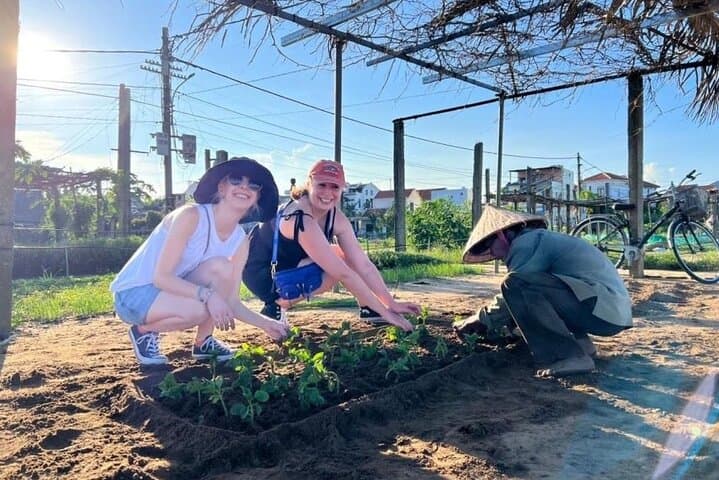
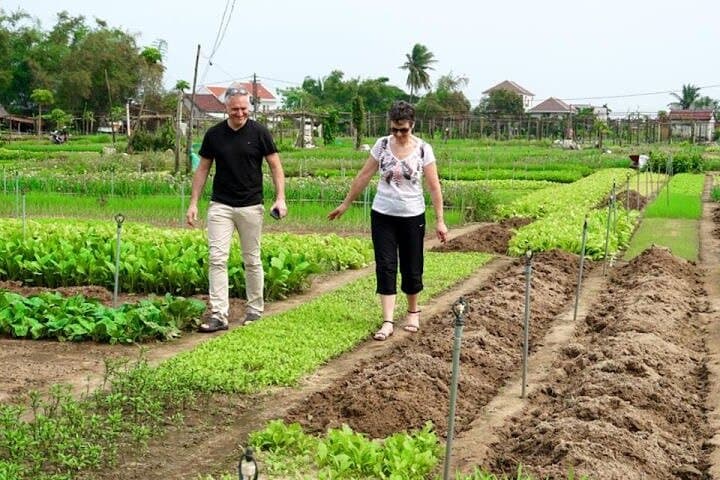
A morning in Tra Que begins on two wheels: bicycles hum across flat lanes, rice paddies opening like pages on either side, and the river-scented air pushes you forward. Riders pass farmers shaping ridges and tossing algae fertilizer while light falls across small herb plots that seem to breathe. The village itself moves with purpose—hands in the soil, baskets of mint and Vietnamese coriander ready for plates.
Verified experiences and guided adventures in the surrounding area.
Operated by DN Tour · Hoi An, Quang Nam
A morning in Tra Que begins on two wheels: bicycles hum across flat lanes, rice paddies opening like pages on either side, and the river-scented air pushes you forward. Riders pass farmers shaping ridges and tossing algae fertilizer while light falls across small herb plots that seem to breathe. The village itself moves with purpose—hands in the soil, baskets of mint and Vietnamese coriander ready for plates.
Tra Que is a living kitchen in Quang Nam province, famous for a centuries-old intensive gardening tradition that supplies Hoi An’s restaurants. The soil here is alluvial and worked with low-tech care: compost, seaweed fertilizer and close crop rotation—techniques that keep beds productive without heavy machinery. Culturally, the village offers a direct line to local foodways; the cooking class centers on regional dishes like Banh Xeo and fresh spring rolls, rooted in ingredients grown on site.
Practical guidance: the full experience runs about four hours—roughly one hour of cycling each way and two hours on the farm and in class. Terrain is flat packed earth and small paved lanes, so basic cycling skills suffice. Expect standing, bending and simple hand-labor when helping with fertilizing and raking; wear quick-dry clothes and closed-toe shoes.
Timing matters: mornings are cooler and insect activity is lower. Bring sun protection, a refillable water bottle and respect harvesting rhythms—this is a working village, not a theme farm. The payoff is immediate: a plate composed of ingredients you helped raise, cook and share.
moderate.
3–4 hours.
Suitable for travelers with moderate fitness who can pedal on flat rural roads and stand/bend during farm work.
The ride is about 6–8 km each way over flat, low-traffic lanes; it’s gentle but requires basic balance and comfort on a bicycle.
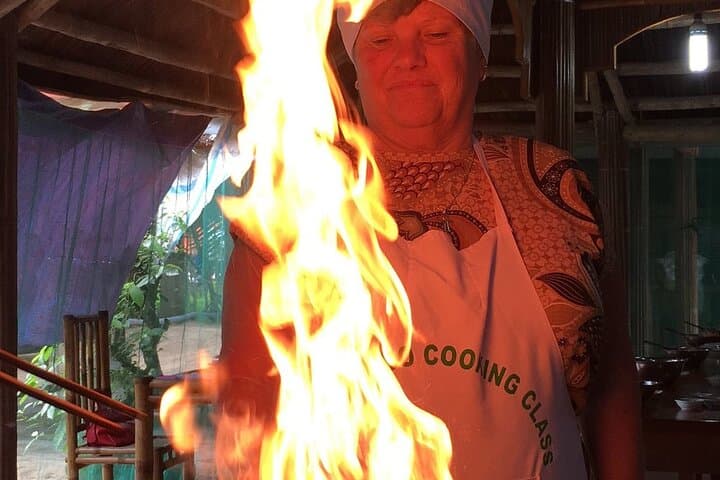
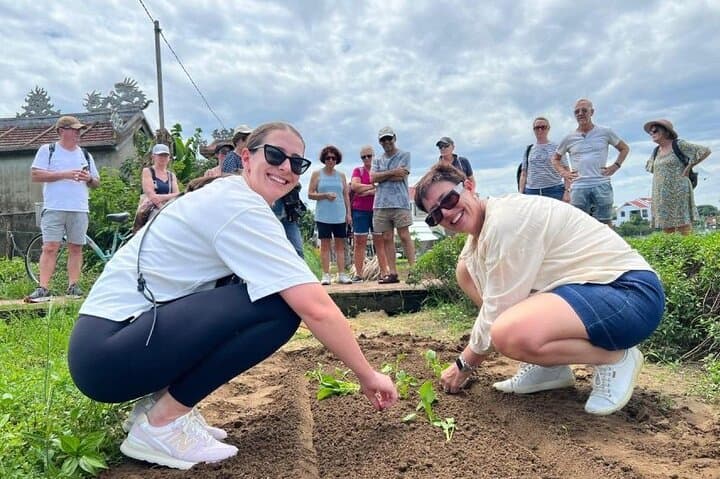
Yes—guests help fertilize, rake and pick produce and then prepare several traditional dishes under a local chef’s guidance before eating what they make.
The tour typically includes hotel pickup in Hoi An; confirm your pickup point when booking and provide full names and pickup details.
Children can join but caregivers should note some manual farm tasks; travelers with serious back or mobility problems should avoid strenuous bending or prolonged standing.
Tra Que’s intensive small-plot agriculture dates back generations and helped supply Hoi An’s market-town cuisine through traditional, low-mechanization methods.
The village emphasizes organic and seaweed-based fertilizers to reduce chemical runoff; visitors are encouraged to minimize waste and follow the farmers’ guidance to avoid trampling beds.
DN Tour operates guided outdoor trips and adventures with an emphasis on safety, stewardship, and memorable experiences.
A morning in Tra Que begins on two wheels: bicycles hum across flat lanes, rice paddies opening like pages on either side, and the river-scented air pushes you forward. Riders pass farmers shaping ridges and tossing algae fertilizer while light falls across small herb plots that seem to breathe. The village itself moves with purpose—hands in the soil, baskets of mint and Vietnamese coriander ready for plates.
A morning in Tra Que begins on two wheels: bicycles hum across flat lanes, rice paddies opening like pages on either side, and the river-scented air pushes you forward. Riders pass farmers shaping ridges and tossing algae fertilizer while light falls across small herb plots that seem to breathe. The village itself moves with purpose—hands in the soil, baskets of mint and Vietnamese coriander ready for plates.
Tra Que is a living kitchen in Quang Nam province, famous for a centuries-old intensive gardening tradition that supplies Hoi An’s restaurants. The soil here is alluvial and worked with low-tech care: compost, seaweed fertilizer and close crop rotation—techniques that keep beds productive without heavy machinery. Culturally, the village offers a direct line to local foodways; the cooking class centers on regional dishes like Banh Xeo and fresh spring rolls, rooted in ingredients grown on site.
Practical guidance: the full experience runs about four hours—roughly one hour of cycling each way and two hours on the farm and in class. Terrain is flat packed earth and small paved lanes, so basic cycling skills suffice. Expect standing, bending and simple hand-labor when helping with fertilizing and raking; wear quick-dry clothes and closed-toe shoes.
Timing matters: mornings are cooler and insect activity is lower. Bring sun protection, a refillable water bottle and respect harvesting rhythms—this is a working village, not a theme farm. The payoff is immediate: a plate composed of ingredients you helped raise, cook and share.