THE ADVENTURE COLLECTIVE® · Independent discovery and booking for outdoor travel

Spend a morning harvesting herbs and learning to cook central Vietnamese classics in Tra Que Village, a working community garden just outside Hoi An. This hands-on tour blends farming techniques, local lore, and a full meal prepared with ingredients you help pick.
Spend a morning harvesting herbs and learning to cook central Vietnamese classics in Tra Que Village, a working community garden just outside Hoi An. This hands-on tour blends farming techniques, local lore, and a full meal prepared with ingredients you help pick.
The morning light in Tra Que lays flat across shallow beds of mint, coriander and watercress, and the village is already at work — hands turning soil, bicycles creaking toward the river, and the scent of fresh herbs cutting clean through humid air.
Verified experiences and guided adventures in the surrounding area.
Operated by Local Tours PU LUONG · Hoi An, Quang Nam
The morning light in Tra Que lays flat across shallow beds of mint, coriander and watercress, and the village is already at work — hands turning soil, bicycles creaking toward the river, and the scent of fresh herbs cutting clean through humid air.
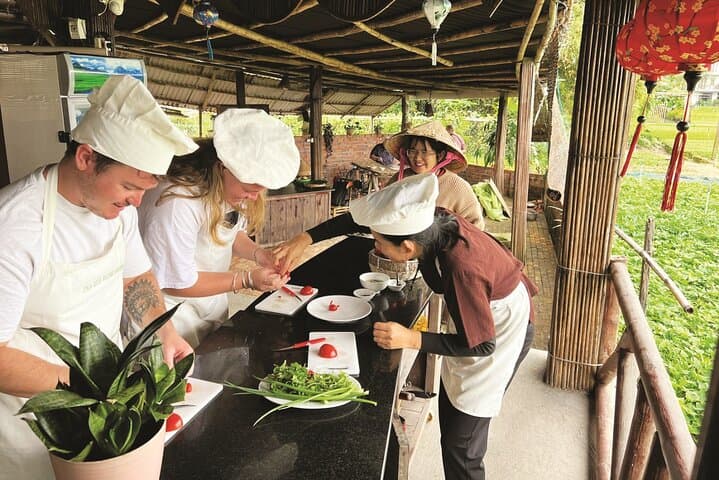
This working vegetable garden has supplied Hoi An for generations; small plots sit on alluvial soils deposited by the Thu Bon River, and farmers still use local seaweed and compost techniques that limit synthetic inputs. The class pairs a short village tour with hands-on planting and harvesting, a practical primer in Vietnamese herb lore followed by a cooking session where participants learn to make banh xeo and fresh spring rolls under a local chef’s guidance.
Culturally, Tra Que reflects Vietnam’s riverland agriculture: cooperative plots, family-run kitchens, and an economy built around seasonal vegetables. Geologically the area is flat floodplain, so expect soft, damp ground and a low-lying landscape shaped by tidal influence.
Practical guidance: the program runs about five hours, usually in the cooler morning; bring sun protection and slip-resistant shoes for muddy furrows. The transfer is by bicycle from Hoi An center, so light mobility is required. Wear clothes you don’t mind getting earthy, pack insect repellent, and hydrate — herbal tea is often served but water is recommended mid-activity.
For travelers seeking a grounded cultural exchange, this class combines tactile farming, straightforward cooking technique, and a chance to support smallholder agriculture while learning flavors that define central Vietnamese cuisine.
easy.
4–5 hours.
Suitable for most fitness levels; requires short bicycle rides and light bending/squatting for planting and cooking.
The tour is about five hours, typically including a short bicycle transfer, farming activities, a cooking class, and a meal.
The program is family-friendly but involves biking and bending; infants should sit on laps and anyone with mobility or spinal issues should check with the operator.
Yes — ingredients are harvested from the village beds and used in the cooking class; a full meal and welcome drink are included.
Yes — the class includes an English-speaking guide or local chef to demonstrate techniques and interpret cultural context.
Tra Que has supplied Hoi An with vegetables for centuries; villagers maintain traditional seaweed-and-compost fertilization methods adapted to the floodplain.
Tours emphasize low-impact practices and support local producers; stick to paths, avoid single-use plastics, and buy from village stalls to directly fund sustainable livelihoods.
Local Tours PU LUONG operates guided outdoor trips and adventures with an emphasis on safety, stewardship, and memorable experiences.


The morning light in Tra Que lays flat across shallow beds of mint, coriander and watercress, and the village is already at work — hands turning soil, bicycles creaking toward the river, and the scent of fresh herbs cutting clean through humid air.
The morning light in Tra Que lays flat across shallow beds of mint, coriander and watercress, and the village is already at work — hands turning soil, bicycles creaking toward the river, and the scent of fresh herbs cutting clean through humid air.
This working vegetable garden has supplied Hoi An for generations; small plots sit on alluvial soils deposited by the Thu Bon River, and farmers still use local seaweed and compost techniques that limit synthetic inputs. The class pairs a short village tour with hands-on planting and harvesting, a practical primer in Vietnamese herb lore followed by a cooking session where participants learn to make banh xeo and fresh spring rolls under a local chef’s guidance.
Culturally, Tra Que reflects Vietnam’s riverland agriculture: cooperative plots, family-run kitchens, and an economy built around seasonal vegetables. Geologically the area is flat floodplain, so expect soft, damp ground and a low-lying landscape shaped by tidal influence.
Practical guidance: the program runs about five hours, usually in the cooler morning; bring sun protection and slip-resistant shoes for muddy furrows. The transfer is by bicycle from Hoi An center, so light mobility is required. Wear clothes you don’t mind getting earthy, pack insect repellent, and hydrate — herbal tea is often served but water is recommended mid-activity.
For travelers seeking a grounded cultural exchange, this class combines tactile farming, straightforward cooking technique, and a chance to support smallholder agriculture while learning flavors that define central Vietnamese cuisine.