THE ADVENTURE COLLECTIVE® · Independent discovery and booking for outdoor travel

Bike from Hoi An to Tra Que Village for a hands-on farm day: help prepare soil with local farmers, pick herbs, then learn to make Tam Huu spring rolls and Banh Xeo with a host family. This half-day tour mixes gentle cycling, practical farming tasks, and a home-cooked meal.
Bike from Hoi An to Tra Que Village for a hands-on farm day: help prepare soil with local farmers, pick herbs, then learn to make Tam Huu spring rolls and Banh Xeo with a host family. This half-day tour mixes gentle cycling, practical farming tasks, and a home-cooked meal.
A cool morning wind follows the bicycle as you pedal out of Hoi An toward Tra Que Village, fields opening into low, emerald plots fed by the Thu Bon River. Local farmers move with practiced rhythm—raking, pressing algae into the soil, and pointing out herbs that scent the air. The day begins on two wheels and quickly shifts to hands in the earth.
Verified experiences and guided adventures in the surrounding area.
Operated by Hoi An Express Travel · Hoi An, Quang Nam
A cool morning wind follows the bicycle as you pedal out of Hoi An toward Tra Que Village, fields opening into low, emerald plots fed by the Thu Bon River. Local farmers move with practiced rhythm—raking, pressing algae into the soil, and pointing out herbs that scent the air. The day begins on two wheels and quickly shifts to hands in the earth.
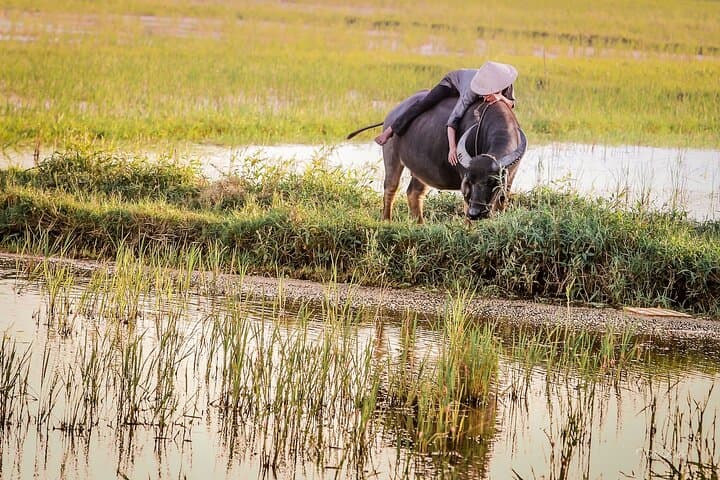
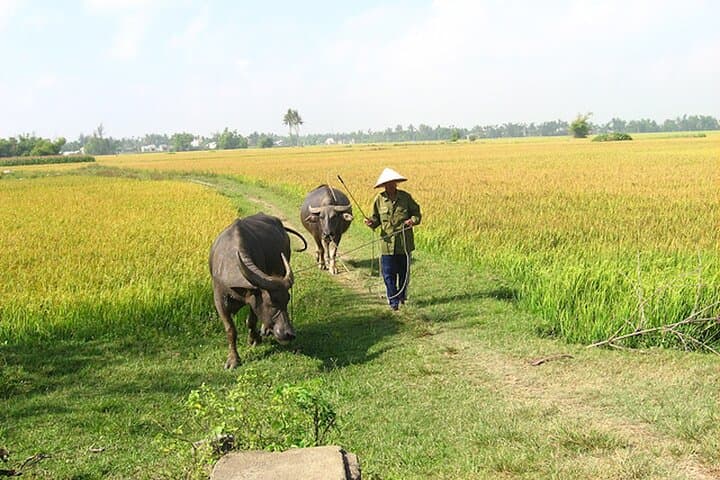
Tra Que is a living agricultural neighborhood renowned for its herbal vegetables and long practice of using lake algae as organic fertilizer. The village sits on a flat river plain with rich alluvial loam that supports tightly planted beds of mint, cilantro, and others used in central Vietnamese cooking and traditional medicine. Culturally, farming here is communal: neighbors share techniques and meals, and recipes—like Tam Huu spring rolls and Banh Xeo pancakes—reflect coastal Central Vietnam’s emphasis on fresh seafood and herbs.
Expect a gentle, family-focused program: a short scenic ride on low-traffic rural lanes, a guided tour of beds, hands-on raking, sowing or picking, then a cooking session with a host family. Terrain is flat with minimal elevation gain; total time is about four hours. Bring sun protection, comfortable shoes that can get dirty, and a sense of curiosity—most activities are low-impact but tactile.
Practical tip: schedule mornings to avoid afternoon heat and heavier rains; the experience is welcoming to beginners and useful for travelers who want a direct connection between field and plate.
easy.
3–4 hours.
Suitable for all fitness levels; requires short, easy cycling on flat roads and light agricultural tasks that involve standing and bending.
The ride is short—typically 5–7 km from Hoi An city center on flat, low-traffic roads and takes about 20–30 minutes depending on stops.
Yes; tasks are low-impact and guides adapt activities for different ages and abilities, though participants should be able to stand and walk short distances.
A light meal and the cooking session are included; inform the operator of allergies or dietary restrictions during booking so recipes can be adjusted.
The operator may cancel or reschedule for heavy rain; light rain may still allow activities with minor adjustments—check the cancellation policy for refunds.
Tra Que has practiced vegetable cultivation for generations, using local algae as organic fertilizer and supplying Hoi An’s markets with herbs used in regional cooking and medicine.
Small-scale organic practices and limited visitor numbers help minimize impact; visitors should avoid single-use plastics and follow host guidance to protect beds and waterways.
Hoi An Express Travel operates guided outdoor trips and adventures with an emphasis on safety, stewardship, and memorable experiences.
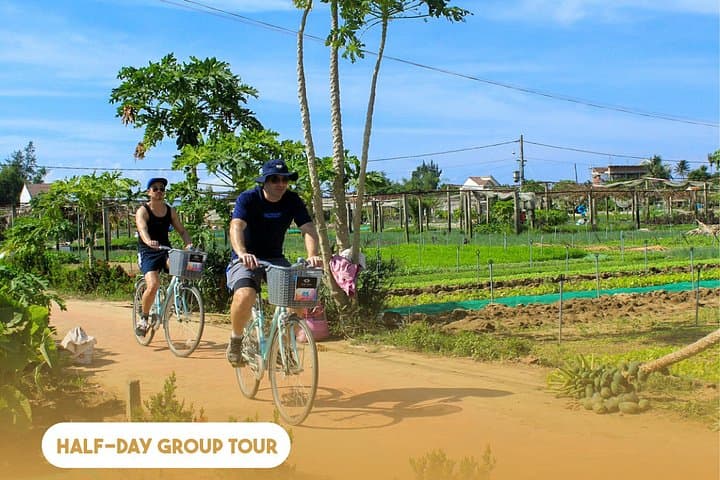
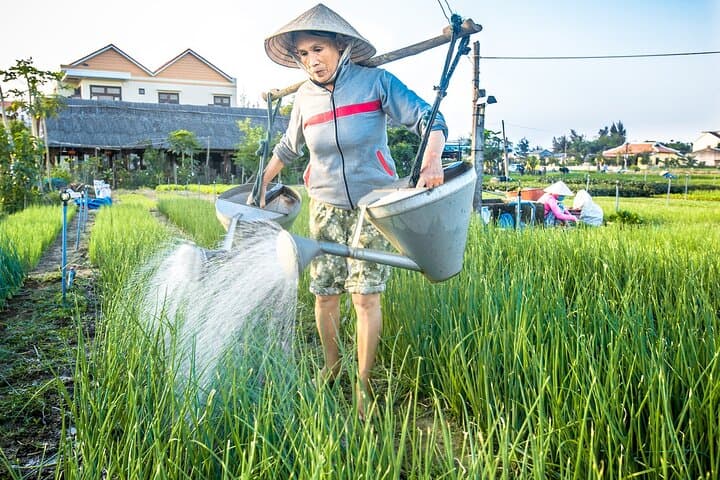
A cool morning wind follows the bicycle as you pedal out of Hoi An toward Tra Que Village, fields opening into low, emerald plots fed by the Thu Bon River. Local farmers move with practiced rhythm—raking, pressing algae into the soil, and pointing out herbs that scent the air. The day begins on two wheels and quickly shifts to hands in the earth.
A cool morning wind follows the bicycle as you pedal out of Hoi An toward Tra Que Village, fields opening into low, emerald plots fed by the Thu Bon River. Local farmers move with practiced rhythm—raking, pressing algae into the soil, and pointing out herbs that scent the air. The day begins on two wheels and quickly shifts to hands in the earth.
Tra Que is a living agricultural neighborhood renowned for its herbal vegetables and long practice of using lake algae as organic fertilizer. The village sits on a flat river plain with rich alluvial loam that supports tightly planted beds of mint, cilantro, and others used in central Vietnamese cooking and traditional medicine. Culturally, farming here is communal: neighbors share techniques and meals, and recipes—like Tam Huu spring rolls and Banh Xeo pancakes—reflect coastal Central Vietnam’s emphasis on fresh seafood and herbs.
Expect a gentle, family-focused program: a short scenic ride on low-traffic rural lanes, a guided tour of beds, hands-on raking, sowing or picking, then a cooking session with a host family. Terrain is flat with minimal elevation gain; total time is about four hours. Bring sun protection, comfortable shoes that can get dirty, and a sense of curiosity—most activities are low-impact but tactile.
Practical tip: schedule mornings to avoid afternoon heat and heavier rains; the experience is welcoming to beginners and useful for travelers who want a direct connection between field and plate.