THE ADVENTURE COLLECTIVE® · Independent discovery and booking for outdoor travel

Push through terraced valleys and wind-swept ridges to reach Jebel Toubkal, North Africa’s highest summit, on a focused two-day climb. This Express itinerary pairs a refuge overnight with a long summit day—best for fit hikers comfortable with altitude and long mountain days.
Push through terraced valleys and wind-swept ridges to reach Jebel Toubkal, North Africa’s highest summit, on a focused two-day climb. This Express itinerary pairs a refuge overnight with a long summit day—best for fit hikers comfortable with altitude and long mountain days.
You crest a dry ridge and the high plain opens—rock, stunted scrub and a wind that seems to push you forward. Below, the Imlil valley drops away in bands of irrigated terraces; above, a broad shoulder of scree leads toward a jagged summit that grips the sky. On the Toubkal Express, that summit is the goal: Jebel Toubkal (4,167 m), the loftiest point in the Atlas and in North Africa.
Verified experiences and guided adventures in the surrounding area.
Operated by View Morocco - DMC Adventure Travel Company · Imlil, Marrakech-Safi
You crest a dry ridge and the high plain opens—rock, stunted scrub and a wind that seems to push you forward. Below, the Imlil valley drops away in bands of irrigated terraces; above, a broad shoulder of scree leads toward a jagged summit that grips the sky. On the Toubkal Express, that summit is the goal: Jebel Toubkal (4,167 m), the loftiest point in the Atlas and in North Africa.
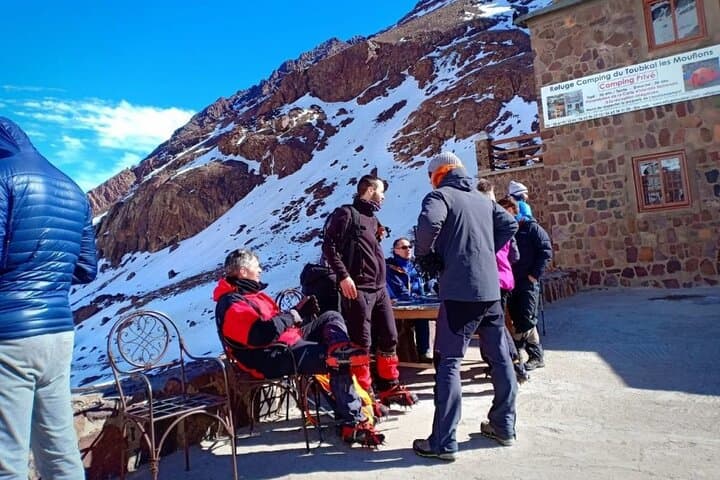
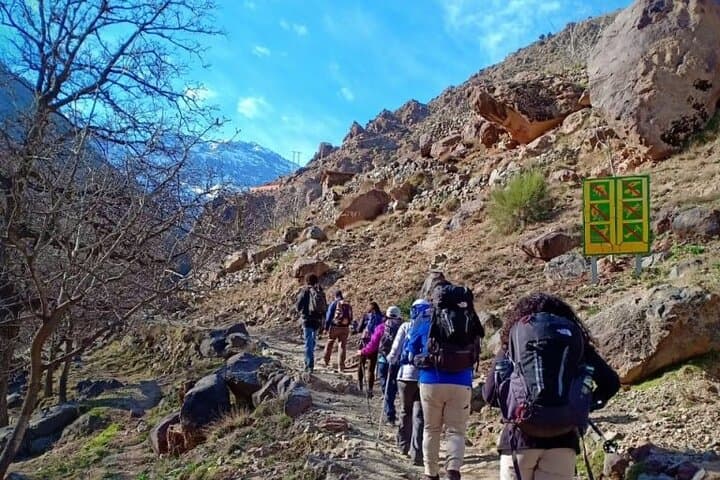
The route follows ancient mule tracks and modern gullies carved into volcanic and metamorphic rock, passing Sidi Chamharouch, a small village built around a saint's shrine and a historic stopping point for mountain travelers. The refuge at 3,210 m sits where pastoral life gives way to windswept alpine stone; shepherds and their goats are a constant, humanizing the stark geology. From the summit the panorama stretches north to the Haouz plain and south toward the arid valleys that lead to Ouarzazate, a reminder of the Atlas's role as a climatic divide.
Practical details: the itinerary is two days with one night in the Neltner refuge, 5–6 hours approach on day one and a long 9-hour summit day with 1,050 m ascent the second day. Expect rocky trails, steep switchbacks and sections of loose scree; no technical climbing is required but altitude and endurance matter. Bring layered clothing, sturdy boots, water and snacks for long stretches, and plan for early starts to avoid afternoon wind. Porters carry bags to the refuge but be ready to shoulder a daypack. Best timing is spring or autumn for stable weather; acclimatize in Marrakech or Imlil if you’re sensitive to altitude.
challenging.
2 days.
Good to high level of aerobic fitness; able to sustain 6–9 hours of mountain hiking with elevation gain at altitude
No — the standard route involves steep hiking and some scrambling on loose rock but no ropes or technical climbing equipment.
Yes — the itinerary gains altitude quickly; spending a night in Imlil and moving steadily reduces the risk of altitude sickness.
You stay in the mountain refuge (Neltner) with basic dormitory-style bunks and shared facilities; meals are simple, hearty Moroccan fare and some meals are included.
Yes — the tour uses local porters to carry heavier bags to the refuge; you should still carry a daypack with essentials for the summit day.
The Atlas Mountains have long been a corridor of Berber (Amazigh) communities; Imlil has served as a traditional mule and pilgrimage stop linking mountain pastures to Marrakech.
Toubkal National Park sees heavy seasonal use—stick to marked trails, pack out waste, and support local guiding services that employ porters and respect grazing areas.
View Morocco - DMC Adventure Travel Company operates guided outdoor trips and adventures with an emphasis on safety, stewardship, and memorable experiences.
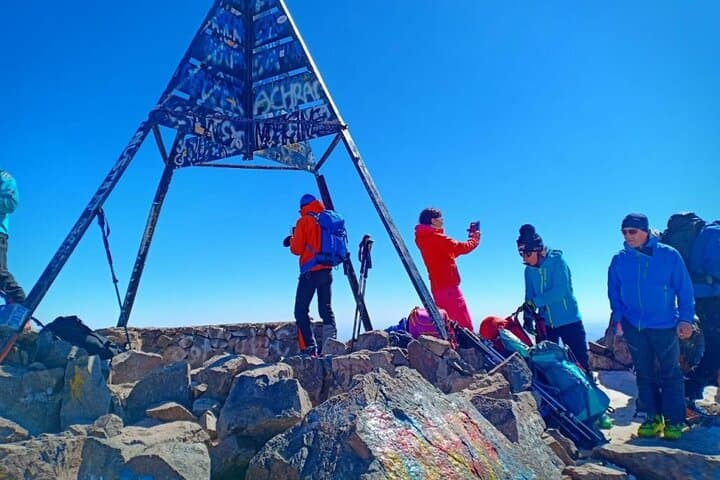
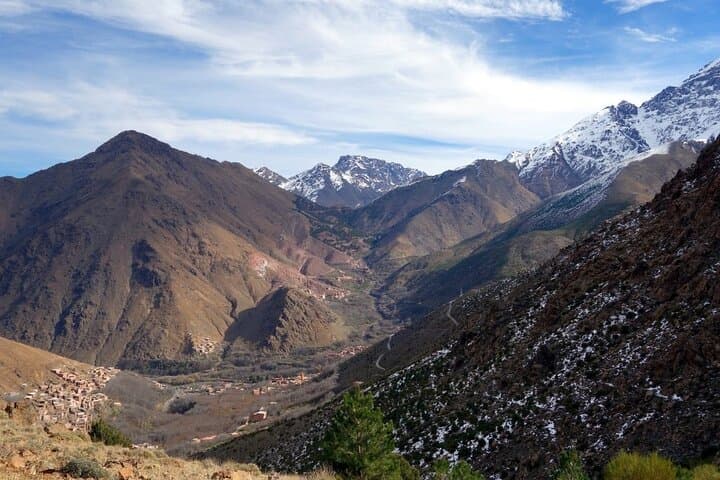
You crest a dry ridge and the high plain opens—rock, stunted scrub and a wind that seems to push you forward. Below, the Imlil valley drops away in bands of irrigated terraces; above, a broad shoulder of scree leads toward a jagged summit that grips the sky. On the Toubkal Express, that summit is the goal: Jebel Toubkal (4,167 m), the loftiest point in the Atlas and in North Africa.
You crest a dry ridge and the high plain opens—rock, stunted scrub and a wind that seems to push you forward. Below, the Imlil valley drops away in bands of irrigated terraces; above, a broad shoulder of scree leads toward a jagged summit that grips the sky. On the Toubkal Express, that summit is the goal: Jebel Toubkal (4,167 m), the loftiest point in the Atlas and in North Africa.
The route follows ancient mule tracks and modern gullies carved into volcanic and metamorphic rock, passing Sidi Chamharouch, a small village built around a saint's shrine and a historic stopping point for mountain travelers. The refuge at 3,210 m sits where pastoral life gives way to windswept alpine stone; shepherds and their goats are a constant, humanizing the stark geology. From the summit the panorama stretches north to the Haouz plain and south toward the arid valleys that lead to Ouarzazate, a reminder of the Atlas's role as a climatic divide.
Practical details: the itinerary is two days with one night in the Neltner refuge, 5–6 hours approach on day one and a long 9-hour summit day with 1,050 m ascent the second day. Expect rocky trails, steep switchbacks and sections of loose scree; no technical climbing is required but altitude and endurance matter. Bring layered clothing, sturdy boots, water and snacks for long stretches, and plan for early starts to avoid afternoon wind. Porters carry bags to the refuge but be ready to shoulder a daypack. Best timing is spring or autumn for stable weather; acclimatize in Marrakech or Imlil if you’re sensitive to altitude.