THE ADVENTURE COLLECTIVE® · Independent discovery and booking for outdoor travel

Escape Marrakech for a seven-hour loop into the High Atlas: short village walks, a camel ride in Asni, tea with a Berber family in Imlil, and panoramic views across the three valleys that feed the Toubkal massif.
Escape Marrakech for a seven-hour loop into the High Atlas: short village walks, a camel ride in Asni, tea with a Berber family in Imlil, and panoramic views across the three valleys that feed the Toubkal massif.
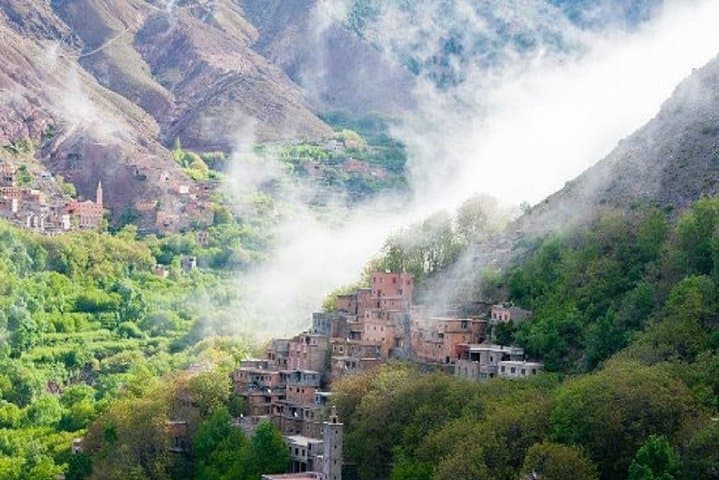
Morning light pulls you out of Marrakech and onto the road that climbs toward the High Atlas. Within an hour the city’s tiles and traffic fall away; the air sharpens and stone houses begin to cluster on terraced slopes. The vehicle threads between dry riverbeds and walnut orchards before you arrive in Asni for a brief camel ride that feels like a wink from another era.
Verified experiences and guided adventures in the surrounding area.
Operated by Marrakech Tours · Imlil, Marrakesh-Safi
Morning light pulls you out of Marrakech and onto the road that climbs toward the High Atlas. Within an hour the city’s tiles and traffic fall away; the air sharpens and stone houses begin to cluster on terraced slopes. The vehicle threads between dry riverbeds and walnut orchards before you arrive in Asni for a brief camel ride that feels like a wink from another era.
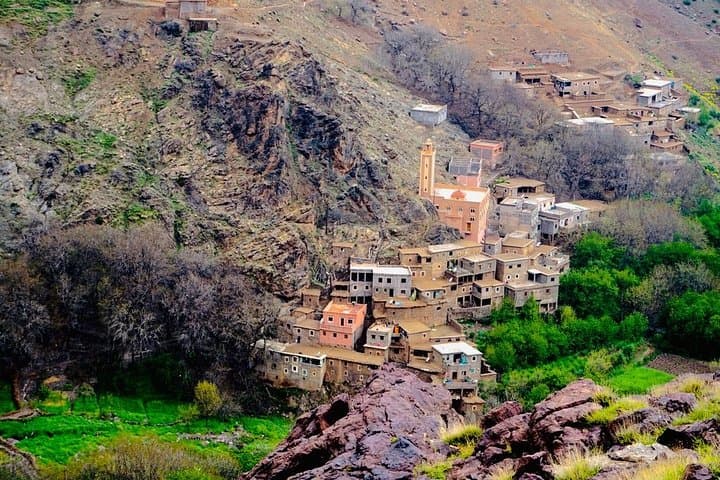
This route moves through villages with roots in Amazigh (Berber) culture and the long history of mountain pastoralism. Geologically, the High Atlas is a young, uplifted range of folded limestones and schists; valleys cut by seasonal rivers create the three distinct corridors you cross—each offering different light and microclimate. Imlil and nearby Aremd are gateway settlements at roughly 1,700–1,900 m where mule tracks and footpaths climb toward Jbel Toubkal, North Africa’s highest peak.
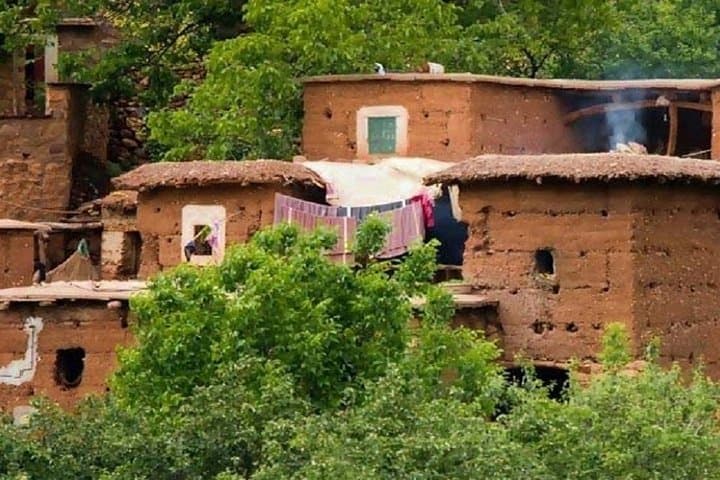
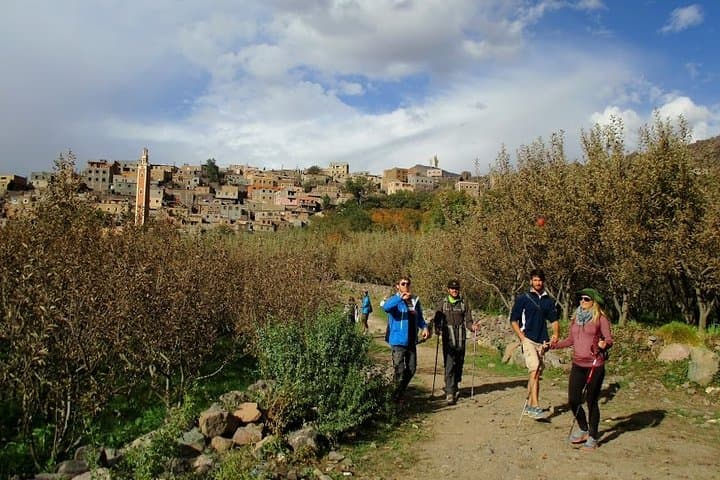
You’ll stop for mint tea with a local family, walk village lanes between stone homes, and get panoramic views over terraced fields that seem to push the horizon upward. The day includes a short mule option and a family-hosted lunch—simple, hearty fare framed by mountain air.
Practical notes: plan for sun and wind at higher altitudes, wear sturdy footwear for uneven village paths, and bring layers—the temperature can swing strongly between town and valley. Expect a full 7-hour day including transfers (about 60 km each way). Respect private homes during village stops and carry small-change if you want to support local markets. The trip balances cultural insight with accessible walking—good for readers who want an active day trip without high-altitude technical demands.
easy.
7 hours.
Suitable for most fitness levels—requires short, non-technical walks and the ability to walk on uneven surfaces for up to 2–4 hours total.
The transfer is about 60 km and typically takes 1–1.5 hours each way depending on traffic and road conditions.
No formal acclimatization is needed—stops occur below 2,000 m and walks are short and non-technical.
Yes, rides are short and usually supervised; confirm child seats or handlers when booking and for very young children request the infant seat option.
Yes—small vendors, the market, and some family-run stops prefer cash in dirhams, so bring small bills and coins.
The High Atlas has long been inhabited by Amazigh (Berber) communities whose terrace agriculture and mule-based transport shaped settlement patterns for centuries.
This region relies on sustainable tourism revenues; stick to paths, avoid single-use plastics, and ask before photographing people to minimize cultural and environmental impact.
Marrakech Tours operates guided outdoor trips and adventures with an emphasis on safety, stewardship, and memorable experiences.
Morning light pulls you out of Marrakech and onto the road that climbs toward the High Atlas. Within an hour the city’s tiles and traffic fall away; the air sharpens and stone houses begin to cluster on terraced slopes. The vehicle threads between dry riverbeds and walnut orchards before you arrive in Asni for a brief camel ride that feels like a wink from another era.
Morning light pulls you out of Marrakech and onto the road that climbs toward the High Atlas. Within an hour the city’s tiles and traffic fall away; the air sharpens and stone houses begin to cluster on terraced slopes. The vehicle threads between dry riverbeds and walnut orchards before you arrive in Asni for a brief camel ride that feels like a wink from another era.
This route moves through villages with roots in Amazigh (Berber) culture and the long history of mountain pastoralism. Geologically, the High Atlas is a young, uplifted range of folded limestones and schists; valleys cut by seasonal rivers create the three distinct corridors you cross—each offering different light and microclimate. Imlil and nearby Aremd are gateway settlements at roughly 1,700–1,900 m where mule tracks and footpaths climb toward Jbel Toubkal, North Africa’s highest peak.
You’ll stop for mint tea with a local family, walk village lanes between stone homes, and get panoramic views over terraced fields that seem to push the horizon upward. The day includes a short mule option and a family-hosted lunch—simple, hearty fare framed by mountain air.
Practical notes: plan for sun and wind at higher altitudes, wear sturdy footwear for uneven village paths, and bring layers—the temperature can swing strongly between town and valley. Expect a full 7-hour day including transfers (about 60 km each way). Respect private homes during village stops and carry small-change if you want to support local markets. The trip balances cultural insight with accessible walking—good for readers who want an active day trip without high-altitude technical demands.