THE ADVENTURE COLLECTIVE® · Independent discovery and booking for outdoor travel

Combine an early-morning canoe through wildlife-rich canals, a midday hike on the Jaguar Trail, and a guided night walk to see Tortuguero’s nocturnal life in one long day. Practical details and local tips prepare you for a full-immersion jungle experience.
Combine an early-morning canoe through wildlife-rich canals, a midday hike on the Jaguar Trail, and a guided night walk to see Tortuguero’s nocturnal life in one long day. Practical details and local tips prepare you for a full-immersion jungle experience.
Morning mist lifts from narrow canals as a wooden canoe slips away from the pier, sunlight tipping mangrove leaves like coins. The canal pushes you forward; water lilies open and kingfishers flicker at the bow. By midmorning the Jaguar Trail unfurls through older growth—muddy roots, strangler figs and the steady chorus of monkeys—each turn revealing a different shade of green. At twilight the jungle changes character, and on the night walk nocturnal life becomes the protagonist: frogs answer distant calls, caimans reflect a single beam of light.
Verified experiences and guided adventures in the surrounding area.
Operated by Kayak Tortuguero · Tortuguero, Limón
Morning mist lifts from narrow canals as a wooden canoe slips away from the pier, sunlight tipping mangrove leaves like coins. The canal pushes you forward; water lilies open and kingfishers flicker at the bow. By midmorning the Jaguar Trail unfurls through older growth—muddy roots, strangler figs and the steady chorus of monkeys—each turn revealing a different shade of green. At twilight the jungle changes character, and on the night walk nocturnal life becomes the protagonist: frogs answer distant calls, caimans reflect a single beam of light.
Tortuguero National Park, created to protect critical nesting beaches and coastal wetlands, sits on Costa Rica's Caribbean coast within Limón province. Geologically it's low, swampy terrain carved by rivers and tides; culturally the area blends Afro-Caribbean fishing villages with conservation-oriented tourism. Local guides focus on species ID, nesting cycles and how the park balances community livelihoods with protection.
Practical guidance: bring a lightweight daypack, waterproof shoes that grip muddy trails and a reliable headlamp for the night segment. Purchase the park admission separately before arrival and plan transport—most visitors arrive by boat from La Pavona or Puerto Limon. Expect long periods of standing in the canoe and short, uneven hiking on the Jaguar Trail; the day spans roughly 6–8 hours with pauses for wildlife viewing and brunch.
Timing matters: dawn and dusk are richest for sightings; avoid heavy rains if possible. Respect the guide’s instructions—no flash photography of turtles or flash-pointing at animals—and leave no trace to protect a fragile, wetland-born ecosystem.
moderate.
6–8 hours.
Be comfortable standing in a canoe for 1–2 hours and walking 2–4 miles on uneven, sometimes muddy trails; basic stamina and balance required.
No—Tortuguero National Park tickets must be purchased separately prior to arrival; your operator will confirm the process.
Most travelers arrive by boat from La Pavona or by organized transfer; the meeting point is near the main pier at Tortuguero village—confirm exact pickup with the operator.
The tour is listed as suitable for most fitness levels, but expect long hours, canoe transfers and uneven trails; infants should sit on laps in boats.
Expect abundant birds, howler and spider monkeys, occasional sloths, and seasonal sea turtle activity on nearby beaches; sightings are never guaranteed.
Tortuguero gained protection in the 1970s to safeguard key Caribbean nesting beaches and the wetlands that support migratory birds and marine life.
Park regulations limit lighting, group sizes and beach access during nesting; follow guides’ instructions and pack out all waste to reduce human impact.
Kayak Tortuguero operates guided outdoor trips and adventures with an emphasis on safety, stewardship, and memorable experiences.
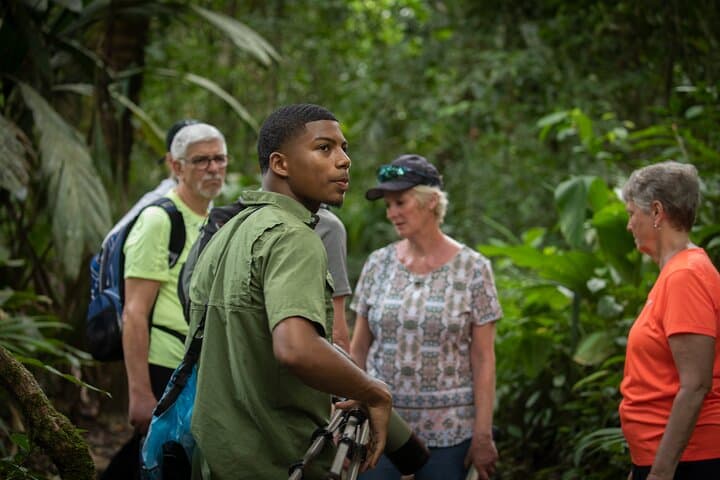
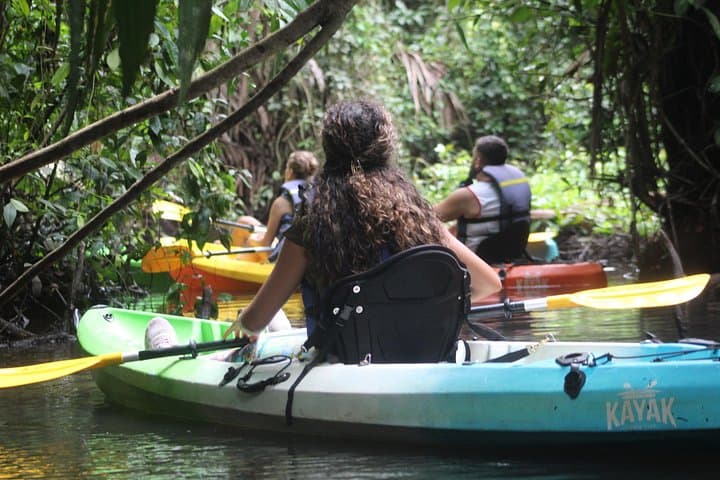
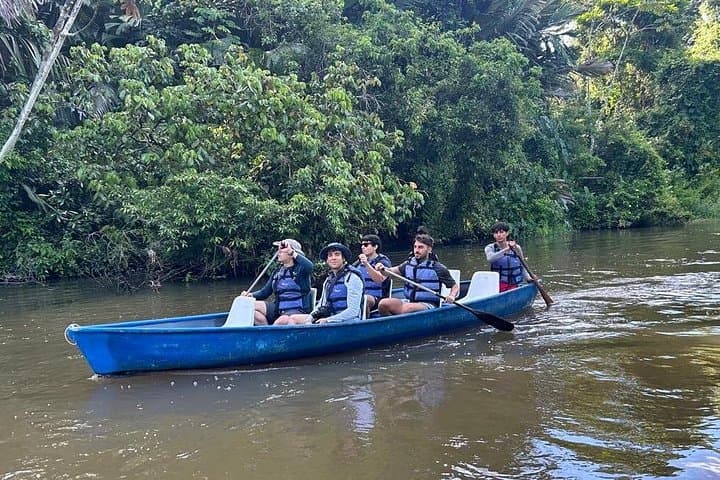
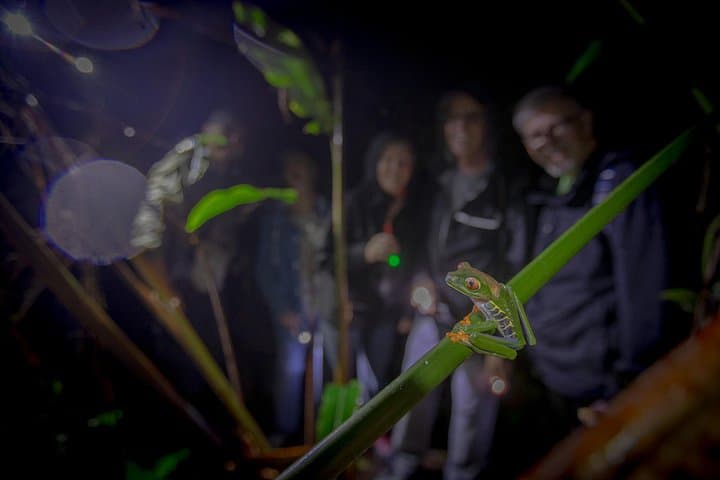
Morning mist lifts from narrow canals as a wooden canoe slips away from the pier, sunlight tipping mangrove leaves like coins. The canal pushes you forward; water lilies open and kingfishers flicker at the bow. By midmorning the Jaguar Trail unfurls through older growth—muddy roots, strangler figs and the steady chorus of monkeys—each turn revealing a different shade of green. At twilight the jungle changes character, and on the night walk nocturnal life becomes the protagonist: frogs answer distant calls, caimans reflect a single beam of light.
Morning mist lifts from narrow canals as a wooden canoe slips away from the pier, sunlight tipping mangrove leaves like coins. The canal pushes you forward; water lilies open and kingfishers flicker at the bow. By midmorning the Jaguar Trail unfurls through older growth—muddy roots, strangler figs and the steady chorus of monkeys—each turn revealing a different shade of green. At twilight the jungle changes character, and on the night walk nocturnal life becomes the protagonist: frogs answer distant calls, caimans reflect a single beam of light.
Tortuguero National Park, created to protect critical nesting beaches and coastal wetlands, sits on Costa Rica's Caribbean coast within Limón province. Geologically it's low, swampy terrain carved by rivers and tides; culturally the area blends Afro-Caribbean fishing villages with conservation-oriented tourism. Local guides focus on species ID, nesting cycles and how the park balances community livelihoods with protection.
Practical guidance: bring a lightweight daypack, waterproof shoes that grip muddy trails and a reliable headlamp for the night segment. Purchase the park admission separately before arrival and plan transport—most visitors arrive by boat from La Pavona or Puerto Limon. Expect long periods of standing in the canoe and short, uneven hiking on the Jaguar Trail; the day spans roughly 6–8 hours with pauses for wildlife viewing and brunch.
Timing matters: dawn and dusk are richest for sightings; avoid heavy rains if possible. Respect the guide’s instructions—no flash photography of turtles or flash-pointing at animals—and leave no trace to protect a fragile, wetland-born ecosystem.