THE ADVENTURE COLLECTIVE® · Independent discovery and booking for outdoor travel

Three linked outings give a concentrated view of Tortuguero’s wildlife: an early-morning canoe through verdant canals, a midmorning forest hike on the Jaguar Trail, and a night-time turtle spawning patrol. Practical timing, clothing rules and conservation measures make this a focused naturalist experience.
Three linked outings give a concentrated view of Tortuguero’s wildlife: an early-morning canoe through verdant canals, a midmorning forest hike on the Jaguar Trail, and a night-time turtle spawning patrol. Practical timing, clothing rules and conservation measures make this a focused naturalist experience.
Dawn finds the canal glass-still and dark mangrove roots reaching like quiet hands into the water as a canoe slips forward. The guide polishes silence with a whisper of paddle—you spot a caiman’s eye, a kingfisher’s flash, then breakfast steaming riverside.
Verified experiences and guided adventures in the surrounding area.
Operated by Tuanis Tour Tortuguero · Tortuguero, Limón
Dawn finds the canal glass-still and dark mangrove roots reaching like quiet hands into the water as a canoe slips forward. The guide polishes silence with a whisper of paddle—you spot a caiman’s eye, a kingfisher’s flash, then breakfast steaming riverside.
Tortuguero sits on Costa Rica’s Caribbean coast where rivers meet the sea; the park was created to protect critical nesting beaches and the mosaic of freshwater canals carved through lowland rainforest and peat soils. Geology here is recent: riverine sediment and coastal sands constantly reconfigure the shoreline, shaping channels that push and pull with the tide and rain.
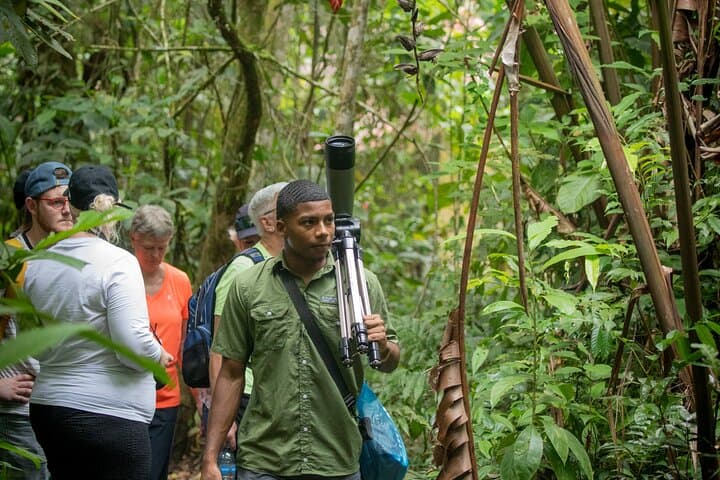
Culture is Caribbean — Spanish and Creole‑speaking communities, small fishing settlements, and a history of conservation centered on sea turtle protection. Local guides blend that cultural knowledge with natural history during walks on the Jaguar Trail, where howler monkeys and toucans are common company.
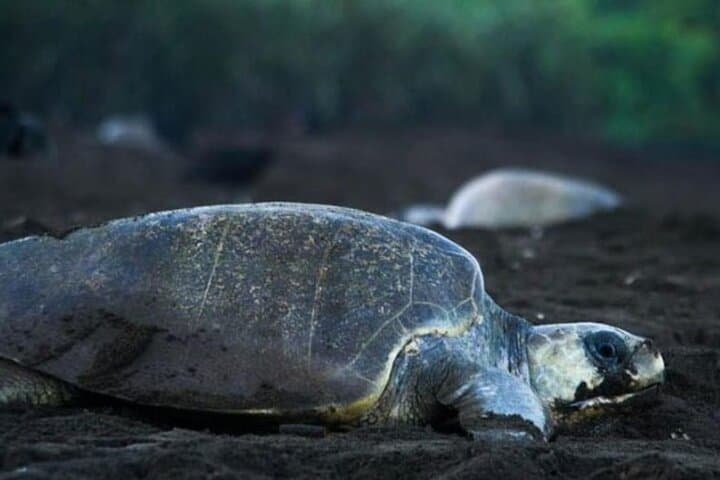
Practical guide: your morning canoe starts at 06:00 (≈2h45) with coffee and snacks; the midday hike runs about two hours on mostly flat, sometimes muddy forest trails; turtle patrols are at night in two park-assigned shifts (20:00–22:00 or 22:00–24:00)—expect strict no-device rules. Wear closed shoes, long pants and insect repellent; bring a lightweight rain shell in the wet season. Small-group tours limit impact and increase sightings; move quietly and follow your guide’s directions for the best wildlife encounters and to protect nesting turtles.
easy.
6–8 hours total (depending on assigned turtle shift).
Suitable for most fitness levels; requires comfortable walking on flat but sometimes muddy trails and sitting in a canoe for several hours.
No — the national park prohibits flash photography and electronic lights on nesting beaches to avoid disorienting turtles; leave devices off and follow your guide’s instructions.
Yes — operators usually offer the turtle patrol either the first night or after the daytime canoe and hike; confirm your assigned turtle shift at the Tuanis office between 17:00–18:00.
Infants must sit on a lap for the canoe; the tour is not recommended for pregnant travelers or those with significant heart problems—consult the operator when booking.
Common sightings include caimans, iguanas, a variety of waterbirds, white‑faced capuchin and howler monkeys, and sloths; turtle sightings depend on nesting season and park lotteries.
Tortuguero National Park was established to protect crucial sea turtle nesting beaches and the unique lowland canal ecosystems; local communities have been central to conservation efforts.
Visits are regulated by the park to limit disturbance—follow no-light rules on beaches, keep to trails, and support local guides to ensure tourism benefits conservation.
Tuanis Tour Tortuguero operates guided outdoor trips and adventures with an emphasis on safety, stewardship, and memorable experiences.


Dawn finds the canal glass-still and dark mangrove roots reaching like quiet hands into the water as a canoe slips forward. The guide polishes silence with a whisper of paddle—you spot a caiman’s eye, a kingfisher’s flash, then breakfast steaming riverside.
Dawn finds the canal glass-still and dark mangrove roots reaching like quiet hands into the water as a canoe slips forward. The guide polishes silence with a whisper of paddle—you spot a caiman’s eye, a kingfisher’s flash, then breakfast steaming riverside.
Tortuguero sits on Costa Rica’s Caribbean coast where rivers meet the sea; the park was created to protect critical nesting beaches and the mosaic of freshwater canals carved through lowland rainforest and peat soils. Geology here is recent: riverine sediment and coastal sands constantly reconfigure the shoreline, shaping channels that push and pull with the tide and rain.
Culture is Caribbean — Spanish and Creole‑speaking communities, small fishing settlements, and a history of conservation centered on sea turtle protection. Local guides blend that cultural knowledge with natural history during walks on the Jaguar Trail, where howler monkeys and toucans are common company.
Practical guide: your morning canoe starts at 06:00 (≈2h45) with coffee and snacks; the midday hike runs about two hours on mostly flat, sometimes muddy forest trails; turtle patrols are at night in two park-assigned shifts (20:00–22:00 or 22:00–24:00)—expect strict no-device rules. Wear closed shoes, long pants and insect repellent; bring a lightweight rain shell in the wet season. Small-group tours limit impact and increase sightings; move quietly and follow your guide’s directions for the best wildlife encounters and to protect nesting turtles.