THE ADVENTURE COLLECTIVE® · Independent discovery and booking for outdoor travel

Walk Toronto’s waterfront with a GPS-powered trivia game that turns landmarks into interactive prompts. Download the tour, follow the map, and learn local history and culture at your own pace.
Walk Toronto’s waterfront with a GPS-powered trivia game that turns landmarks into interactive prompts. Download the tour, follow the map, and learn local history and culture at your own pace.
You step out onto the waterfront with the CN Tower rising to your left and Lake Ontario breathing cold air across the promenade. The app pings, a voice narrates, and the city rearranges itself into a sequence of questions, clues and overlooked details — a living scavenger hunt along boardwalks, plazas and parks.
Verified experiences and guided adventures in the surrounding area.
Operated by Tripvia Tours · Toronto, Ontario
You step out onto the waterfront with the CN Tower rising to your left and Lake Ontario breathing cold air across the promenade. The app pings, a voice narrates, and the city rearranges itself into a sequence of questions, clues and overlooked details — a living scavenger hunt along boardwalks, plazas and parks.
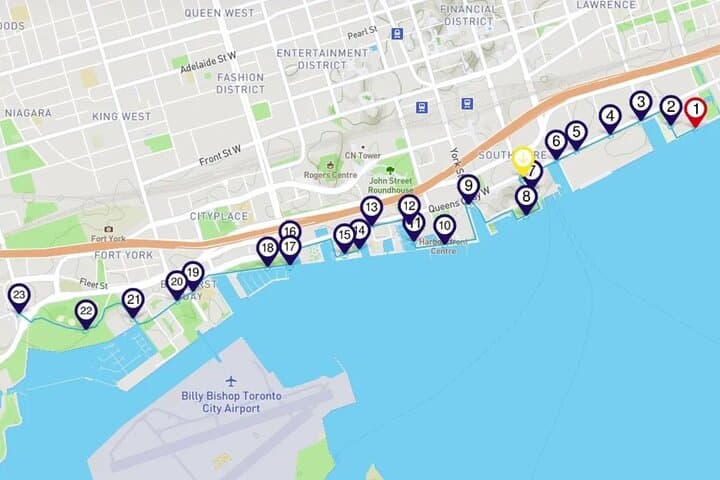
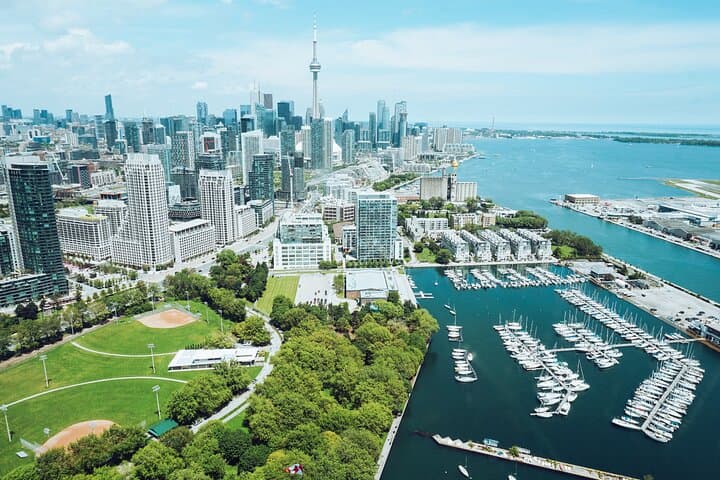
This stretch of Toronto was shaped by glacial basins and centuries of shipping and industry; warehouses, rail lines and reclaimed land gave way in the late 20th century to parks, cultural venues and pedestrian promenades. The tour threads past civic landmarks — Rogers Centre, Harbourfront, the Toronto Music Garden — and points toward Toronto Island, itself layered with Indigenous and settler histories.
Culturally the waterfront pulses with festivals, outdoor concerts and year-round public art; the guide commentary highlights both the architecture and the stories behind place names and civic change. Geology here is subtle: low elevation, lake-washed shoreline and fill material in many parks, so views are wide and the grade is flat.
Practically, expect 90–120 minutes of gameplay and roughly 3–5 km of mostly paved walking with minimal elevation gain. Download the game on Wi‑Fi first — audio clips trigger by GPS and use no data once loaded. Wear comfortable shoes, bring a fully charged phone and earbuds, and pick a quieter morning or late afternoon to avoid crowds. The route is wheelchair accessible and unhurried — the game lets you linger at any stop.
For curious travelers this self-guided trivia walk is both orientation and urban game: it teaches the waterfront’s past while letting you set the pace.
easy.
1.5–2 hours.
Suitable for most fitness levels; requires the ability to walk several kilometres on paved surfaces.
No — download the tour on Wi‑Fi before you start and the GPS-triggered audio will run without data.
Yes — the waterfront segments covered are mostly paved and wheelchair accessible, though some parks may have ramps and slight grade changes.
Yes — there’s no time limit and you can stop, explore, and resume whenever you like; the tour remains tied to your purchased device count.
The number of travelers selected equals the number of devices that can download the tour; share devices at your own discretion.
The waterfront evolved from an industrial port and rail yards into public parks and cultural venues during late 20th-century redevelopment, reflecting Toronto’s shift from manufacturing to mixed-use waterfront planning.
Shoreline and habitat restoration projects focus on native plantings, improved water quality and reducing stormwater runoff; carry out trash and respect nesting sites to support local efforts.
Tripvia Tours operates guided outdoor trips and adventures with an emphasis on safety, stewardship, and memorable experiences.
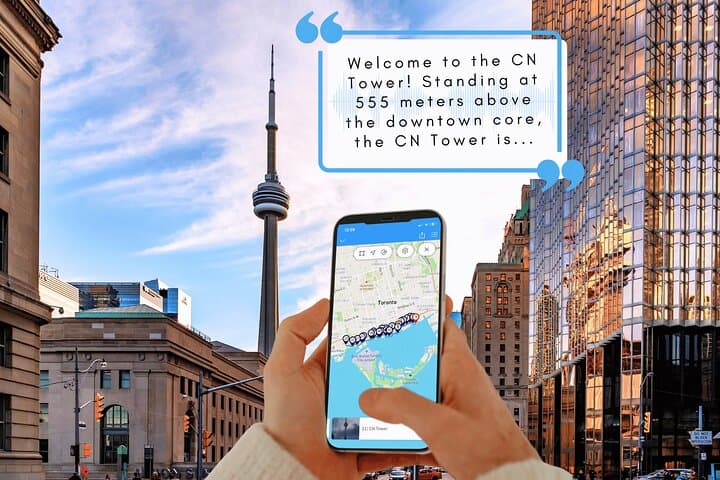

You step out onto the waterfront with the CN Tower rising to your left and Lake Ontario breathing cold air across the promenade. The app pings, a voice narrates, and the city rearranges itself into a sequence of questions, clues and overlooked details — a living scavenger hunt along boardwalks, plazas and parks.
You step out onto the waterfront with the CN Tower rising to your left and Lake Ontario breathing cold air across the promenade. The app pings, a voice narrates, and the city rearranges itself into a sequence of questions, clues and overlooked details — a living scavenger hunt along boardwalks, plazas and parks.
This stretch of Toronto was shaped by glacial basins and centuries of shipping and industry; warehouses, rail lines and reclaimed land gave way in the late 20th century to parks, cultural venues and pedestrian promenades. The tour threads past civic landmarks — Rogers Centre, Harbourfront, the Toronto Music Garden — and points toward Toronto Island, itself layered with Indigenous and settler histories.
Culturally the waterfront pulses with festivals, outdoor concerts and year-round public art; the guide commentary highlights both the architecture and the stories behind place names and civic change. Geology here is subtle: low elevation, lake-washed shoreline and fill material in many parks, so views are wide and the grade is flat.
Practically, expect 90–120 minutes of gameplay and roughly 3–5 km of mostly paved walking with minimal elevation gain. Download the game on Wi‑Fi first — audio clips trigger by GPS and use no data once loaded. Wear comfortable shoes, bring a fully charged phone and earbuds, and pick a quieter morning or late afternoon to avoid crowds. The route is wheelchair accessible and unhurried — the game lets you linger at any stop.
For curious travelers this self-guided trivia walk is both orientation and urban game: it teaches the waterfront’s past while letting you set the pace.