THE ADVENTURE COLLECTIVE® · Independent discovery and booking for outdoor travel

Take the controls in downtown Toronto’s immersive VR flight simulator. Ideal for curious beginners and aspiring pilots, this one-hour, hands-on experience teaches takeoff, cruising, and landing using realistic Cessna controls and live-world weather.
Take the controls in downtown Toronto’s immersive VR flight simulator. Ideal for curious beginners and aspiring pilots, this one-hour, hands-on experience teaches takeoff, cruising, and landing using realistic Cessna controls and live-world weather.
You step from Toronto’s brisk street into a dim cockpit that hums with power. The city’s glass facades and the soft sprawl of Lake Ontario become a mapped horizon inside the headset; the yoke sits firm beneath your hands and the simulator’s engines whisper as you taxi toward an invisible runway.
Verified experiences and guided adventures in the surrounding area.
Operated by Levelup Virtual Reality Arcade · Toronto, Ontario
You step from Toronto’s brisk street into a dim cockpit that hums with power. The city’s glass facades and the soft sprawl of Lake Ontario become a mapped horizon inside the headset; the yoke sits firm beneath your hands and the simulator’s engines whisper as you taxi toward an invisible runway.
The experience borrows from the region’s aviation roots — from Billy Bishop’s compact island field to Pearson’s international sweep — translating real-world airspace into code. The default aircraft, a Cessna 172, is a workhorse of general aviation and a common trainer worldwide; the simulator layers live weather and thousands of real airports so flights over Toronto, rural Ontario, or distant mountain passes feel familiar and believable.
Culturally, the setup appeals to aspiring pilots, city travelers, and technophiles looking for tactile learning without fuel costs or airspace constraints. Geology and weather matter here too: you’ll practice crosswinds that mirror lake-effect breezes and learn how urban skylines change sightlines for navigation.
Practically: sessions are one hour, single-occupant and staff run a quick orientation before you fly. Expect guided virtual cues for takeoff, cruise, and landing, but hands-on controls mean you’re piloting. Arrive early to settle in, bring a government ID for booking, and plan for potential motion sensitivity — short acclimation periods help.
For explorers who want to test flight training, study traffic patterns, or simply experience low-stakes flying above Toronto, this simulator is a compact, efficient way to learn aircraft basics with city-scale perspective.
easy.
60 minutes.
Moderate general fitness is sufficient; sessions require seated coordination and brief physical input with controls.
No — the simulator is designed for beginners and uses guided virtual instruction; basic coordination and following directions are all that’s required.
Yes — the default is a Cessna 172, but other aircraft models and thousands of real-world airports are typically available to explore with staff assistance.
Younger children may fit in the cockpit, but the experience isn’t recommended for infants; check the operator’s age or size limits and parental discretion is advised.
Service animals are allowed and staff can assist with setup; however, travelers with serious spinal, heart, or pregnancy-related conditions should avoid intense sessions and consult staff beforehand.
Toronto’s flying history spans island aerodromes and international gateways; the Cessna trainer reflects decades of general aviation training common across Canada.
Simulator-based training reduces fuel use and emissions compared with real flight hours; operators should also follow e-waste and energy-efficiency best practices for VR hardware.
Levelup Virtual Reality Arcade operates guided outdoor trips and adventures with an emphasis on safety, stewardship, and memorable experiences.
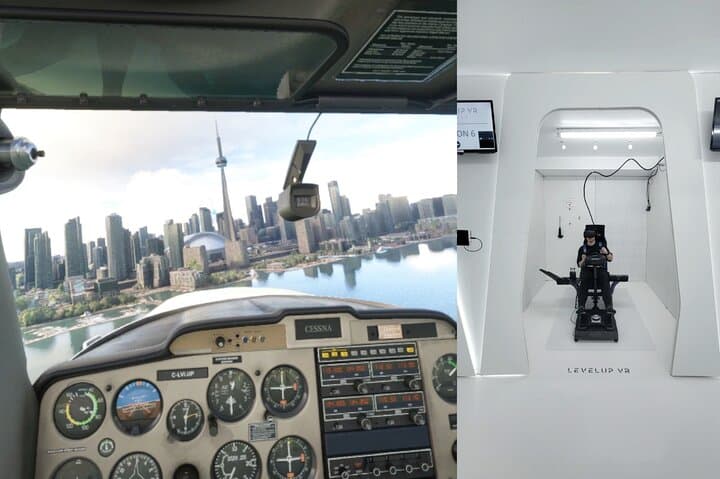
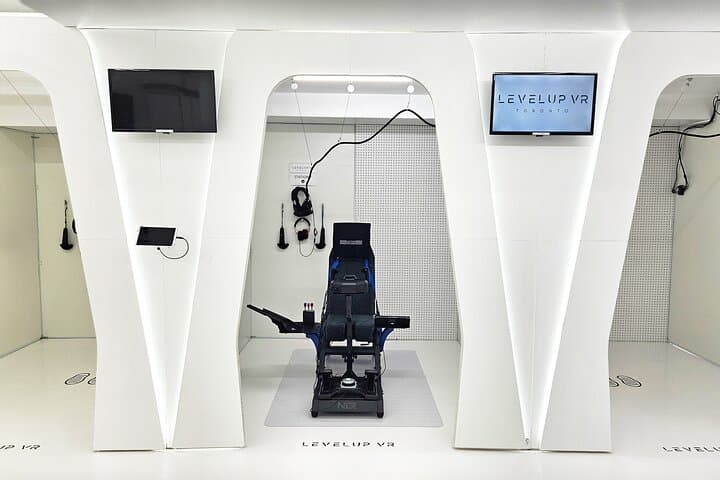
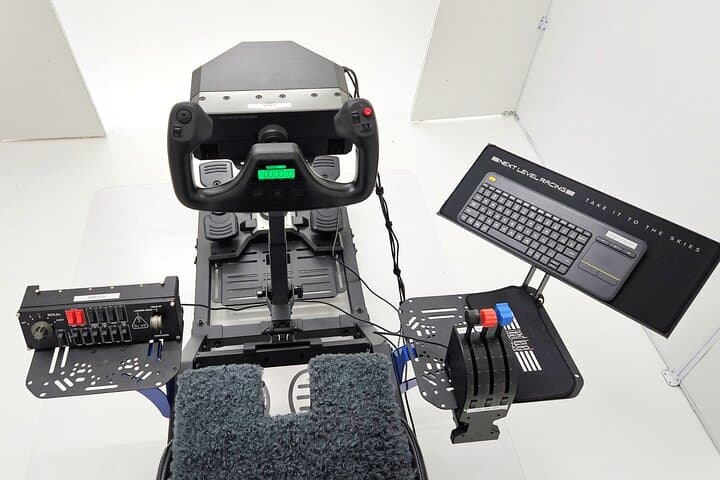
You step from Toronto’s brisk street into a dim cockpit that hums with power. The city’s glass facades and the soft sprawl of Lake Ontario become a mapped horizon inside the headset; the yoke sits firm beneath your hands and the simulator’s engines whisper as you taxi toward an invisible runway.
You step from Toronto’s brisk street into a dim cockpit that hums with power. The city’s glass facades and the soft sprawl of Lake Ontario become a mapped horizon inside the headset; the yoke sits firm beneath your hands and the simulator’s engines whisper as you taxi toward an invisible runway.
The experience borrows from the region’s aviation roots — from Billy Bishop’s compact island field to Pearson’s international sweep — translating real-world airspace into code. The default aircraft, a Cessna 172, is a workhorse of general aviation and a common trainer worldwide; the simulator layers live weather and thousands of real airports so flights over Toronto, rural Ontario, or distant mountain passes feel familiar and believable.
Culturally, the setup appeals to aspiring pilots, city travelers, and technophiles looking for tactile learning without fuel costs or airspace constraints. Geology and weather matter here too: you’ll practice crosswinds that mirror lake-effect breezes and learn how urban skylines change sightlines for navigation.
Practically: sessions are one hour, single-occupant and staff run a quick orientation before you fly. Expect guided virtual cues for takeoff, cruise, and landing, but hands-on controls mean you’re piloting. Arrive early to settle in, bring a government ID for booking, and plan for potential motion sensitivity — short acclimation periods help.
For explorers who want to test flight training, study traffic patterns, or simply experience low-stakes flying above Toronto, this simulator is a compact, efficient way to learn aircraft basics with city-scale perspective.