THE ADVENTURE COLLECTIVE® · Independent discovery and booking for outdoor travel

Follow clues through Toronto’s Distillery District in a self-guided whisky and ghost exploration game. Solve puzzles on your phone as historical sites like Balzac’s and Spirit of York come alive.
Follow clues through Toronto’s Distillery District in a self-guided whisky and ghost exploration game. Solve puzzles on your phone as historical sites like Balzac’s and Spirit of York come alive.
The Distillery District’s red‑brick warehouses stretch along a narrow, cobbled spine as late afternoon light slants through iron lamps and the air carries faint notes of malt and smoke.
Verified experiences and guided adventures in the surrounding area.
Operated by Questo · Toronto, Ontario
The Distillery District’s red‑brick warehouses stretch along a narrow, cobbled spine as late afternoon light slants through iron lamps and the air carries faint notes of malt and smoke.
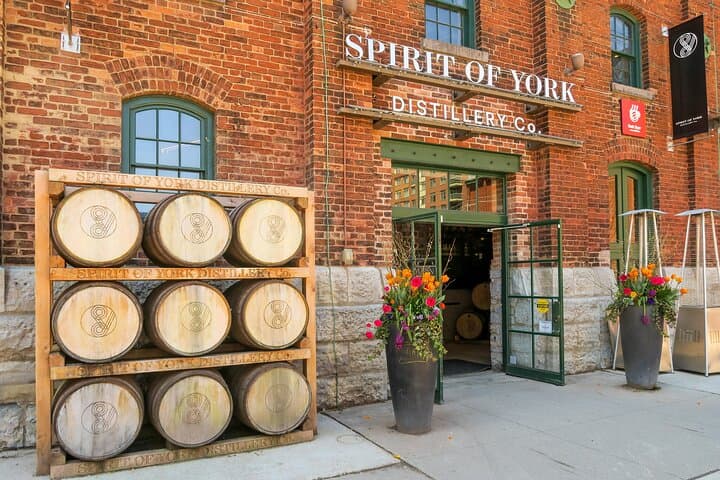
Players begin at Cherry Street Gate, phone in hand, stepping into an interactive mystery that turns galleries, distilleries, and courtyards into chapters of a ghost story. The experience threads historical fact—Victorian-era Gooderham & Worts distilling operations and industrial 19th-century Toronto—with fiction, placing Rocco Perri’s spectral narration over real storefronts like Balzac’s and Spirit of York.
Geology is subtle here: old lakeplain clay underpins the compact streets and reveals why heavy industry clustered on this stretch of Toronto’s waterfront. Culture is immediate—local breweries, artisan chocolatiers, and small galleries pulse through the route—while adaptive‑reuse architecture keeps original brick facades and ironwork visible at every turn.
Practical side: plan 65–95 minutes walking at an easy pace, stop for a coffee or tasting between clues, and expect uneven cobbles and pedestrian crowds on weekends. The game runs on a phone app and supplies step‑by‑step coordinates and puzzles; each solved clue points to the next landmark.
Bring a fully charged phone, comfortable shoes, and modest weather protection. Midweek or early morning slots reduce foot traffic and let the story breathe. Accessibility is generally good on main paths, but historic paving can be bumpy.
This hybrid tour-escape‑game is best for curious walkers who like history, puzzles, and small discoveries tucked between restored industrial buildings.
easy.
65–95 minutes.
Light walking suitable for most fitness levels; able to stand and walk for up to 1.5 hours
After booking you receive an email with instructions and a link to download the app; the first clue is unlocked at Cherry Street Gate.
Yes—several people can share a single phone, but the operator recommends one ticket per player for the optimal interactive experience.
Main paths are generally accessible, but historic cobbles and occasional steps may make some sections bumpy; stroller access is possible in many areas.
Full refunds are available if you cancel at least 24 hours before the booked start time.
The Distillery District occupies the former Gooderham & Worts complex, a major 19th-century distillery that shaped Toronto’s industrial waterfront and later became a heritage district of restored brick warehouses.
Adaptive reuse preserves historic buildings, but high visitor numbers can stress cobblestone surfaces and public spaces—respect signage and local business operations.
Questo operates guided outdoor trips and adventures with an emphasis on safety, stewardship, and memorable experiences.
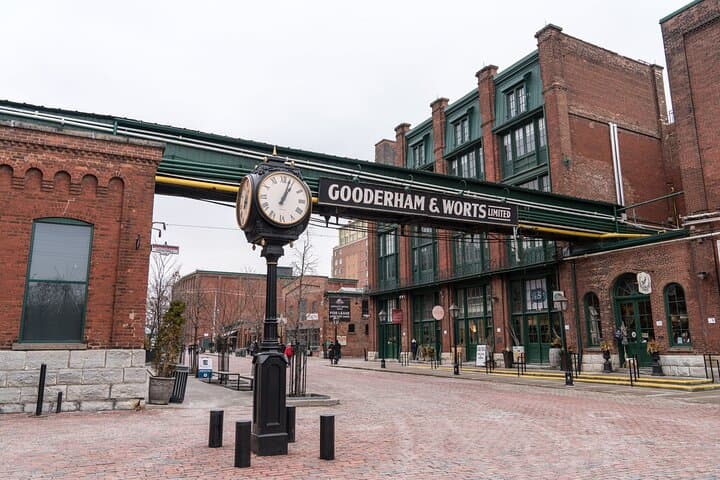


The Distillery District’s red‑brick warehouses stretch along a narrow, cobbled spine as late afternoon light slants through iron lamps and the air carries faint notes of malt and smoke.
The Distillery District’s red‑brick warehouses stretch along a narrow, cobbled spine as late afternoon light slants through iron lamps and the air carries faint notes of malt and smoke.
Players begin at Cherry Street Gate, phone in hand, stepping into an interactive mystery that turns galleries, distilleries, and courtyards into chapters of a ghost story. The experience threads historical fact—Victorian-era Gooderham & Worts distilling operations and industrial 19th-century Toronto—with fiction, placing Rocco Perri’s spectral narration over real storefronts like Balzac’s and Spirit of York.
Geology is subtle here: old lakeplain clay underpins the compact streets and reveals why heavy industry clustered on this stretch of Toronto’s waterfront. Culture is immediate—local breweries, artisan chocolatiers, and small galleries pulse through the route—while adaptive‑reuse architecture keeps original brick facades and ironwork visible at every turn.
Practical side: plan 65–95 minutes walking at an easy pace, stop for a coffee or tasting between clues, and expect uneven cobbles and pedestrian crowds on weekends. The game runs on a phone app and supplies step‑by‑step coordinates and puzzles; each solved clue points to the next landmark.
Bring a fully charged phone, comfortable shoes, and modest weather protection. Midweek or early morning slots reduce foot traffic and let the story breathe. Accessibility is generally good on main paths, but historic paving can be bumpy.
This hybrid tour-escape‑game is best for curious walkers who like history, puzzles, and small discoveries tucked between restored industrial buildings.