THE ADVENTURE COLLECTIVE® · Independent discovery and booking for outdoor travel

Glide through flooded forest and past stilted homes on Tonle Sap’s great seasonal lake. This private half-day tour from Siem Reap combines a guided boat ride, village visit, and the chance to see how communities adapt to the lake’s dramatic water cycle.
Glide through flooded forest and past stilted homes on Tonle Sap’s great seasonal lake. This private half-day tour from Siem Reap combines a guided boat ride, village visit, and the chance to see how communities adapt to the lake’s dramatic water cycle.
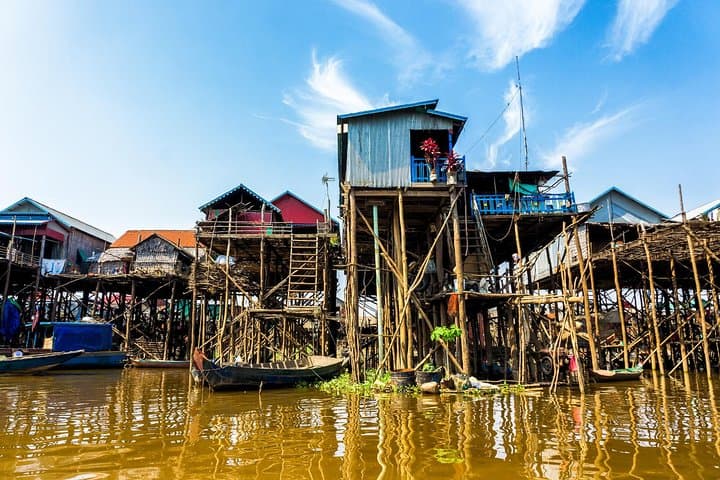
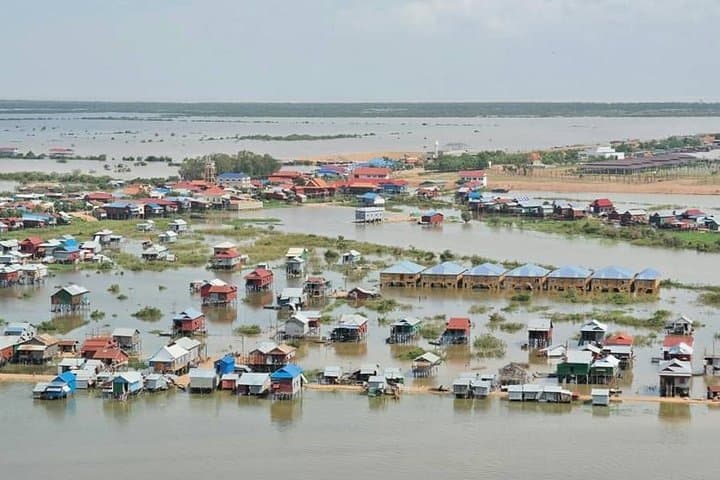
A slow wooden boat parts a glassy morning on Tonle Sap, rice paddies folding away to marsh and drowned forest as you glide toward Kampong Phluk. Birds wheel low; villagers wave from a lattice of stilts and narrow walkways. The pagoda on a lone rise punctures the skyline—the only building not lifted above the season’s flood.
Verified experiences and guided adventures in the surrounding area.
Operated by Green Era Travel · Siem Reap, Siem Reap Province
A slow wooden boat parts a glassy morning on Tonle Sap, rice paddies folding away to marsh and drowned forest as you glide toward Kampong Phluk. Birds wheel low; villagers wave from a lattice of stilts and narrow walkways. The pagoda on a lone rise punctures the skyline—the only building not lifted above the season’s flood.
Tonle Sap is Southeast Asia’s largest freshwater lake by seasonal extent. Its annual pulse—rising with Mekong floods—transforms dry plains into a vast wetland, shaping a unique ecology and the livelihoods of Khmer fishing communities. Kampong Phluk (often spelled Kompong Pluk) grew here as an adaptation: houses on tall stilts, schools and shrines that read the water line like a calendar.
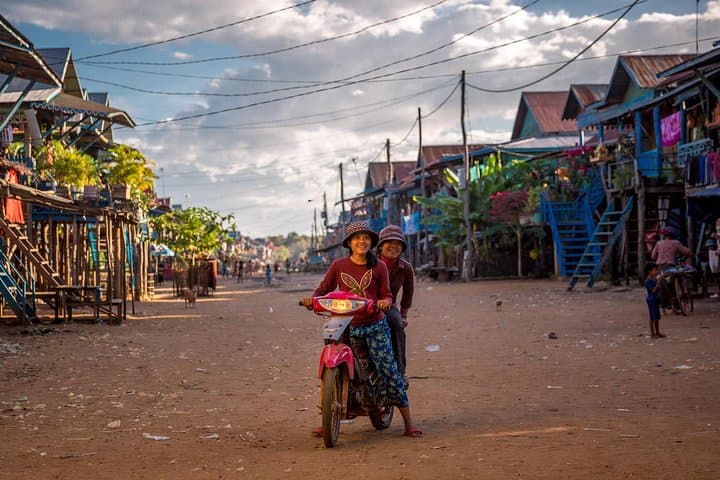
Geologically, the region is a shallow basin fed by Mekong backflow; sediment and seasonal inundation create rich fisheries and dense submerged forest. Culturally, the village reflects Cambodian rural life: small-scale fishing, boat carpentry, and community rhythms timed to the floods rather than the clock.
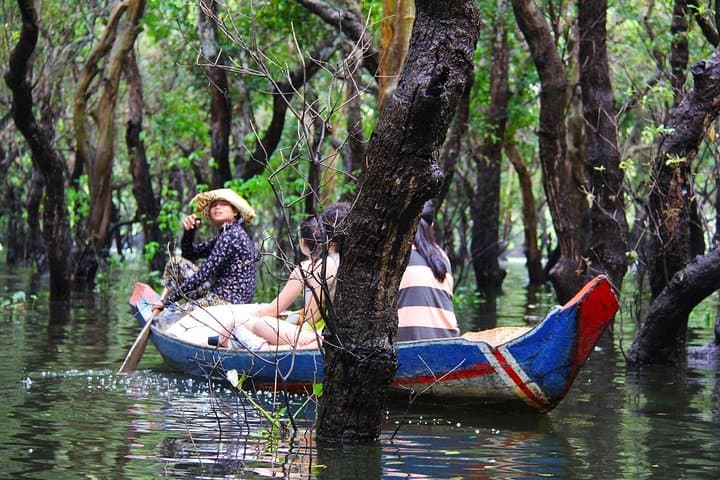
Practical guidance: tours typically leave Siem Reap early and include hotel pickup, a one- to two-hour boat ride, and a guided walk among raised homes. Bring sun protection, insect repellent, and a camera with a fast shutter—light changes fast on open water. In the wet season you may opt for a village canoe to slip into flooded forest channels; in the dry season expect bumpy roads and more visible stilts. Respect private spaces, ask before photographing people, and carry small Cambodian riel or dollars for tips or canoe fees.
This half-day loop is accessible for most travelers and offers a concise, vivid portrait of Tonle Sap’s seasonal world.
easy.
3–4 hours.
Suitable for most fitness levels; involves short boat rides and flat, sometimes uneven village walkways.
The guided boat portion typically lasts about 1–1.5 hours, with additional time spent exploring the village and quay.
Visit between August and January to see the village partly or fully flooded and take optional canoe trips; February–July is drier and easier for walking access.
Tours are family-friendly, but operators often advise pregnant travelers to avoid boat-heavy excursions—check with your provider first.
Most operators include bottled water and hotel pickup; bring snacks if you want more than the standard provisions.
Tonle Sap’s flood pulse has supported Khmer settlements for centuries; villages like Kampong Phluk developed elevated architecture to live with the water rather than against it.
The lake’s health is threatened by upstream dams and overfishing; support responsible operators, avoid single-use plastics, and follow guides’ instructions to minimize disturbance.
Green Era Travel operates guided outdoor trips and adventures with an emphasis on safety, stewardship, and memorable experiences.
A slow wooden boat parts a glassy morning on Tonle Sap, rice paddies folding away to marsh and drowned forest as you glide toward Kampong Phluk. Birds wheel low; villagers wave from a lattice of stilts and narrow walkways. The pagoda on a lone rise punctures the skyline—the only building not lifted above the season’s flood.
A slow wooden boat parts a glassy morning on Tonle Sap, rice paddies folding away to marsh and drowned forest as you glide toward Kampong Phluk. Birds wheel low; villagers wave from a lattice of stilts and narrow walkways. The pagoda on a lone rise punctures the skyline—the only building not lifted above the season’s flood.
Tonle Sap is Southeast Asia’s largest freshwater lake by seasonal extent. Its annual pulse—rising with Mekong floods—transforms dry plains into a vast wetland, shaping a unique ecology and the livelihoods of Khmer fishing communities. Kampong Phluk (often spelled Kompong Pluk) grew here as an adaptation: houses on tall stilts, schools and shrines that read the water line like a calendar.
Geologically, the region is a shallow basin fed by Mekong backflow; sediment and seasonal inundation create rich fisheries and dense submerged forest. Culturally, the village reflects Cambodian rural life: small-scale fishing, boat carpentry, and community rhythms timed to the floods rather than the clock.
Practical guidance: tours typically leave Siem Reap early and include hotel pickup, a one- to two-hour boat ride, and a guided walk among raised homes. Bring sun protection, insect repellent, and a camera with a fast shutter—light changes fast on open water. In the wet season you may opt for a village canoe to slip into flooded forest channels; in the dry season expect bumpy roads and more visible stilts. Respect private spaces, ask before photographing people, and carry small Cambodian riel or dollars for tips or canoe fees.
This half-day loop is accessible for most travelers and offers a concise, vivid portrait of Tonle Sap’s seasonal world.