THE ADVENTURE COLLECTIVE® · Independent discovery and booking for outdoor travel

Witness the sun ignite the moai at Ahu Tongariki on a private two‑hour sunrise tour of Easter Island. Expect quiet pre‑dawn moments, coastal wind, and both practical guidance and cultural context from a local guide.
Witness the sun ignite the moai at Ahu Tongariki on a private two‑hour sunrise tour of Easter Island. Expect quiet pre‑dawn moments, coastal wind, and both practical guidance and cultural context from a local guide.
Before the sun clears the Pacific horizon, fifteen stone guardians lift their heads above the flat shore at Ahu Tongariki. The air is cool, the ocean pushes a line of low fog toward the platform, and the moai stand motionless — then color arrives, slow and uncompromising, turning volcanic tuff from gray to ochre.
Verified experiences and guided adventures in the surrounding area.
Operated by Kava Kava Tours · Hanga Roa, Valparaíso Region
Before the sun clears the Pacific horizon, fifteen stone guardians lift their heads above the flat shore at Ahu Tongariki. The air is cool, the ocean pushes a line of low fog toward the platform, and the moai stand motionless — then color arrives, slow and uncompromising, turning volcanic tuff from gray to ochre.
Tongariki is the island’s largest restored ahu, a ceremonial platform rebuilt after a 20th‑century collapse and the 1960 tsunami. The moai here were carved from Rano Raraku’s volcanic tuff and moved across a landscape shaped by three extinct volcanoes; Poike’s ridge frames the eastern sky. For the Rapa Nui people these statues mark ancestors and social history, and modern restoration has made Tongariki a focal point for both archaeology and living culture.
On a private two‑hour sunrise tour you’ll stand opposite the statues as daylight sweeps across the coast. Timing matters: between October and March the sun rises behind the platform; the rest of the year it climbs up from the Poike side, and winter months bring more cloud. Guides typically include private transport, a local guide, and a warm drink — and they’ll remind you that a Rapa Nui National Park ticket is required to enter the site.
Practicalities: arrive before civil dawn, dress in windproof layers, and expect uneven, rocky ground near the ahu. Photography benefits from a small tripod and fast lenses for low light. This is an accessible, low‑effort outing that rewards patience and respect for the place — the statues don’t rush, and neither should you.
easy.
2 hours.
Minimal fitness required; mostly standing and short walks on uneven ground. Suitable for most travelers.
Yes — a valid Rapa Nui National Park ticket is required for entry to Ahu Tongariki and must be presented for the tour.
This private experience lasts about two hours and typically includes private transportation, a local guide, and a warm drink (coffee or tea).
Not always: from October to March the sun typically rises behind the platform; during the rest of the year it rises nearer Poike volcano. Cloud cover is more common in the southern hemisphere winter (June–August).
Access near the ahu involves uneven, rocky ground; portions are flat but may be challenging for wheelchairs or strollers without assistance. Contact the operator about specific accessibility needs.
The moai at Tongariki were carved by the Rapa Nui people from Rano Raraku tuff and the platform was toppled in earlier centuries and then by the 1960 tsunami; an international restoration effort re‑erected the statues in the 1990s.
Ahu Tongariki sits inside Rapa Nui National Park — stick to designated paths, avoid climbing on the moai, and purchase park tickets to support conservation and local management.
Kava Kava Tours operates guided outdoor trips and adventures with an emphasis on safety, stewardship, and memorable experiences.


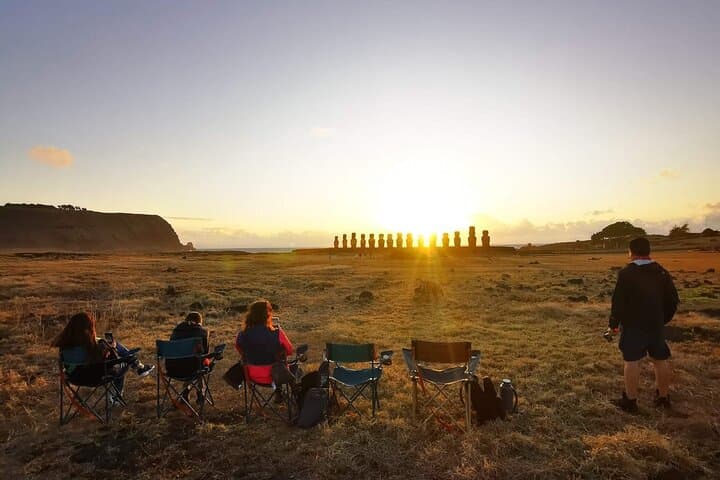
Before the sun clears the Pacific horizon, fifteen stone guardians lift their heads above the flat shore at Ahu Tongariki. The air is cool, the ocean pushes a line of low fog toward the platform, and the moai stand motionless — then color arrives, slow and uncompromising, turning volcanic tuff from gray to ochre.
Before the sun clears the Pacific horizon, fifteen stone guardians lift their heads above the flat shore at Ahu Tongariki. The air is cool, the ocean pushes a line of low fog toward the platform, and the moai stand motionless — then color arrives, slow and uncompromising, turning volcanic tuff from gray to ochre.
Tongariki is the island’s largest restored ahu, a ceremonial platform rebuilt after a 20th‑century collapse and the 1960 tsunami. The moai here were carved from Rano Raraku’s volcanic tuff and moved across a landscape shaped by three extinct volcanoes; Poike’s ridge frames the eastern sky. For the Rapa Nui people these statues mark ancestors and social history, and modern restoration has made Tongariki a focal point for both archaeology and living culture.
On a private two‑hour sunrise tour you’ll stand opposite the statues as daylight sweeps across the coast. Timing matters: between October and March the sun rises behind the platform; the rest of the year it climbs up from the Poike side, and winter months bring more cloud. Guides typically include private transport, a local guide, and a warm drink — and they’ll remind you that a Rapa Nui National Park ticket is required to enter the site.
Practicalities: arrive before civil dawn, dress in windproof layers, and expect uneven, rocky ground near the ahu. Photography benefits from a small tripod and fast lenses for low light. This is an accessible, low‑effort outing that rewards patience and respect for the place — the statues don’t rush, and neither should you.