THE ADVENTURE COLLECTIVE® · Independent discovery and booking for outdoor travel

A full-day coach trip from Madrid that pairs Toledo’s medieval lanes with Segovia’s Roman aqueduct and priority entry to the Alcázar. Ideal for travelers who want efficient access to UNESCO sites with guided context and free time to explore.
A full-day coach trip from Madrid that pairs Toledo’s medieval lanes with Segovia’s Roman aqueduct and priority entry to the Alcázar. Ideal for travelers who want efficient access to UNESCO sites with guided context and free time to explore.
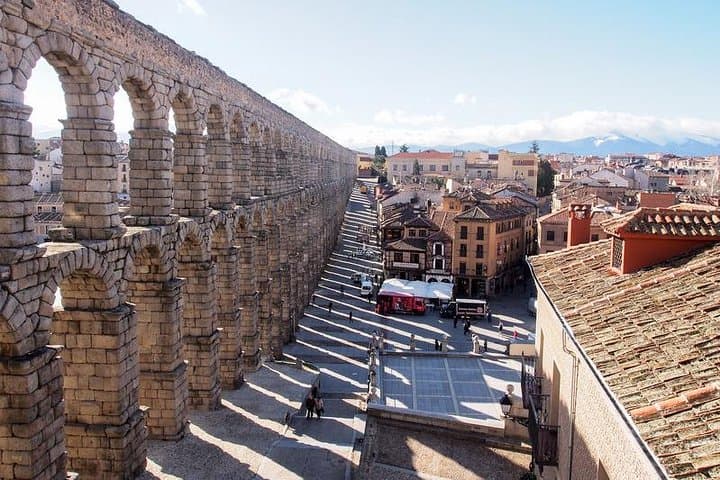
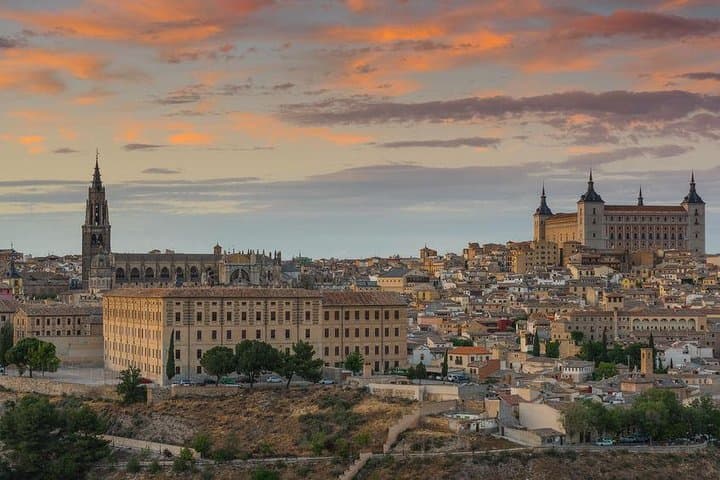
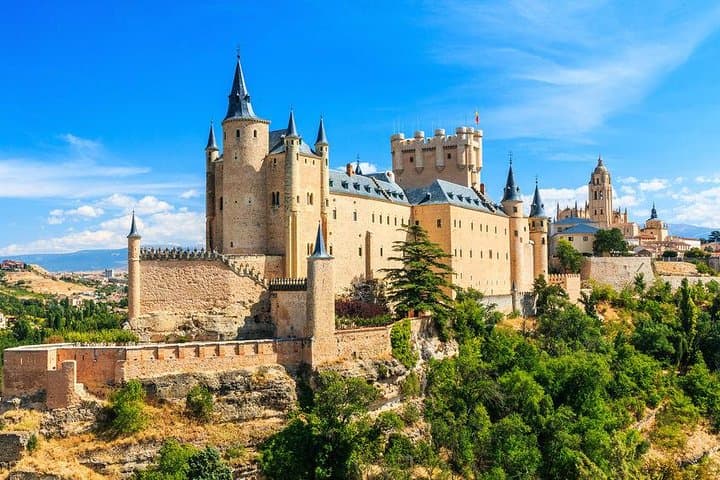
You step onto an air-conditioned coach in central Madrid before dawn and watch the city thin into folded farmland. The bus hum carries you toward Toledo’s honey-colored ramparts, where narrow streets pull you inward and the cathedral’s spires pierce a pale sky. Later the Roman aqueduct of Segovia looms like a line drawn by engineers who refused to be ordinary, and the Alcázar perches on its crag as if daring the Guadarrama winds.
Verified experiences and guided adventures in the surrounding area.
Operated by Fun and Tickets · Madrid, Community of Madrid
You step onto an air-conditioned coach in central Madrid before dawn and watch the city thin into folded farmland. The bus hum carries you toward Toledo’s honey-colored ramparts, where narrow streets pull you inward and the cathedral’s spires pierce a pale sky. Later the Roman aqueduct of Segovia looms like a line drawn by engineers who refused to be ordinary, and the Alcázar perches on its crag as if daring the Guadarrama winds.
Toledo earned the nickname “City of Three Cultures” for its medieval coexistence of Christian, Jewish and Muslim life; its cathedral was remodeled in Gothic flourishes with Olihuelas limestone that glows in late light. Segovia’s aqueduct is a surviving chapter of Roman engineering — stacked granite blocks that have kept their balance for two millennia. The Alcázar, rebuilt over centuries, reads like a fortified palace with artillery-era additions and sweeping views over the Eresma and Clamores rivers.
On this 10-hour loop you’ll join guided walking tours, see the cathedral interiors, and use preferential entry to the Alcázar; a picnic is included. Expect cobbled streets, staircases, short uphill sections and roughly 2–4 miles of walking across the day. Bring comfortable shoes, a refillable water bottle, and a compact layer for wind or sudden showers. Photography is excellent in the morning light and late afternoon; mornings are cooler and less crowded. The pace balances commentary and free time so you can explore narrow alleys, small museums and tapas stalls without feeling rushed.
easy.
10 hours.
Suitable for average fitness — you should be comfortable walking several miles on cobbles and climbing short flights of stairs.
Departures normally meet at Calle de San Bernardo, 7 in Madrid; arrive 30 minutes before the scheduled departure time for check-in.
Yes — the tour provides preferential access and a guided visit inside the Alcázar of Segovia as listed in the itinerary.
The tour notes stroller accessibility for infants and small children, but expect cobbled streets and stairs that may limit mobility in some areas.
Each city includes guided segments plus free time—typically 30–60 minutes in Toledo and Segovia to explore on your own or grab lunch.
Toledo’s urban fabric reflects centuries of Christian, Jewish and Muslim presence, while Segovia preserves a Roman aqueduct and medieval alcázar that mark strategic importance since antiquity.
Both cities are UNESCO World Heritage Sites; visitors should stick to marked routes, avoid touching fragile stonework and support local shops to keep tourism benefits local.
Fun and Tickets operates guided outdoor trips and adventures with an emphasis on safety, stewardship, and memorable experiences.
You step onto an air-conditioned coach in central Madrid before dawn and watch the city thin into folded farmland. The bus hum carries you toward Toledo’s honey-colored ramparts, where narrow streets pull you inward and the cathedral’s spires pierce a pale sky. Later the Roman aqueduct of Segovia looms like a line drawn by engineers who refused to be ordinary, and the Alcázar perches on its crag as if daring the Guadarrama winds.
You step onto an air-conditioned coach in central Madrid before dawn and watch the city thin into folded farmland. The bus hum carries you toward Toledo’s honey-colored ramparts, where narrow streets pull you inward and the cathedral’s spires pierce a pale sky. Later the Roman aqueduct of Segovia looms like a line drawn by engineers who refused to be ordinary, and the Alcázar perches on its crag as if daring the Guadarrama winds.
Toledo earned the nickname “City of Three Cultures” for its medieval coexistence of Christian, Jewish and Muslim life; its cathedral was remodeled in Gothic flourishes with Olihuelas limestone that glows in late light. Segovia’s aqueduct is a surviving chapter of Roman engineering — stacked granite blocks that have kept their balance for two millennia. The Alcázar, rebuilt over centuries, reads like a fortified palace with artillery-era additions and sweeping views over the Eresma and Clamores rivers.
On this 10-hour loop you’ll join guided walking tours, see the cathedral interiors, and use preferential entry to the Alcázar; a picnic is included. Expect cobbled streets, staircases, short uphill sections and roughly 2–4 miles of walking across the day. Bring comfortable shoes, a refillable water bottle, and a compact layer for wind or sudden showers. Photography is excellent in the morning light and late afternoon; mornings are cooler and less crowded. The pace balances commentary and free time so you can explore narrow alleys, small museums and tapas stalls without feeling rushed.