THE ADVENTURE COLLECTIVE® · Independent discovery and booking for outdoor travel

A self-guided walking tour that threads Asakusa's temple lanes through Akihabara's neon alleys to Shibuya's scramble. Download the app, pace your day, and expect a full day of contrasting Tokyo scenes and easy urban walking.
A self-guided walking tour that threads Asakusa's temple lanes through Akihabara's neon alleys to Shibuya's scramble. Download the app, pace your day, and expect a full day of contrasting Tokyo scenes and easy urban walking.
You step beneath the Kaminarimon Gate and the lantern sways like a slow heartbeat, opening into streets where neon and wooden storefronts trade places every few blocks.
Verified experiences and guided adventures in the surrounding area.
Operated by CloudGuide S.L · Tokyo, Tokyo
You step beneath the Kaminarimon Gate and the lantern sways like a slow heartbeat, opening into streets where neon and wooden storefronts trade places every few blocks.
This self-guided route threads Asakusa's Edo-era lanes into the electric alleys of Akihabara, the book-strewn calm of Jimbocho, and the scramble of Shibuya. Expect tight side streets lined with izakaya, temple grounds shaded by old cedar, and pockets of modern architecture that glare and recede in equal measure.
Historically Tokyo grew outward from Edo's castle town; today's alleys still echo that patchwork development—rice merchants and craftsmen once occupied the same plots now home to gadget shops and artisan knife stores. Geology matters in small ways: the low, flat basin of the Kanto plain made Tokyo easy to walk but prone to floods, which shaped canal routes and bridges you’ll cross without always noticing.
Culturally the city rewards slow observation: shopkeepers who polish their thresholds at dawn, shrine caretakers at prayer, and arcade staff who treat machines like instruments. Local insights: mornings are quieter, evenings hum with food stalls, and many side streets hold tiny museums or specialty shops.
Practical guidance: download the tour app and an offline map, carry a charged power bank and a transit IC card for quick travel between wards. Wear comfortable shoes for several miles of pavement, and plan breaks near green pockets such as Hamarikyu or Ueno Park. Aim for early morning light for temple courtyards and arrive at popular spots before late afternoon to avoid peak crowds.
easy.
6–10 hours.
Suitable for anyone who can handle all-day urban walking (several miles); frequent standing and stair use.
Most neighborhood sites are walk-up access or paid at the door; buy museum tickets online for special exhibitions to guarantee entry.
Yes — the CloudGuide app allows pre-download of route content so you can use it without continuous data service.
Yes — the app provides English narration and maps; many shops and stations have English signage, but a translation app helps in small local stores.
The guide can be used over multiple days within the access window; plan to split by neighborhoods and use trains to hop between them.
Asakusa preserves Tokyo’s old-town character from the Edo period while areas like Marunouchi and Ginza reflect Meiji-era modernization—walking shows the city’s layered growth.
Tokyo relies on heavy public transit use and strict waste separation; pack out trash where bins are limited and follow signage at temples and gardens.
CloudGuide S.L operates guided outdoor trips and adventures with an emphasis on safety, stewardship, and memorable experiences.
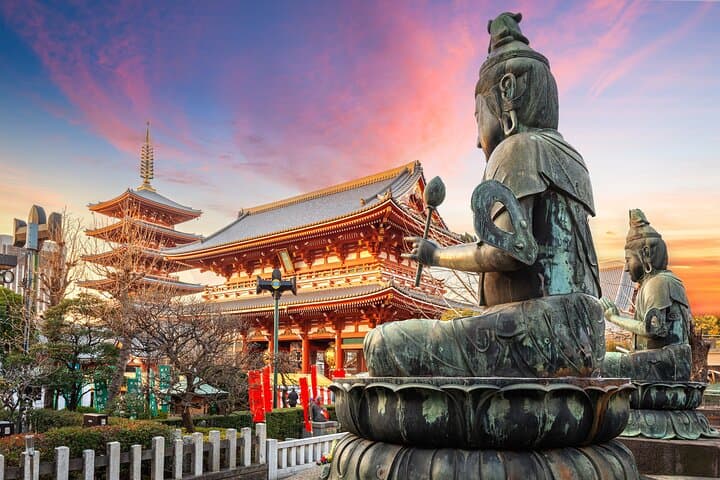

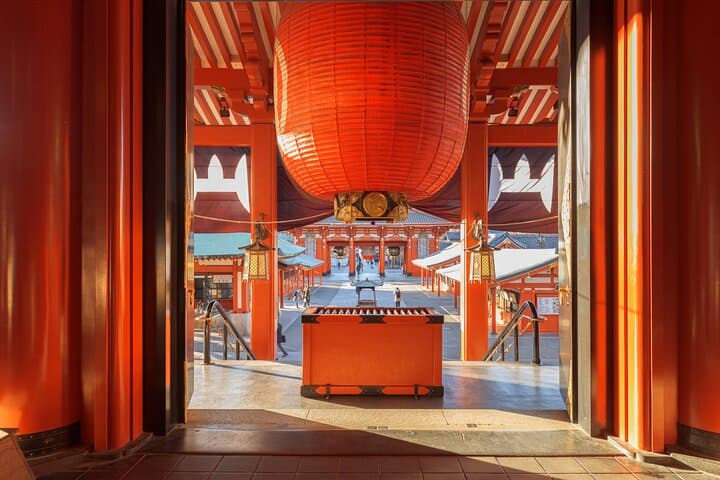

You step beneath the Kaminarimon Gate and the lantern sways like a slow heartbeat, opening into streets where neon and wooden storefronts trade places every few blocks.
You step beneath the Kaminarimon Gate and the lantern sways like a slow heartbeat, opening into streets where neon and wooden storefronts trade places every few blocks.
This self-guided route threads Asakusa's Edo-era lanes into the electric alleys of Akihabara, the book-strewn calm of Jimbocho, and the scramble of Shibuya. Expect tight side streets lined with izakaya, temple grounds shaded by old cedar, and pockets of modern architecture that glare and recede in equal measure.
Historically Tokyo grew outward from Edo's castle town; today's alleys still echo that patchwork development—rice merchants and craftsmen once occupied the same plots now home to gadget shops and artisan knife stores. Geology matters in small ways: the low, flat basin of the Kanto plain made Tokyo easy to walk but prone to floods, which shaped canal routes and bridges you’ll cross without always noticing.
Culturally the city rewards slow observation: shopkeepers who polish their thresholds at dawn, shrine caretakers at prayer, and arcade staff who treat machines like instruments. Local insights: mornings are quieter, evenings hum with food stalls, and many side streets hold tiny museums or specialty shops.
Practical guidance: download the tour app and an offline map, carry a charged power bank and a transit IC card for quick travel between wards. Wear comfortable shoes for several miles of pavement, and plan breaks near green pockets such as Hamarikyu or Ueno Park. Aim for early morning light for temple courtyards and arrive at popular spots before late afternoon to avoid peak crowds.