THE ADVENTURE COLLECTIVE® · Independent discovery and booking for outdoor travel

Learn classic Japanese dance while wearing a yukata in a private Tokyo studio. This 90-minute lesson covers bowing, walking, fan technique and a short choreography to “Sakura Sakura.”
Learn classic Japanese dance while wearing a yukata in a private Tokyo studio. This 90-minute lesson covers bowing, walking, fan technique and a short choreography to “Sakura Sakura.”
Step into a low-ceilinged Tokyo studio and the city noise slips away; wooden floorboards keep time underfoot as a warm fan is folded and unfolded with deliberate rhythm. You are fitted into a yukata, learning how the fabric shapes posture, and taught the small, formal bow that calibrates every movement of Japanese classical dance.
Verified experiences and guided adventures in the surrounding area.
Operated by Traditional Japanese Dance Experiences for International Travelers · Tokyo, Tokyo
Step into a low-ceilinged Tokyo studio and the city noise slips away; wooden floorboards keep time underfoot as a warm fan is folded and unfolded with deliberate rhythm. You are fitted into a yukata, learning how the fabric shapes posture, and taught the small, formal bow that calibrates every movement of Japanese classical dance.
This practice draws from Edo-period court and theatre traditions—Nihon buyo and Kabuki footwork inform the slow, precise gestures you’ll rehearse to the familiar tune “Sakura Sakura.” The lesson connects everyday summer cotton garments (yukata) with centuries of performance etiquette: how a fan extends an arm, how a step conveys mood. In Tokyo, these studios act as miniature cultural conservatories where tangible craft—tabi, obi tying, fan folding—meets social ritual.
Expect hands-on instruction, gentle cadence work, and a short choreography to the song’s melody. The experience emphasizes posture, breath, and the bow-and-walk sequence tourists rarely encounter outside Japan.
Practical tips: arrive early to change and be measured for your yukata; wear easy layers underneath; the studio provides a fan, yukata set and often tabbii socks you can keep. Sessions run about 90 minutes and are private, so technique is corrected in real time.
This is a low-impact, high-culture activity ideal for travelers who want a tactile introduction to Japanese performance practice. Respect the space, follow the instructor’s guidance on movement and footwear, and leave with a clearer sense of how a single song and a folded fan can carry centuries of gesture.
easy.
1–2 hours.
Suitable for all fitness levels; basic mobility and balance recommended for stepping and brief choreography
No—this private lesson is designed for beginners; instructors teach basic bowing, walking and fan movements step-by-step.
Many Tokyo studios offer instruction in basic English, but confirm language availability when booking; gestures and demonstration bridge gaps.
Yes—the program supplies a yukata, fan and often tabi socks; the socks are commonly included as a souvenir to take home.
Yes—infants and small children can attend, but check age requirements and inform the provider about special needs during booking.
Japanese classical dance borrows technique from Edo-period theatre and court dance forms; the yukata evolved as a lighter version of kimono worn in warmer months.
Support studios that source garments locally and follow low-impact laundry practices; treat rented clothing gently to extend its life.
Traditional Japanese Dance Experiences for International Travelers operates guided outdoor trips and adventures with an emphasis on safety, stewardship, and memorable experiences.
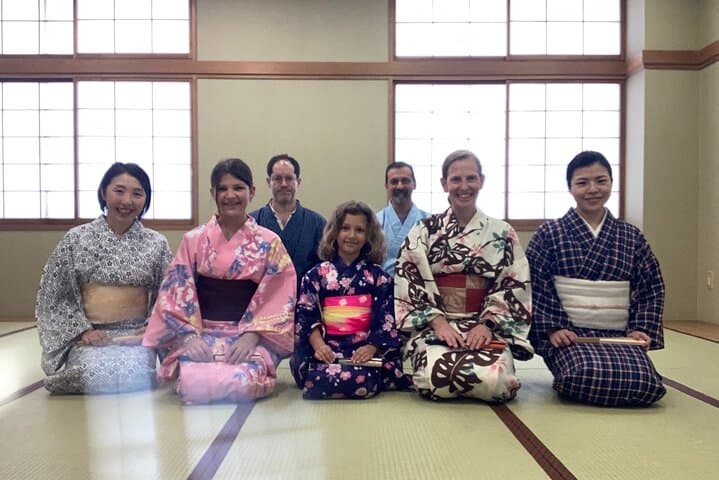
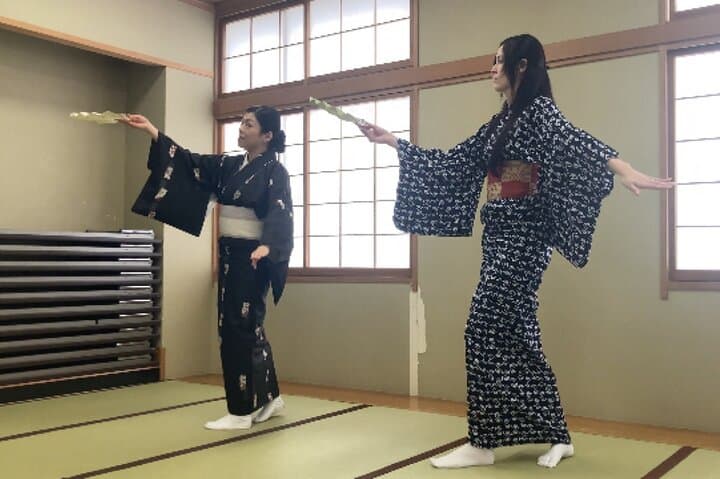
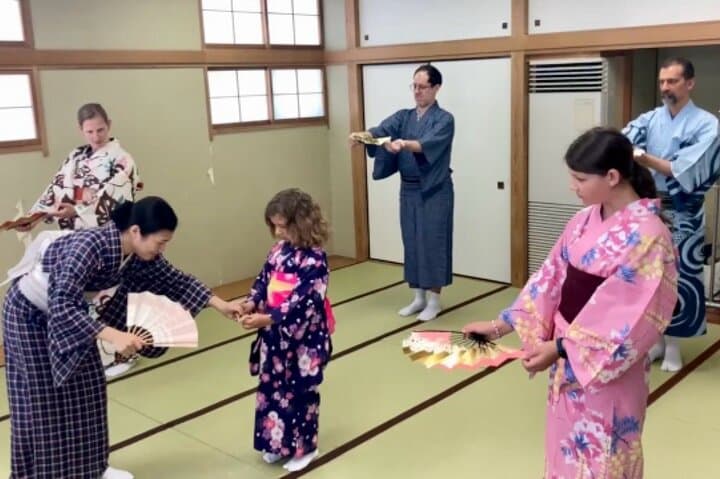
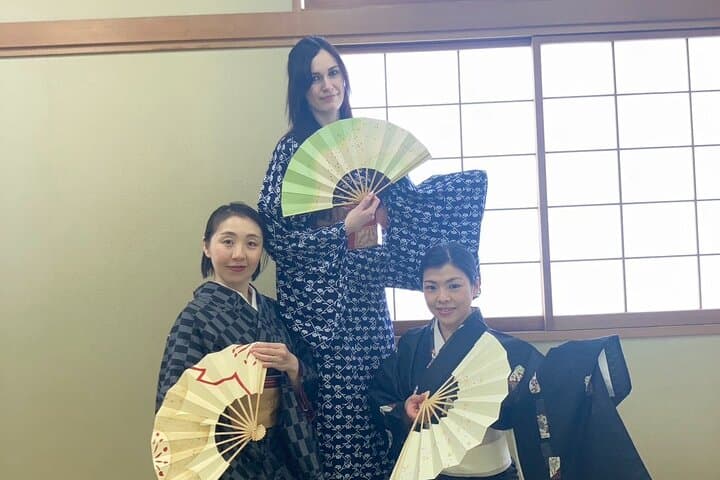
Step into a low-ceilinged Tokyo studio and the city noise slips away; wooden floorboards keep time underfoot as a warm fan is folded and unfolded with deliberate rhythm. You are fitted into a yukata, learning how the fabric shapes posture, and taught the small, formal bow that calibrates every movement of Japanese classical dance.
Step into a low-ceilinged Tokyo studio and the city noise slips away; wooden floorboards keep time underfoot as a warm fan is folded and unfolded with deliberate rhythm. You are fitted into a yukata, learning how the fabric shapes posture, and taught the small, formal bow that calibrates every movement of Japanese classical dance.
This practice draws from Edo-period court and theatre traditions—Nihon buyo and Kabuki footwork inform the slow, precise gestures you’ll rehearse to the familiar tune “Sakura Sakura.” The lesson connects everyday summer cotton garments (yukata) with centuries of performance etiquette: how a fan extends an arm, how a step conveys mood. In Tokyo, these studios act as miniature cultural conservatories where tangible craft—tabi, obi tying, fan folding—meets social ritual.
Expect hands-on instruction, gentle cadence work, and a short choreography to the song’s melody. The experience emphasizes posture, breath, and the bow-and-walk sequence tourists rarely encounter outside Japan.
Practical tips: arrive early to change and be measured for your yukata; wear easy layers underneath; the studio provides a fan, yukata set and often tabbii socks you can keep. Sessions run about 90 minutes and are private, so technique is corrected in real time.
This is a low-impact, high-culture activity ideal for travelers who want a tactile introduction to Japanese performance practice. Respect the space, follow the instructor’s guidance on movement and footwear, and leave with a clearer sense of how a single song and a folded fan can carry centuries of gesture.