THE ADVENTURE COLLECTIVE® · Independent discovery and booking for outdoor travel

Step into a Tokyo dojo for a two-hour, hands-on sumo training session led by former wrestlers. Learn footwork, belt wrapping, and short bouts while getting a close look at sumo’s ritual and athletic culture.
Step into a Tokyo dojo for a two-hour, hands-on sumo training session led by former wrestlers. Learn footwork, belt wrapping, and short bouts while getting a close look at sumo’s ritual and athletic culture.
You step off a narrow Tokyo side street into a low-ceilinged dojo; the air is warm with movement, the clay dohyo humming under the stomps of practiced feet. For two hours you trade tourist distance for direct practice—wrapping a mawashi, learning shiko leg-stamps, and charging in controlled bouts that deliver both power and etiquette.
Verified experiences and guided adventures in the surrounding area.
Operated by Amita Sumo Dojo / Authentic Sumo Experience in Tokyo produced by "Sanctuary" Sumo Director · Tokyo, Tokyo
You step off a narrow Tokyo side street into a low-ceilinged dojo; the air is warm with movement, the clay dohyo humming under the stomps of practiced feet. For two hours you trade tourist distance for direct practice—wrapping a mawashi, learning shiko leg-stamps, and charging in controlled bouts that deliver both power and etiquette.
Sumo carries Japan’s layered past: Shinto purification rites, Edo-period patronage, and a modern circuit centered on the Ryogoku area near the Sumida River. The dohyo itself is a simple construction of clay and sand, a living stage shaped by ritual and repetition rather than geology, though the Kanto Plain that holds Tokyo has always funneled people, commerce and culture into this neighborhood.
Local color is immediate—chanko nabe kitchens a few blocks away, shrine salt sprinkled before practice, and long-time stable traditions that structure even short visitor sessions. The experience blends respectful instruction with athletic drills: footwork, pushing, and short bouts led by ex-wrestlers who explain rules and the sport’s social codes.
Practically: arrive early, wear athletic leggings or shorts under the provided mawashi, and remove glasses for safety. The session is wheelchair and stroller accessible for observers, but not recommended for pregnant guests or people with serious back or heart conditions. Bring a towel, change of clothes, and modest footwear for before and after. Photography is allowed with courtesy—don’t block instruction or film unwilling participants. Book ahead (24-hour cancellation policy for full refunds) and expect a hands-on, high-energy cultural workout that leaves you with a new respect for sumo’s ritualized strength.
easy.
2 hours.
Suitable for most fitness levels; basic mobility and the ability to squat and stand repeatedly help.
No — the class is designed for beginners and includes step-by-step instruction from ex-wrestlers.
Children aged 5 and older may participate with their own booking; under-4s may observe for free.
Observers and many areas are wheelchair accessible, but active participation may be limited by mobility constraints.
Yes, photography and video are allowed if you don’t interfere with instruction and you don’t film participants who haven’t consented.
Sumo began as a Shinto ritual and evolved into a professional sport in the Edo period; Ryogoku became Tokyo’s sumo neighborhood around the early 20th century.
The dojo encourages low-impact visitation—follow rules about filming, avoid leaving waste, and support nearby small restaurants rather than large chains.
Amita Sumo Dojo / Authentic Sumo Experience in Tokyo produced by "Sanctuary" Sumo Director operates guided outdoor trips and adventures with an emphasis on safety, stewardship, and memorable experiences.
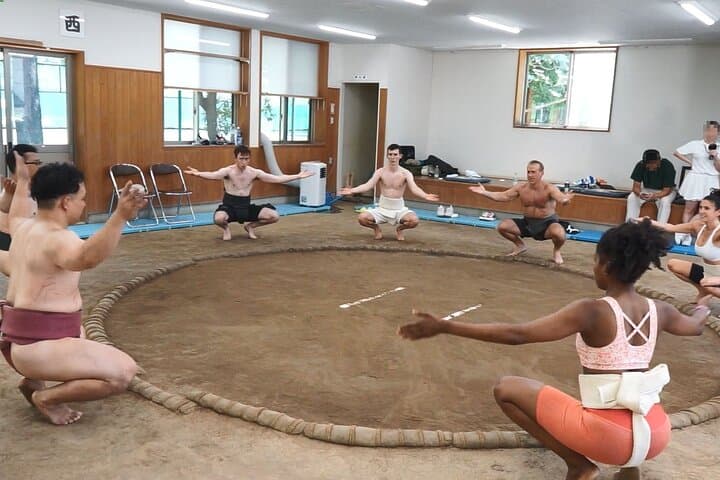
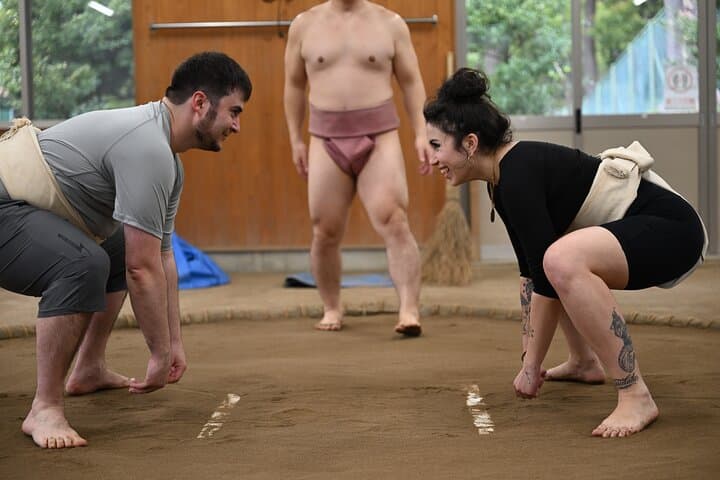
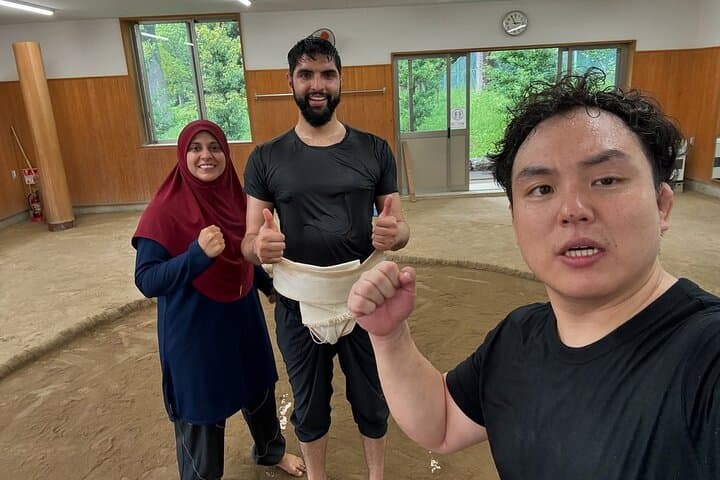
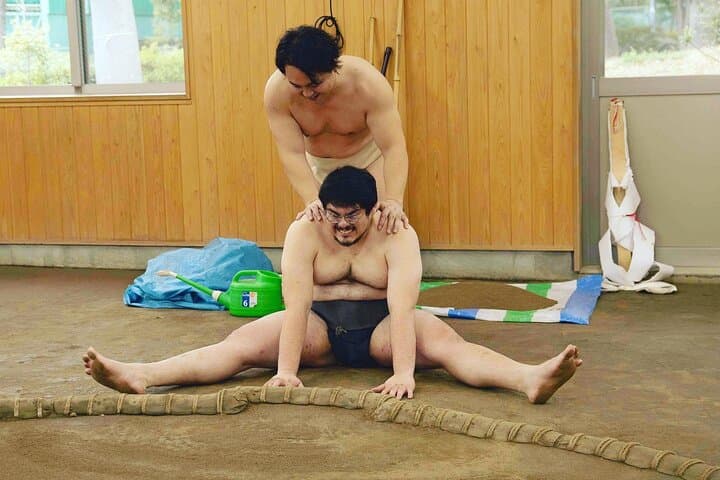
You step off a narrow Tokyo side street into a low-ceilinged dojo; the air is warm with movement, the clay dohyo humming under the stomps of practiced feet. For two hours you trade tourist distance for direct practice—wrapping a mawashi, learning shiko leg-stamps, and charging in controlled bouts that deliver both power and etiquette.
You step off a narrow Tokyo side street into a low-ceilinged dojo; the air is warm with movement, the clay dohyo humming under the stomps of practiced feet. For two hours you trade tourist distance for direct practice—wrapping a mawashi, learning shiko leg-stamps, and charging in controlled bouts that deliver both power and etiquette.
Sumo carries Japan’s layered past: Shinto purification rites, Edo-period patronage, and a modern circuit centered on the Ryogoku area near the Sumida River. The dohyo itself is a simple construction of clay and sand, a living stage shaped by ritual and repetition rather than geology, though the Kanto Plain that holds Tokyo has always funneled people, commerce and culture into this neighborhood.
Local color is immediate—chanko nabe kitchens a few blocks away, shrine salt sprinkled before practice, and long-time stable traditions that structure even short visitor sessions. The experience blends respectful instruction with athletic drills: footwork, pushing, and short bouts led by ex-wrestlers who explain rules and the sport’s social codes.
Practically: arrive early, wear athletic leggings or shorts under the provided mawashi, and remove glasses for safety. The session is wheelchair and stroller accessible for observers, but not recommended for pregnant guests or people with serious back or heart conditions. Bring a towel, change of clothes, and modest footwear for before and after. Photography is allowed with courtesy—don’t block instruction or film unwilling participants. Book ahead (24-hour cancellation policy for full refunds) and expect a hands-on, high-energy cultural workout that leaves you with a new respect for sumo’s ritualized strength.