THE ADVENTURE COLLECTIVE® · Independent discovery and booking for outdoor travel

Unleash forty minutes of controlled destruction in Tokyo’s Reeast Room. The Mega Special Course pairs protective gear with axes, bats and artful breakables for a unique stress-relief session in Ikebukuro, Shinjuku or Asakusa.
Unleash forty minutes of controlled destruction in Tokyo’s Reeast Room. The Mega Special Course pairs protective gear with axes, bats and artful breakables for a unique stress-relief session in Ikebukuro, Shinjuku or Asakusa.
You step through a heavy door and the city noise thins to a distant hum; inside, painted walls glare back at you and a stack of porcelain, glass and small appliances waits like a dare. The Mega Special Course at Reeast Room compresses urban tension into forty minutes of directed impact: bats, axes and paint meet objects chosen to break, while staff outfit you in protective gear and guide each strike.
Verified experiences and guided adventures in the surrounding area.
Operated by Reeast Room · Tokyo, Tokyo
You step through a heavy door and the city noise thins to a distant hum; inside, painted walls glare back at you and a stack of porcelain, glass and small appliances waits like a dare. The Mega Special Course at Reeast Room compresses urban tension into forty minutes of directed impact: bats, axes and paint meet objects chosen to break, while staff outfit you in protective gear and guide each strike.
Rage rooms are a recent urban ritual born in the 2000s and quickly found footing in fast-paced cities like Tokyo, where concepts of stress relief meet playful spectacle. Tokyo itself sits on an alluvial plain carved by rivers and human engineering, and its dense neighborhoods—from Ikebukuro to Shinjuku and Asakusa—house a range of offbeat leisure pursuits that this experience taps into.
Culturally, this is part performance, part therapy: rooms often feature pop-art backdrops for photos, and the act of breaking objects is framed as release rather than destruction. Practical realities matter—safety briefings, ear and eye protection, and staff supervision are standard. The session runs about 40 minutes, with time to suit up, smash, and debrief.
Plan to wear sturdy, closed-toe shoes and clothes you don't mind staining. Bring ID and any relevant health notes—pregnancy, back or heart issues are contraindications. Book in advance for evening slots on weekends; arrive 10–15 minutes early for check-in. Expect staff to enforce rules strictly: the activity is high-energy but controlled. Leave space in your itinerary afterward for a calm meal nearby—the contrast will feel deliberate and restorative.
easy.
40 minutes.
Suitable for most fitness levels, but requires standing, swinging and basic mobility; not recommended for those with spinal or cardiovascular conditions.
The activity is a 40-minute session including gear-up and a brief safety orientation.
Age rules vary by location—children may be allowed with guardian consent, but axe throwing usually requires a minimum age; bring ID.
Staff provide helmets, eye and ear protection and supervised coaching; however, it's not recommended for pregnant guests or those with serious back or heart conditions.
Policies differ; some locations allow personal items for an added fee, but check with the operator in advance and follow staff guidance.
Rage rooms emerged internationally in the 2000s as commercial stress-relief experiences; Tokyo’s versions combine that idea with local urban entertainment and pop-art presentation.
Operators typically separate and recycle materials where possible and follow waste-disposal rules; look for venues that reuse or responsibly sort broken items and limit hazardous waste.
Reeast Room operates guided outdoor trips and adventures with an emphasis on safety, stewardship, and memorable experiences.

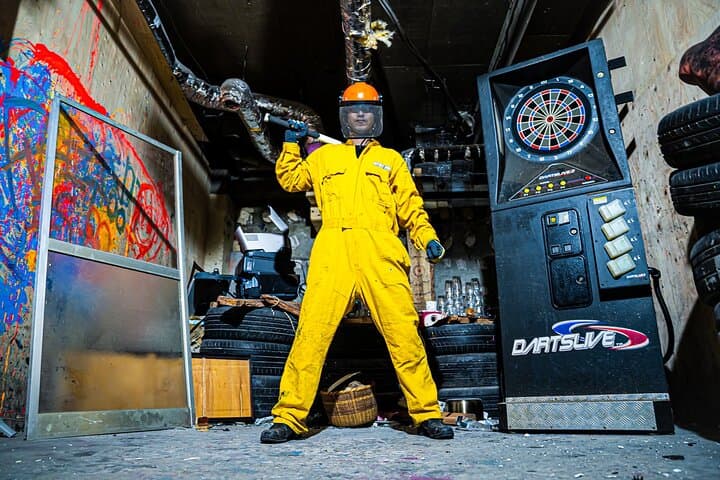
You step through a heavy door and the city noise thins to a distant hum; inside, painted walls glare back at you and a stack of porcelain, glass and small appliances waits like a dare. The Mega Special Course at Reeast Room compresses urban tension into forty minutes of directed impact: bats, axes and paint meet objects chosen to break, while staff outfit you in protective gear and guide each strike.
You step through a heavy door and the city noise thins to a distant hum; inside, painted walls glare back at you and a stack of porcelain, glass and small appliances waits like a dare. The Mega Special Course at Reeast Room compresses urban tension into forty minutes of directed impact: bats, axes and paint meet objects chosen to break, while staff outfit you in protective gear and guide each strike.
Rage rooms are a recent urban ritual born in the 2000s and quickly found footing in fast-paced cities like Tokyo, where concepts of stress relief meet playful spectacle. Tokyo itself sits on an alluvial plain carved by rivers and human engineering, and its dense neighborhoods—from Ikebukuro to Shinjuku and Asakusa—house a range of offbeat leisure pursuits that this experience taps into.
Culturally, this is part performance, part therapy: rooms often feature pop-art backdrops for photos, and the act of breaking objects is framed as release rather than destruction. Practical realities matter—safety briefings, ear and eye protection, and staff supervision are standard. The session runs about 40 minutes, with time to suit up, smash, and debrief.
Plan to wear sturdy, closed-toe shoes and clothes you don't mind staining. Bring ID and any relevant health notes—pregnancy, back or heart issues are contraindications. Book in advance for evening slots on weekends; arrive 10–15 minutes early for check-in. Expect staff to enforce rules strictly: the activity is high-energy but controlled. Leave space in your itinerary afterward for a calm meal nearby—the contrast will feel deliberate and restorative.