THE ADVENTURE COLLECTIVE® · Independent discovery and booking for outdoor travel

Learn basic Mugai-ryu Iaido in a focused 90-minute private session in Tokyo. Don a kimono, practice draws and cuts with a mock sword, and complete a supervised cardboard cutting test—no sharp steel involved.
Learn basic Mugai-ryu Iaido in a focused 90-minute private session in Tokyo. Don a kimono, practice draws and cuts with a mock sword, and complete a supervised cardboard cutting test—no sharp steel involved.
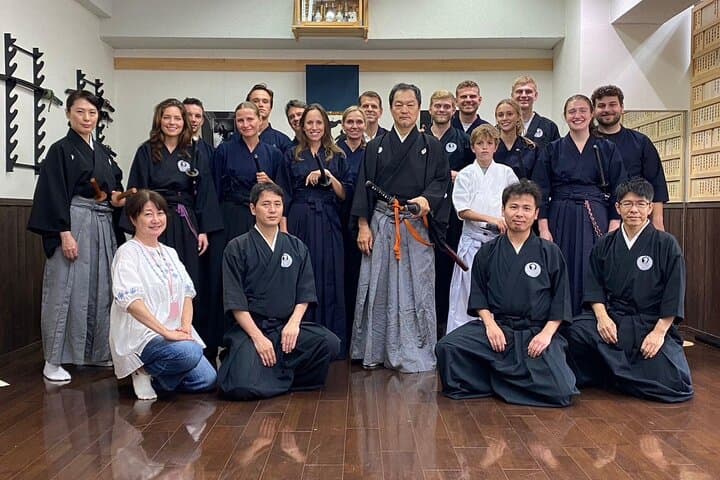
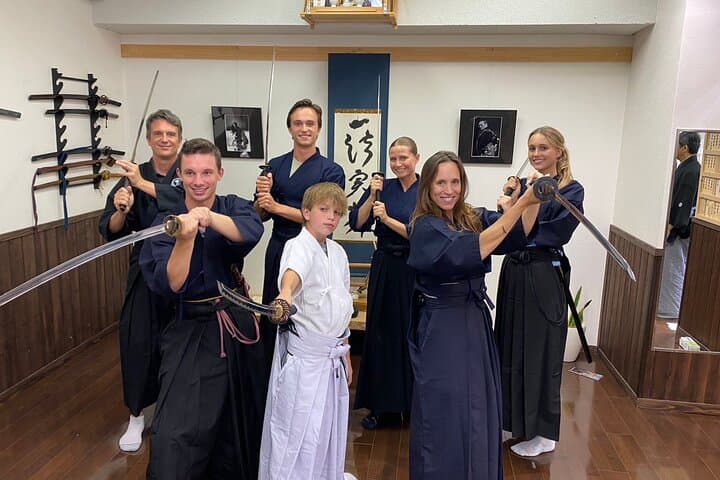
You stand in a low-ceiling dohyō, the smell of tatami and lacquered wood sharpening your focus. An instructor in kimono hands you a mock katana; the movement is simple but precise—draw, cut, return—and the room tightens around each practiced breath.
Verified experiences and guided adventures in the surrounding area.
Operated by MY Travel Consulting · Tokyo, Tokyo
You stand in a low-ceiling dohyō, the smell of tatami and lacquered wood sharpening your focus. An instructor in kimono hands you a mock katana; the movement is simple but precise—draw, cut, return—and the room tightens around each practiced breath.
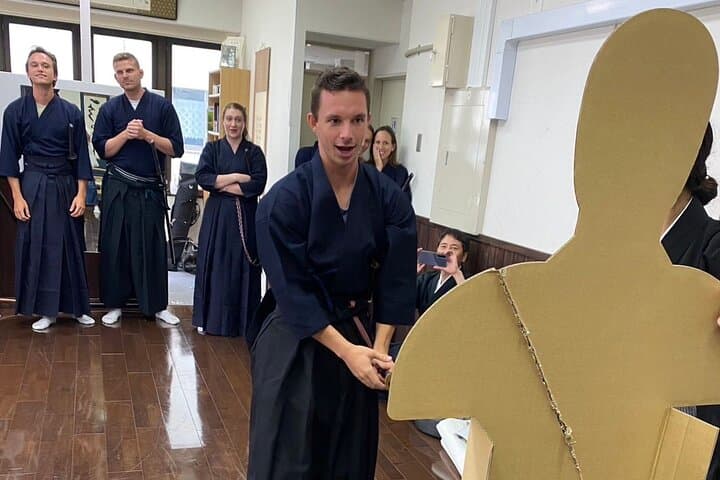
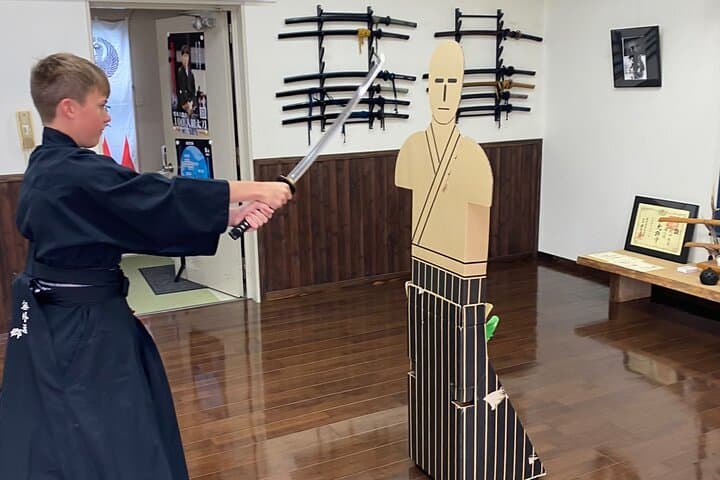
Iaido developed as a discipline of readiness in the Edo period; Mugai-ryu, the style often taught outside Japan, emphasizes smooth, efficient draws and respectful form. In Tokyo this translates to short, concentrated lessons that pair ritual etiquette with hands-on practice. The class you’ll join begins with kimono etiquette and posture, moves into basic footwork and drawing techniques in English, and culminates with a supervised cutting test using a humanoid cardboard target—mock blades only.
The experience sits at the intersection of living tradition and urban tourism: it’s not a museum diorama but a practiced art distilled into a private 90-minute session. Expect direct instruction, repetition, and a focus on safety—sharp steel is not used. Cultural notes on bowing, phraseology, and the history of the sword are woven between drills, offering context without slowing momentum.
Practicalities: arrive slightly early to change into provided clothing, keep long hair tied back, and be prepared to stand and move for most of the session. This activity is suitable for children over five and those with moderate fitness; observers may watch free of charge. Book a private slot to get personalized corrections and questions in plain English, and remember this is learning etiquette as much as technique—respect for the space and instructor goes as far as clean technique.
moderate.
1.5 hours (90 minutes).
Moderate fitness: basic balance, standing, and light bending required; suitable for most healthy adults and children 5+
No—mock swords with non-sharp edges are used for safety; the cutting test uses a cardboard target and supervised technique.
Yes; participants must be at least 5 years old. Infants may observe but cannot participate.
Yes; the course includes English-speaking instruction and cultural explanation to help non-Japanese speakers engage.
Yes—observers may watch free of charge but confirm room capacity when booking to ensure space.
Iaido traces techniques of drawing the sword for rapid response; Mugai-ryu, taught here, was formalized in the 17th century and focuses on smooth, efficient draws.
Respecting tatami, equipment, and instructor guidance helps preserve training spaces; prioritize local cultural centers that invest class fees back into preservation and teaching.
MY Travel Consulting operates guided outdoor trips and adventures with an emphasis on safety, stewardship, and memorable experiences.
You stand in a low-ceiling dohyō, the smell of tatami and lacquered wood sharpening your focus. An instructor in kimono hands you a mock katana; the movement is simple but precise—draw, cut, return—and the room tightens around each practiced breath.
You stand in a low-ceiling dohyō, the smell of tatami and lacquered wood sharpening your focus. An instructor in kimono hands you a mock katana; the movement is simple but precise—draw, cut, return—and the room tightens around each practiced breath.
Iaido developed as a discipline of readiness in the Edo period; Mugai-ryu, the style often taught outside Japan, emphasizes smooth, efficient draws and respectful form. In Tokyo this translates to short, concentrated lessons that pair ritual etiquette with hands-on practice. The class you’ll join begins with kimono etiquette and posture, moves into basic footwork and drawing techniques in English, and culminates with a supervised cutting test using a humanoid cardboard target—mock blades only.
The experience sits at the intersection of living tradition and urban tourism: it’s not a museum diorama but a practiced art distilled into a private 90-minute session. Expect direct instruction, repetition, and a focus on safety—sharp steel is not used. Cultural notes on bowing, phraseology, and the history of the sword are woven between drills, offering context without slowing momentum.
Practicalities: arrive slightly early to change into provided clothing, keep long hair tied back, and be prepared to stand and move for most of the session. This activity is suitable for children over five and those with moderate fitness; observers may watch free of charge. Book a private slot to get personalized corrections and questions in plain English, and remember this is learning etiquette as much as technique—respect for the space and instructor goes as far as clean technique.