THE ADVENTURE COLLECTIVE® · Independent discovery and booking for outdoor travel

See Tokyo from above on a private helicopter charter—choose 20–90 minute routes that capture Tokyo Tower, Skytree and, on longer flights, Mount Fuji and the Hakone coast. Expect private seating, weight limits and weather-dependent scheduling.
See Tokyo from above on a private helicopter charter—choose 20–90 minute routes that capture Tokyo Tower, Skytree and, on longer flights, Mount Fuji and the Hakone coast. Expect private seating, weight limits and weather-dependent scheduling.
A low hum grows beneath you as the helicopter lifts off from Tokyo's heliport; the city unspools in a grid of rooftops, ribbons of rail and the glint of the Sumida River. Below, Tokyo Tower looks like a model beneath glass, Skytree pierces the haze, and on clear days Mount Fuji rears over the western horizon—an impossible silhouette that seems to float above the city.
Verified experiences and guided adventures in the surrounding area.
Operated by H.I.S.Co., Ltd. · Tokyo, Tokyo
A low hum grows beneath you as the helicopter lifts off from Tokyo's heliport; the city unspools in a grid of rooftops, ribbons of rail and the glint of the Sumida River. Below, Tokyo Tower looks like a model beneath glass, Skytree pierces the haze, and on clear days Mount Fuji rears over the western horizon—an impossible silhouette that seems to float above the city.
The flight maps modern Japan: Tokyo Tower (built 1958) and the newer Tokyo Skytree (2012) bookend postwar reconstruction and contemporary growth. Geologically, you’re skimming a low coastal plain forged by river sediment and reclaimed land, with Mt. Fuji’s volcanic cone anchoring the skyline to the west. Culturally the aerial view compresses neighborhoods—shrine-rich alleys, neon commercial blocks, and waterfront developments—into a single, readable geometry.
Practical guidance: tours run 20–90 minutes depending on route—short city loops show Tokyo Tower and Skytree; 30-minute flights add the Yamanote Line corridor; 90-minute charters extend to Hakone, Yokohama, Enoshima and Mt. Fuji. Flights are private charters (up to three seats) with weight limits (about 120 kg/seat and combined aircraft limits), and restrictions for pregnant travelers or those with heart conditions. Expect a 30-minute window between meeting time and takeoff, photography allowed in-flight (not inside the heliport), and strict no-food/no-drink rules.
Book for clear mornings to maximize visibility, bring a wind-proof layer and a camera with a strap, and plan for weather-dependent rescheduling. From the air Tokyo reveals itself differently—fast, honest, and unforgettable.
easy.
20–90 minutes.
No specific fitness required; must be able to enter/exit a small aircraft and sit for the flight.
Aircraft are three-seat helicopters and the booking price is per plane; the operator offers private charters (no shared seating).
Seat limit is up to about 120 kg (264 lb) per person and the aircraft has combined weight constraints—provide accurate weights when booking.
Flights are weather-dependent—if cancelled the operator will reschedule or issue a refund according to their policy.
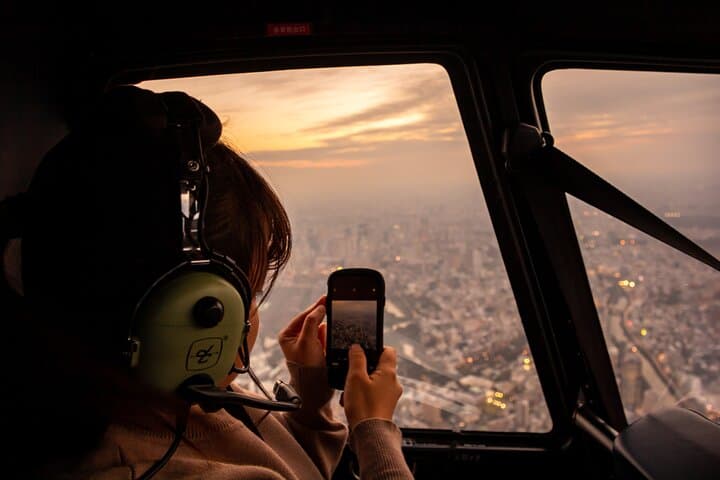
Photography is permitted in-flight; however photography is prohibited inside the heliport itself and eating/drinking is not allowed on board.
The flights frame postwar Tokyo’s rapid reconstruction—Tokyo Tower (1958) and the modern Skytree (2012) mark distinct eras in the city’s skyline.
Helicopter operators follow route and noise regulations to minimize impact over residential areas; flights are weather-limited which reduces pressure on sensitive environments.
H.I.S.Co., Ltd. operates guided outdoor trips and adventures with an emphasis on safety, stewardship, and memorable experiences.
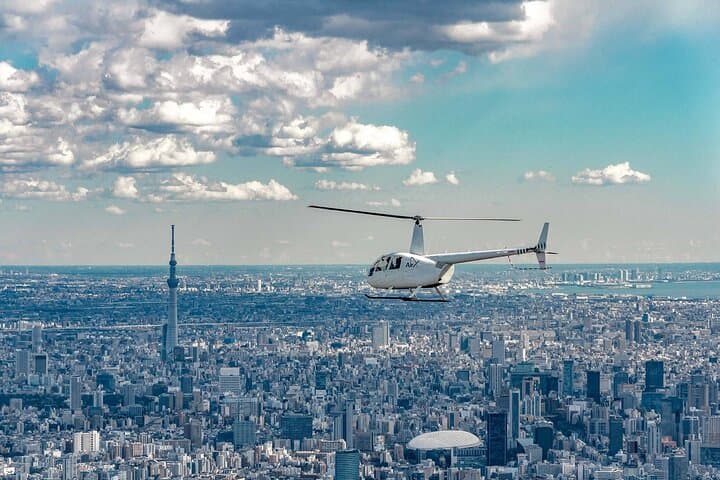
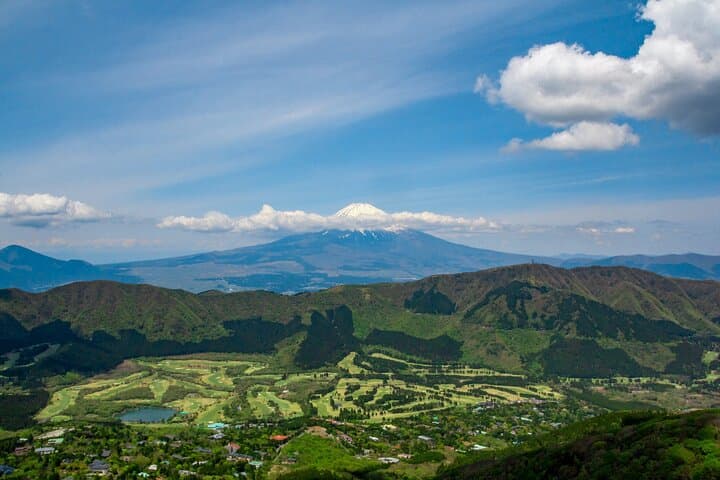
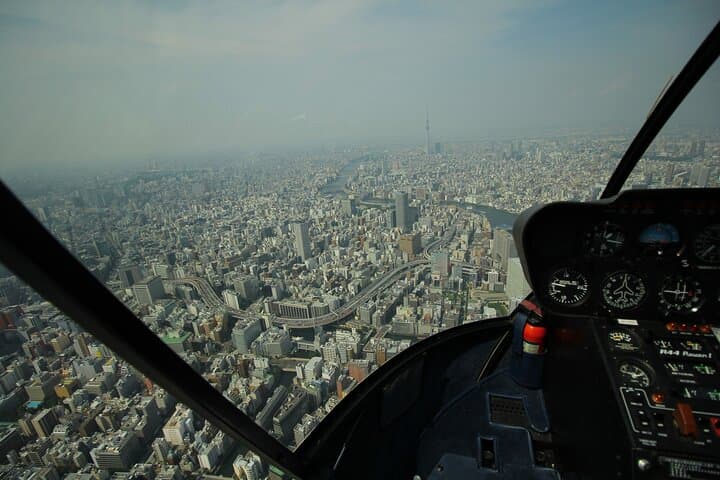
A low hum grows beneath you as the helicopter lifts off from Tokyo's heliport; the city unspools in a grid of rooftops, ribbons of rail and the glint of the Sumida River. Below, Tokyo Tower looks like a model beneath glass, Skytree pierces the haze, and on clear days Mount Fuji rears over the western horizon—an impossible silhouette that seems to float above the city.
A low hum grows beneath you as the helicopter lifts off from Tokyo's heliport; the city unspools in a grid of rooftops, ribbons of rail and the glint of the Sumida River. Below, Tokyo Tower looks like a model beneath glass, Skytree pierces the haze, and on clear days Mount Fuji rears over the western horizon—an impossible silhouette that seems to float above the city.
The flight maps modern Japan: Tokyo Tower (built 1958) and the newer Tokyo Skytree (2012) bookend postwar reconstruction and contemporary growth. Geologically, you’re skimming a low coastal plain forged by river sediment and reclaimed land, with Mt. Fuji’s volcanic cone anchoring the skyline to the west. Culturally the aerial view compresses neighborhoods—shrine-rich alleys, neon commercial blocks, and waterfront developments—into a single, readable geometry.
Practical guidance: tours run 20–90 minutes depending on route—short city loops show Tokyo Tower and Skytree; 30-minute flights add the Yamanote Line corridor; 90-minute charters extend to Hakone, Yokohama, Enoshima and Mt. Fuji. Flights are private charters (up to three seats) with weight limits (about 120 kg/seat and combined aircraft limits), and restrictions for pregnant travelers or those with heart conditions. Expect a 30-minute window between meeting time and takeoff, photography allowed in-flight (not inside the heliport), and strict no-food/no-drink rules.
Book for clear mornings to maximize visibility, bring a wind-proof layer and a camera with a strap, and plan for weather-dependent rescheduling. From the air Tokyo reveals itself differently—fast, honest, and unforgettable.