THE ADVENTURE COLLECTIVE® · Independent discovery and booking for outdoor travel

Ride an e-bike from Kanda through Tokyo’s lesser-seen streets and riverside paths. In three hours a local guide blends history, food markets and quiet shrines into a compact city exploration.
Ride an e-bike from Kanda through Tokyo’s lesser-seen streets and riverside paths. In three hours a local guide blends history, food markets and quiet shrines into a compact city exploration.
A morning bell from the Kanda neighborhood fades as rubber meets pavement and your e-bike hums into a different Tokyo — one threaded with narrow alleys, river promenades and small shrines that most visitors pass without noticing.
Verified experiences and guided adventures in the surrounding area.
Operated by Cycling Holiday Tokyo · Tokyo, Tokyo
A morning bell from the Kanda neighborhood fades as rubber meets pavement and your e-bike hums into a different Tokyo — one threaded with narrow alleys, river promenades and small shrines that most visitors pass without noticing.
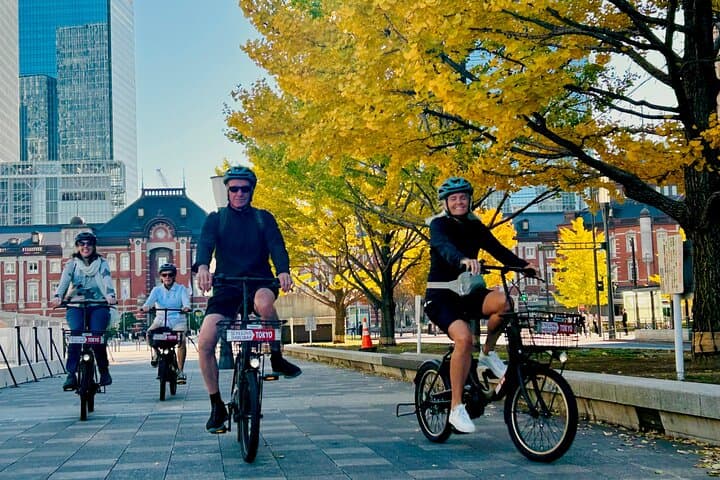
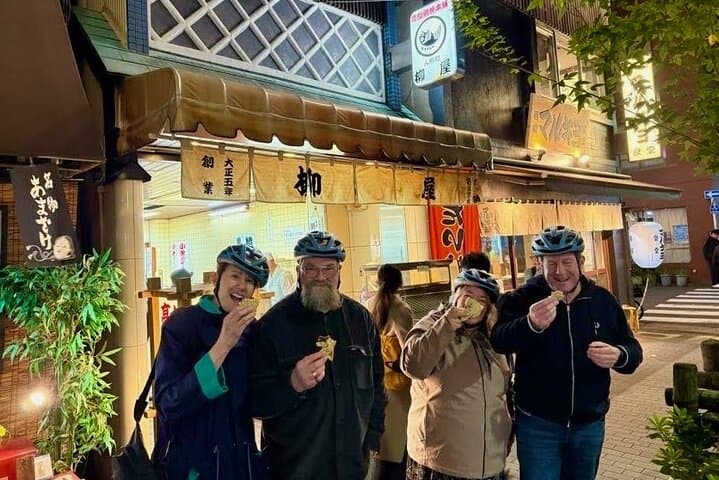
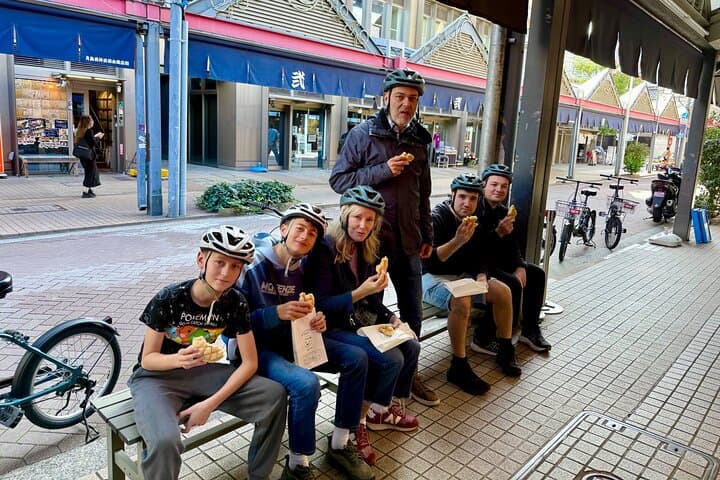
This three‑hour circuit moves between eras: the red-brick façade of Tokyo Station and the Nihonbashi marker that once measured the nation’s roads, the Imperial Palace moat and the informal commerce of Tsukiji’s outer market. Geologically the city is a flat, low-lying plain built along Edo Bay; its grid of canals and rivers shaped old trade routes and now offers surprisingly quiet green corridors. Culturally, you’ll feel the city’s rhythms — salarymen exiting Kanda’s tiny izakaya lane, vendors arranging plastic sushi in Tsukiji, and the vendor bustle of Asakusa.
Local insight matters here: a guide opens the backstreets of Ginza and the tool shops of Kappabashi you’d rarely find alone, and stops let you hear why Sakuradamon gate once mattered to castle defense and why Nihonbashi was the nation’s zero point.
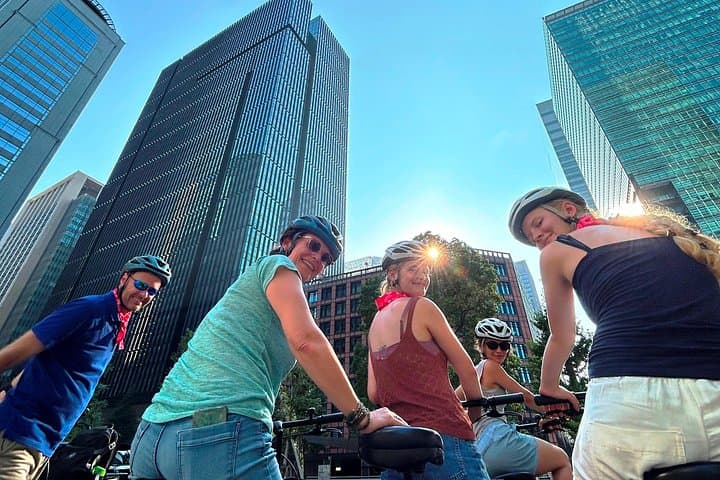
Practical guidance is straightforward. Riders must be at least 12, at least 147 cm tall and confident on a bicycle; helmets are required and supplied. Expect a mostly flat route on city streets and riverside paths with some pedestrian zones; traffic and pedestrians dictate pace. Bring water, sun protection in summer, warm layers in winter, and leave valuables in the shop’s luggage hold if needed. The guide monitors weather and heat index for safety — if conditions are unsafe the tour may be canceled and refunded.
easy.
3 hours.
Suitable for people comfortable riding a bicycle for up to three hours; minimal sustained exertion thanks to e-assist.
No — the guide gives a brief orientation; you only need basic balance and confidence riding a bicycle.
The operator checks forecasts and the WBGT heat index; tours may be canceled or stopped mid-route for safety with a refund policy in place.
Yes — the shop near Kanda Station offers short‑term storage for luggage except for valuables during the tour.
Minimum age is 12 and minimum height is 147 cm (4.8 ft); participants must be able to ride independently.
This route threads Edo/Tokyo history from Nihonbashi — the historical kilometer zero — to the Imperial Palace grounds that were once Edo Castle.
Stick to bike lanes and pedestrian rules to reduce conflict; avoid idling e-bike chargers in public areas and support local businesses rather than leaving waste.
Cycling Holiday Tokyo operates guided outdoor trips and adventures with an emphasis on safety, stewardship, and memorable experiences.
A morning bell from the Kanda neighborhood fades as rubber meets pavement and your e-bike hums into a different Tokyo — one threaded with narrow alleys, river promenades and small shrines that most visitors pass without noticing.
A morning bell from the Kanda neighborhood fades as rubber meets pavement and your e-bike hums into a different Tokyo — one threaded with narrow alleys, river promenades and small shrines that most visitors pass without noticing.
This three‑hour circuit moves between eras: the red-brick façade of Tokyo Station and the Nihonbashi marker that once measured the nation’s roads, the Imperial Palace moat and the informal commerce of Tsukiji’s outer market. Geologically the city is a flat, low-lying plain built along Edo Bay; its grid of canals and rivers shaped old trade routes and now offers surprisingly quiet green corridors. Culturally, you’ll feel the city’s rhythms — salarymen exiting Kanda’s tiny izakaya lane, vendors arranging plastic sushi in Tsukiji, and the vendor bustle of Asakusa.
Local insight matters here: a guide opens the backstreets of Ginza and the tool shops of Kappabashi you’d rarely find alone, and stops let you hear why Sakuradamon gate once mattered to castle defense and why Nihonbashi was the nation’s zero point.
Practical guidance is straightforward. Riders must be at least 12, at least 147 cm tall and confident on a bicycle; helmets are required and supplied. Expect a mostly flat route on city streets and riverside paths with some pedestrian zones; traffic and pedestrians dictate pace. Bring water, sun protection in summer, warm layers in winter, and leave valuables in the shop’s luggage hold if needed. The guide monitors weather and heat index for safety — if conditions are unsafe the tour may be canceled and refunded.