THE ADVENTURE COLLECTIVE® · Independent discovery and booking for outdoor travel

See Tokyo’s skyscrapers and temple roofs from a low, 22-minute helicopter flight that sweeps past Tokyo Skytree and Asakusa at night. A compact, weather-dependent aerial experience ideal for first-time flyers and visitors short on time.
See Tokyo’s skyscrapers and temple roofs from a low, 22-minute helicopter flight that sweeps past Tokyo Skytree and Asakusa at night. A compact, weather-dependent aerial experience ideal for first-time flyers and visitors short on time.
Night folds over Tokyo and the city becomes a grid of moving stars. From the helicopter cabin a few hundred meters above Sumida, Tokyo Skytree rises like a lit mast; the Sumida River cuts the city into luminous ribbons while pockets of neon gather in Asakusa beneath the old temples. The first moments are all motion—engines, rotating light, windows framing a metropolis that keeps changing scale.
Verified experiences and guided adventures in the surrounding area.
Operated by AIROS Skyview Tokyo Helicopter Tours (ヘリコプター遊覧飛行) · Tokyo, Tokyo
Night folds over Tokyo and the city becomes a grid of moving stars. From the helicopter cabin a few hundred meters above Sumida, Tokyo Skytree rises like a lit mast; the Sumida River cuts the city into luminous ribbons while pockets of neon gather in Asakusa beneath the old temples. The first moments are all motion—engines, rotating light, windows framing a metropolis that keeps changing scale.
This short, 22-minute flight traces Tokyo’s modern and historic spine. The Skytree, completed in 2012, is a modern broadcast tower and observation platform that contrasts with Asakusa’s Senso-ji, a Buddhist temple whose wooden gate has welcomed pilgrims for centuries. Geologically the flight reveals Tokyo’s flat coastal plain carved by the Sumida and Arakawa rivers; culturally it spotlights the city’s layered skyline of shrines, steel, and stacked neighborhoods.
Practically, this is a compact aerial experience: expect clear city panoramas on fair-weather nights, tight seating for up to three passengers, and strict weight limits. Flights are weather-dependent—low clouds, high winds, or visibility issues will cancel flights for safety. Bring a jacket; rotor wash and open windows make the cabin feel colder than ground level. Arrive early to complete safety briefings and passport check-in; most operators provide a short transfer from central Tokyo.
For photographers, night exposures through curved glass require steady hands and high ISO. For anyone wanting a quick, high-impact view of Tokyo’s contrasts—old temples, river corridors, and soaring modern towers—this flight delivers concentrated perspective with minimal time commitment.
easy.
20–30 minutes.
Minimal fitness required; must be able to sit unassisted for the duration
You’ll be offered a full refund or the option to reschedule; operators typically notify passengers ahead of time where possible.
Yes, infants can fly but must sit on an adult’s lap; inform the operator at booking and bring ID for all passengers.
This experience is limited to a maximum of three passengers per helicopter, so bookings are private to small groups.
Yes—photography is permitted, but expect reflections from curved cabin windows and brief vibration from the rotors.
The flight contrasts Tokyo Skytree (a 21st-century broadcasting tower) with Asakusa’s Senso-ji area, a cultural center with roots in the early Edo period.
Operators follow strict safety and noise regulations to minimize disturbance; flying only in permitted corridors helps reduce impacts on residential areas.
AIROS Skyview Tokyo Helicopter Tours (ヘリコプター遊覧飛行) operates guided outdoor trips and adventures with an emphasis on safety, stewardship, and memorable experiences.
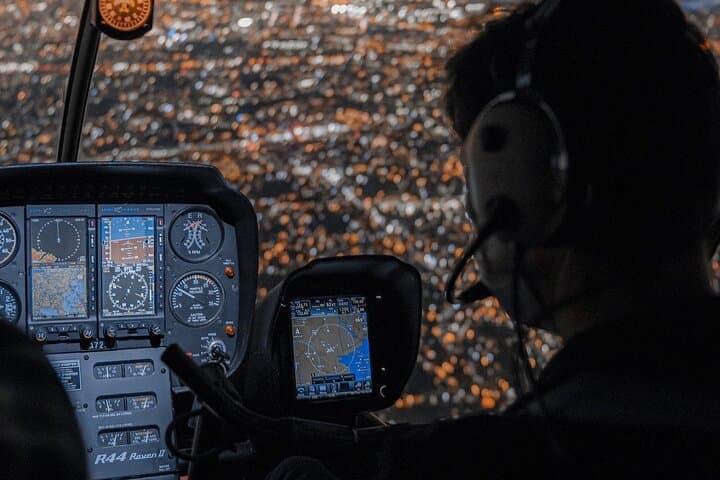
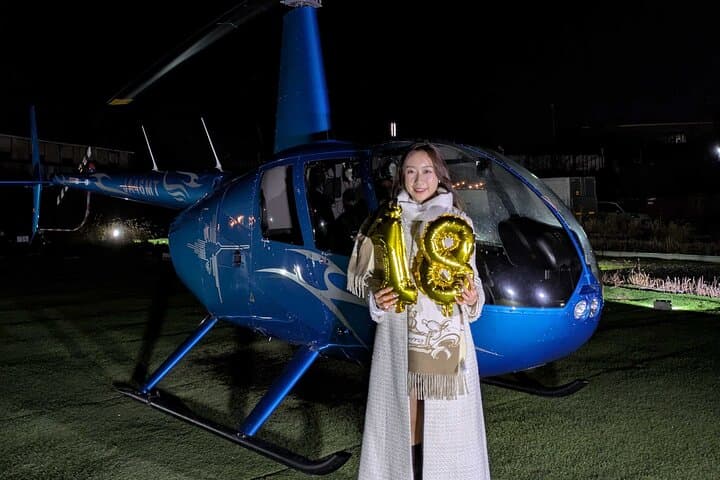
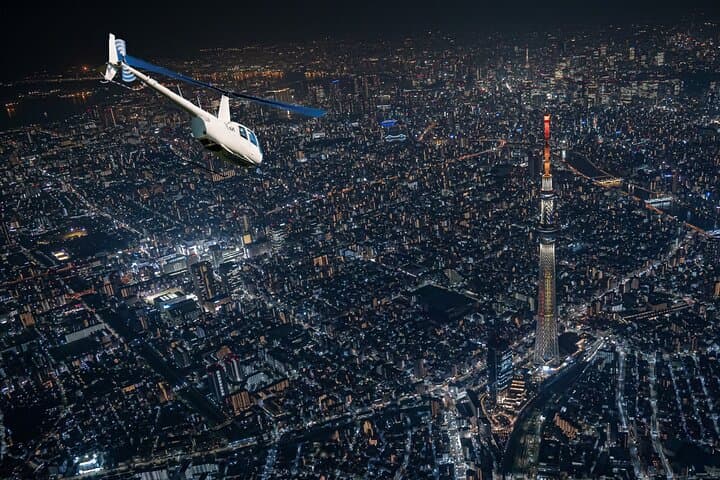
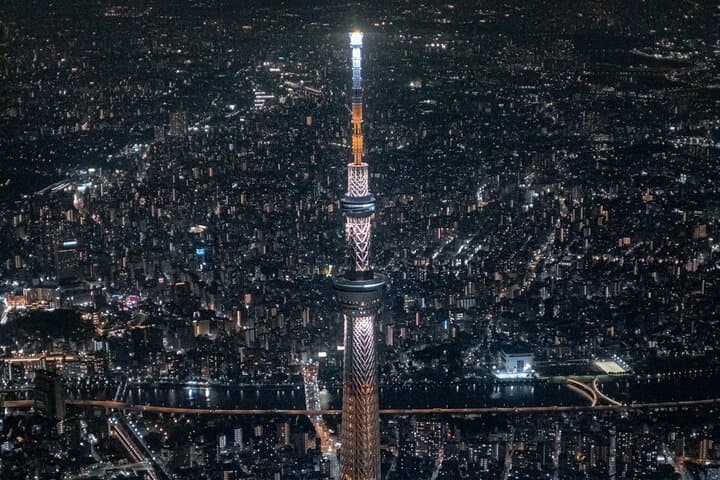
Night folds over Tokyo and the city becomes a grid of moving stars. From the helicopter cabin a few hundred meters above Sumida, Tokyo Skytree rises like a lit mast; the Sumida River cuts the city into luminous ribbons while pockets of neon gather in Asakusa beneath the old temples. The first moments are all motion—engines, rotating light, windows framing a metropolis that keeps changing scale.
Night folds over Tokyo and the city becomes a grid of moving stars. From the helicopter cabin a few hundred meters above Sumida, Tokyo Skytree rises like a lit mast; the Sumida River cuts the city into luminous ribbons while pockets of neon gather in Asakusa beneath the old temples. The first moments are all motion—engines, rotating light, windows framing a metropolis that keeps changing scale.
This short, 22-minute flight traces Tokyo’s modern and historic spine. The Skytree, completed in 2012, is a modern broadcast tower and observation platform that contrasts with Asakusa’s Senso-ji, a Buddhist temple whose wooden gate has welcomed pilgrims for centuries. Geologically the flight reveals Tokyo’s flat coastal plain carved by the Sumida and Arakawa rivers; culturally it spotlights the city’s layered skyline of shrines, steel, and stacked neighborhoods.
Practically, this is a compact aerial experience: expect clear city panoramas on fair-weather nights, tight seating for up to three passengers, and strict weight limits. Flights are weather-dependent—low clouds, high winds, or visibility issues will cancel flights for safety. Bring a jacket; rotor wash and open windows make the cabin feel colder than ground level. Arrive early to complete safety briefings and passport check-in; most operators provide a short transfer from central Tokyo.
For photographers, night exposures through curved glass require steady hands and high ISO. For anyone wanting a quick, high-impact view of Tokyo’s contrasts—old temples, river corridors, and soaring modern towers—this flight delivers concentrated perspective with minimal time commitment.