THE ADVENTURE COLLECTIVE® · Independent discovery and booking for outdoor travel

A 7km clifftop loop on West Cork’s Wild Atlantic Way that blends rugged coastal geology, an Iron Age promontory fort, a deserted famine village and wild orchids. Expect exposed cliffs, sea views and local stories on a guided 2–3 hour hike.
A 7km clifftop loop on West Cork’s Wild Atlantic Way that blends rugged coastal geology, an Iron Age promontory fort, a deserted famine village and wild orchids. Expect exposed cliffs, sea views and local stories on a guided 2–3 hour hike.
The walk opens with wind off the Atlantic pressing on your shoulders and cliffs that dare you to look over. Start on low heath where Móin Rua's peat and orchids bend under a salt breeze; the path climbs and falls along clifftops with constant ocean views and sudden, secret coves glimpsed through gorse.
Verified experiences and guided adventures in the surrounding area.
Operated by Gormú · Skibbereen, County Cork
The walk opens with wind off the Atlantic pressing on your shoulders and cliffs that dare you to look over. Start on low heath where Móin Rua's peat and orchids bend under a salt breeze; the path climbs and falls along clifftops with constant ocean views and sudden, secret coves glimpsed through gorse.
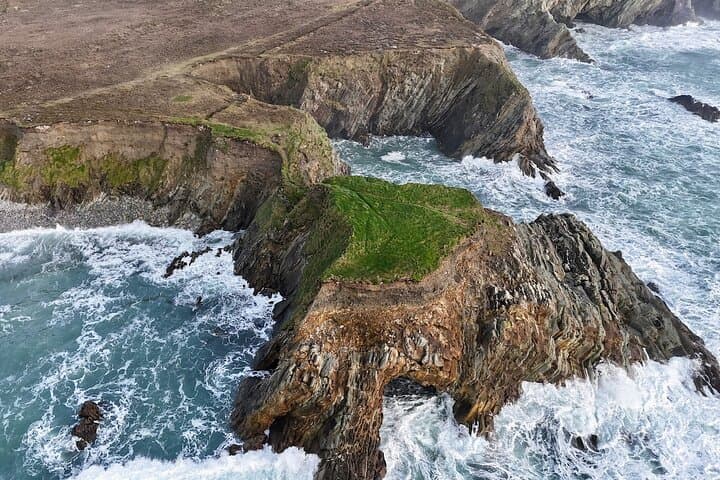
This stretch of the Wild Atlantic Way carries human history in its folds: a deserted famine village tucked into a hollow, an Iron Age promontory fort with a local secret, and wartime stories about WWI submarine patrols that watched these waters. Geologically the headland is old sandstone and shale, sculpted by wave hammering into stacks and sea clefts; Cnoc na nGabhar rises inland as a rugged landmark.
On the trail you'll pass the famous EIRE sign — a 20th-century coastal navigation mark — and the battlefield beach of Tráigh Liceach where stories and shore mix. Birdlife is active along the spray line and seals often ride the swell just off shore.
Practical notes: the route is roughly 7 km and the guided loop runs about 2¾ hours with frequent stops for photos and storytelling. Expect variable, exposed terrain—peat, rocky paths and narrow cliff-edge tracks—so bring sturdy boots, windproof layers and rain protection. Hydrate and pack snacks; the tour includes home-baked oat cookies and hot tea on return. Tides and weather shape the experience: a clear morning gives long ocean visibility, while a blustery day turns currents and cliffs into a live performance. Stay on marked lines to protect orchids and fragile peat, and allow time to savor viewpoints — the hike is paced to be welcoming but demands respect for changeable Atlantic weather.
moderate.
2–3 hours.
Suitable for hikers with a moderate level of fitness who can manage uneven terrain and short climbs.
The guided loop is about 7 km and takes roughly 2¾ hours at an easy pace with frequent stops; terrain is exposed and uneven, so it's rated moderate.
Service animals are permitted; owners should check with the operator beforehand as general pets may be discouraged on guided walks to protect wildlife.
Wear waterproof outer layers, sturdy boots and bring water, a hat and sunscreen; tides do not directly affect the clifftop route but weather can change rapidly.
Full refund available if cancelled at least 24 hours before departure; operator may cancel in bad weather and will notify booked guests.
The coastline bears traces from the Great Famine era and 20th-century coastal navigation (EIRE) markings; local lore includes wartime submarine patrols off the coast.
Móin Rua is peatland with sensitive orchid colonies—stick to paths, avoid picking plants and carry out all waste to minimize impact.
Gormú operates guided outdoor trips and adventures with an emphasis on safety, stewardship, and memorable experiences.
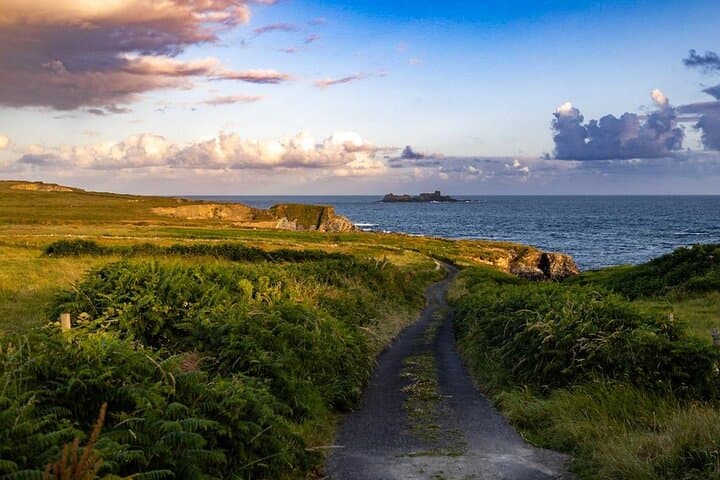
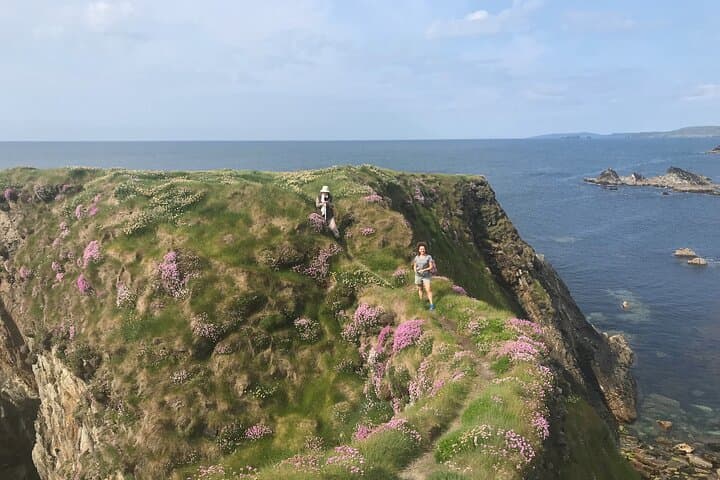
The walk opens with wind off the Atlantic pressing on your shoulders and cliffs that dare you to look over. Start on low heath where Móin Rua's peat and orchids bend under a salt breeze; the path climbs and falls along clifftops with constant ocean views and sudden, secret coves glimpsed through gorse.
The walk opens with wind off the Atlantic pressing on your shoulders and cliffs that dare you to look over. Start on low heath where Móin Rua's peat and orchids bend under a salt breeze; the path climbs and falls along clifftops with constant ocean views and sudden, secret coves glimpsed through gorse.
This stretch of the Wild Atlantic Way carries human history in its folds: a deserted famine village tucked into a hollow, an Iron Age promontory fort with a local secret, and wartime stories about WWI submarine patrols that watched these waters. Geologically the headland is old sandstone and shale, sculpted by wave hammering into stacks and sea clefts; Cnoc na nGabhar rises inland as a rugged landmark.
On the trail you'll pass the famous EIRE sign — a 20th-century coastal navigation mark — and the battlefield beach of Tráigh Liceach where stories and shore mix. Birdlife is active along the spray line and seals often ride the swell just off shore.
Practical notes: the route is roughly 7 km and the guided loop runs about 2¾ hours with frequent stops for photos and storytelling. Expect variable, exposed terrain—peat, rocky paths and narrow cliff-edge tracks—so bring sturdy boots, windproof layers and rain protection. Hydrate and pack snacks; the tour includes home-baked oat cookies and hot tea on return. Tides and weather shape the experience: a clear morning gives long ocean visibility, while a blustery day turns currents and cliffs into a live performance. Stay on marked lines to protect orchids and fragile peat, and allow time to savor viewpoints — the hike is paced to be welcoming but demands respect for changeable Atlantic weather.