THE ADVENTURE COLLECTIVE® · Independent discovery and booking for outdoor travel

Walk Todgha Gorge with local guides who take you off the main road onto shepherd paths, nomadic camps, and a Berber home visit. This 3–3.5 hour hike mixes dramatic limestone walls with intimate cultural encounters.
Walk Todgha Gorge with local guides who take you off the main road onto shepherd paths, nomadic camps, and a Berber home visit. This 3–3.5 hour hike mixes dramatic limestone walls with intimate cultural encounters.
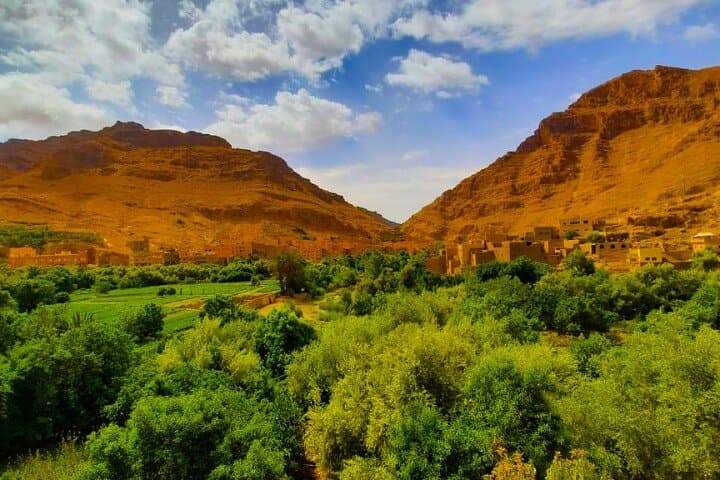
You step from the shaded palm groves into a corridor of stone—canyon walls rising like folded pages, sunlight cutting sharp bands across the river. The Todgha (Todgha/Todra) Gorge presses close; the river dares you to follow its course while cliffs keep a quiet watch.
Verified experiences and guided adventures in the surrounding area.
Operated by Todgha Gorge · Tinerhir, Drâa-Tafilalet
You step from the shaded palm groves into a corridor of stone—canyon walls rising like folded pages, sunlight cutting sharp bands across the river. The Todgha (Todgha/Todra) Gorge presses close; the river dares you to follow its course while cliffs keep a quiet watch.
This walk follows a long human story. The gorge is carved from limestone and dolomite, uplifted by the High Atlas and scoured by seasonal floods that cut narrow, vertical passages up to 300 meters high. People have moved through these valleys for centuries: Berber families who keep seasonal herds, kasbahs that guarded trade routes, and riverside groves that sustained palm and date cultivation.
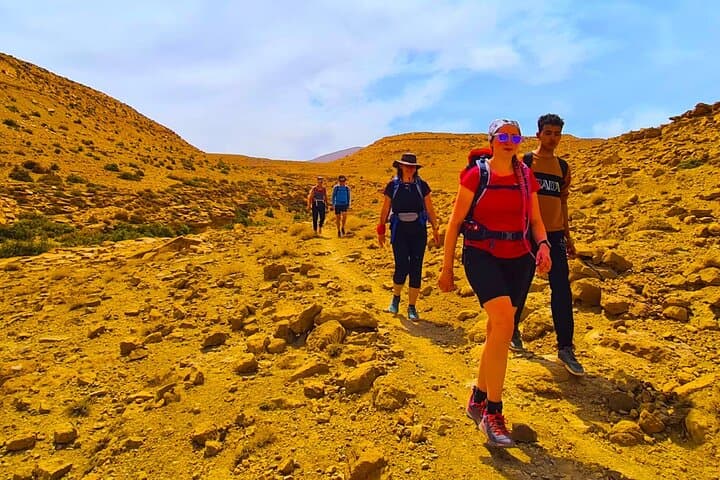
Your local guide leads you off paved viewpoints onto shepherd paths that thread between terraces and nomadic camps. Expect intimate cultural moments: poured mint tea under a tent, conversations about migration cycles, and a look inside traditional stone-and-earth homes where architecture answers heat and wind.
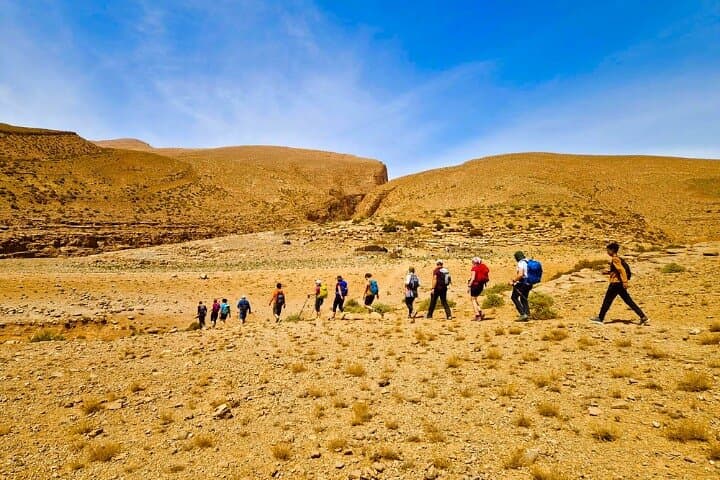
Practically, this is a short, accessible loop—roughly three to three-and-a-half hours on mixed rocky tracks, occasional loose scree, and flat riverside walking. Bring sturdy footwear, sun protection, and at least 1–2 liters of water; the sun can be fierce and shade patchy. Morning starts give cooler temperatures and better light for photos; late afternoon offers warm tones but can be hotter lower in the valley.
This is a hike that balances landscape and people: the gorge’s geology pushes you forward; local hosts pull you into their stories. Come ready to listen, to move carefully over uneven ground, and to leave with a small handmade keepsake and a clearer sense of life in the High Atlas.
easy.
3–3.5 hours.
Suitable for most fitness levels; expect moderate walking on uneven terrain and short climbs.
The tour runs about 3–3.5 hours and is rated easy—paths are mostly short walks with uneven terrain but no technical climbing.
Yes; families and well-behaved children can attend, but be mindful of small spaces in tents and follow guide instructions.
Guides provide bottled water and traditional Berber tea at a nomadic camp; bring additional water if you prefer more hydration.
You can hike parts independently, but a local guide opens less-traveled nomadic trails and manages cultural introductions to family camps.
Todgha Gorge sits along ancient routes across the High Atlas; kasbahs and terraced agriculture reflect long-standing adaptive strategies to arid mountain conditions.
Water is scarce—stay on trails and pack out waste; support local guides and craftspeople to keep tourism benefits in the community.
Todgha Gorge operates guided outdoor trips and adventures with an emphasis on safety, stewardship, and memorable experiences.
You step from the shaded palm groves into a corridor of stone—canyon walls rising like folded pages, sunlight cutting sharp bands across the river. The Todgha (Todgha/Todra) Gorge presses close; the river dares you to follow its course while cliffs keep a quiet watch.
You step from the shaded palm groves into a corridor of stone—canyon walls rising like folded pages, sunlight cutting sharp bands across the river. The Todgha (Todgha/Todra) Gorge presses close; the river dares you to follow its course while cliffs keep a quiet watch.
This walk follows a long human story. The gorge is carved from limestone and dolomite, uplifted by the High Atlas and scoured by seasonal floods that cut narrow, vertical passages up to 300 meters high. People have moved through these valleys for centuries: Berber families who keep seasonal herds, kasbahs that guarded trade routes, and riverside groves that sustained palm and date cultivation.
Your local guide leads you off paved viewpoints onto shepherd paths that thread between terraces and nomadic camps. Expect intimate cultural moments: poured mint tea under a tent, conversations about migration cycles, and a look inside traditional stone-and-earth homes where architecture answers heat and wind.
Practically, this is a short, accessible loop—roughly three to three-and-a-half hours on mixed rocky tracks, occasional loose scree, and flat riverside walking. Bring sturdy footwear, sun protection, and at least 1–2 liters of water; the sun can be fierce and shade patchy. Morning starts give cooler temperatures and better light for photos; late afternoon offers warm tones but can be hotter lower in the valley.
This is a hike that balances landscape and people: the gorge’s geology pushes you forward; local hosts pull you into their stories. Come ready to listen, to move carefully over uneven ground, and to leave with a small handmade keepsake and a clearer sense of life in the High Atlas.