THE ADVENTURE COLLECTIVE® · Independent discovery and booking for outdoor travel

This full-day trip from Addis Ababa pairs UNESCO-listed stelae at Tiya with an authentic Gurage village visit and the prehistoric finds at Melka Kunture. Expect cultural immersion, short walks, and scenic drives across the Awash Valley.
This full-day trip from Addis Ababa pairs UNESCO-listed stelae at Tiya with an authentic Gurage village visit and the prehistoric finds at Melka Kunture. Expect cultural immersion, short walks, and scenic drives across the Awash Valley.
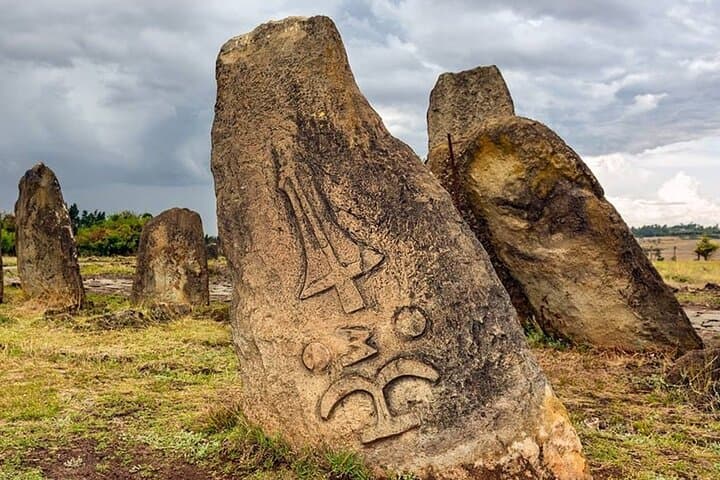
You leave Addis Ababa with the city shrinking behind you and a wide Ethiopian sky opening ahead—red earth, low hills, and roadside farms rolling past the window of an air-conditioned vehicle. The first stop is Tiya, where a field of carved stelae rises from grass and scrub; the stones, scored with geometric and anthropomorphic marks, hold a quiet, difficult-to-decipher human story.
Verified experiences and guided adventures in the surrounding area.
Operated by GishAbay Ethiopia Tours · Addis Ababa, Addis Ababa
You leave Addis Ababa with the city shrinking behind you and a wide Ethiopian sky opening ahead—red earth, low hills, and roadside farms rolling past the window of an air-conditioned vehicle. The first stop is Tiya, where a field of carved stelae rises from grass and scrub; the stones, scored with geometric and anthropomorphic marks, hold a quiet, difficult-to-decipher human story.
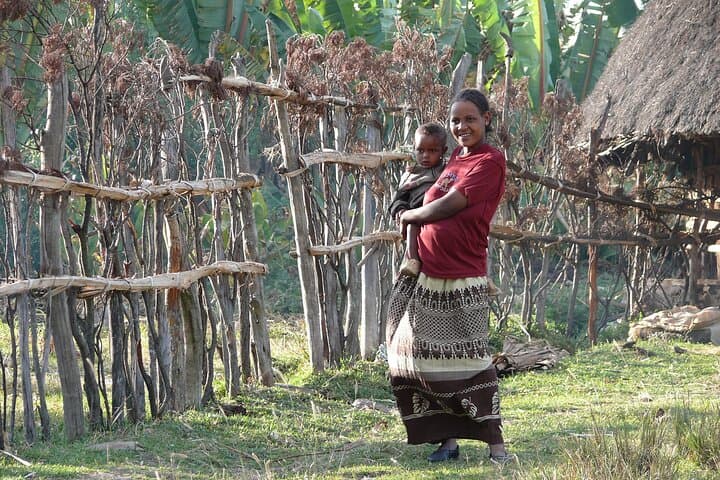
From there the tour slips into living culture in a Gurage village. Here the pace slows: the aroma of roasting coffee fills a compact courtyard, women show the laborious process of turning enset (the false banana) into kocho and bread, and guests are invited into a coffee ceremony that maps local kinship and hospitality. The day balances sensory detail—newly pounded injera-like bread, the clack of mortar—with learning about agricultural practices adapted to highland soils.
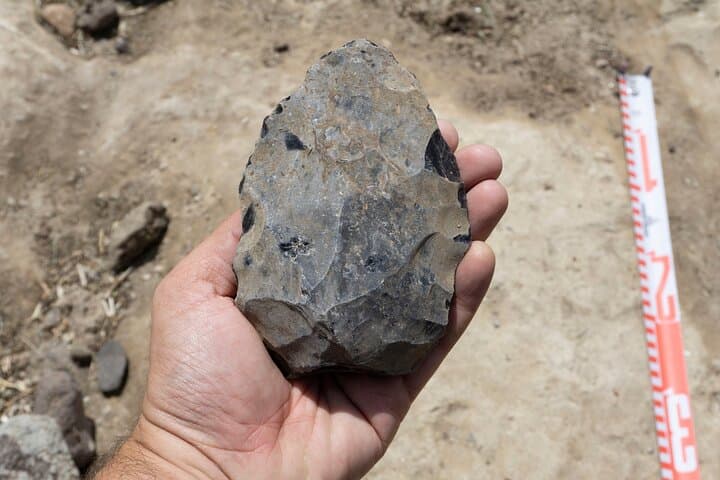
On the return, Melka Kunture reveals much older chapters: open-air displays of hand axes and fossil-bearing deposits that speak to human ancestors and the geological shaping of the Awash Valley. The layered volcanic deposits make for easy interpretation and wide views of the river corridor below.
Practical guidance: expect an 8–9 hour day of mostly driving punctuated by short walks on uneven ground; bring sun protection, cash for small purchases, and a respectful attitude toward private homes and archaeological features. Guides provide context—listen, ask questions, and follow signage at protected sites to minimize impact.
easy.
8–9 hours.
Suitable for most fitness levels; participants should be comfortable with a full day of travel and short walks over uneven terrain.
Yes—private transportation from Addis Ababa is provided and the tour returns you to your pickup point.
The provider lists wheelchair accessibility, but note that some outdoor paths at archaeological sites can be uneven—check with the operator for specific access needs.
Guides commonly speak English and Amharic; many also know local languages used in Gurage communities for better cultural interpretation.
Yes—visits to a Gurage household include tasting traditional dishes like kocho and kitfo as part of the cultural experience.
Tiya is one of Ethiopia’s few UNESCO World Heritage archaeological sites, noted for 36 megalithic stelae linked to medieval funerary practices; Melka Kunture contains Stone Age artifacts that illuminate early hominin activity in the Awash corridor.
Both archaeological sites are protected—visitors should avoid touching carved surfaces, stick to marked paths, and support local preservation by following guide instructions.
GishAbay Ethiopia Tours operates guided outdoor trips and adventures with an emphasis on safety, stewardship, and memorable experiences.
You leave Addis Ababa with the city shrinking behind you and a wide Ethiopian sky opening ahead—red earth, low hills, and roadside farms rolling past the window of an air-conditioned vehicle. The first stop is Tiya, where a field of carved stelae rises from grass and scrub; the stones, scored with geometric and anthropomorphic marks, hold a quiet, difficult-to-decipher human story.
You leave Addis Ababa with the city shrinking behind you and a wide Ethiopian sky opening ahead—red earth, low hills, and roadside farms rolling past the window of an air-conditioned vehicle. The first stop is Tiya, where a field of carved stelae rises from grass and scrub; the stones, scored with geometric and anthropomorphic marks, hold a quiet, difficult-to-decipher human story.
From there the tour slips into living culture in a Gurage village. Here the pace slows: the aroma of roasting coffee fills a compact courtyard, women show the laborious process of turning enset (the false banana) into kocho and bread, and guests are invited into a coffee ceremony that maps local kinship and hospitality. The day balances sensory detail—newly pounded injera-like bread, the clack of mortar—with learning about agricultural practices adapted to highland soils.
On the return, Melka Kunture reveals much older chapters: open-air displays of hand axes and fossil-bearing deposits that speak to human ancestors and the geological shaping of the Awash Valley. The layered volcanic deposits make for easy interpretation and wide views of the river corridor below.
Practical guidance: expect an 8–9 hour day of mostly driving punctuated by short walks on uneven ground; bring sun protection, cash for small purchases, and a respectful attitude toward private homes and archaeological features. Guides provide context—listen, ask questions, and follow signage at protected sites to minimize impact.