THE ADVENTURE COLLECTIVE® · Independent discovery and booking for outdoor travel

Visit Tiwanaku and Puma Punku to see pre-Incan monumental architecture and precision-cut stonework. This practical guide explains what you’ll see, why the sites matter, and how to prepare for high-altitude archaeology from La Paz.
Visit Tiwanaku and Puma Punku to see pre-Incan monumental architecture and precision-cut stonework. This practical guide explains what you’ll see, why the sites matter, and how to prepare for high-altitude archaeology from La Paz.
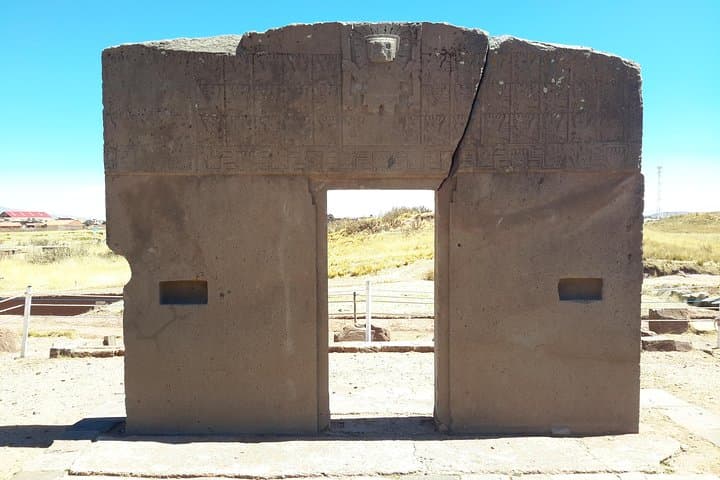
Morning light carves the edges of weathered stone as the bus drops you on the high-altitude plateau outside Tiwanaku. Wind moves across flattened grasslands and the Gate of the Sun stands austere, its carved faces watching a landscape that once pulsed with ritual and engineering. You step from the vehicle into thin air—history presses close and the stones seem to answer.
Verified experiences and guided adventures in the surrounding area.
Operated by Inti Travel · La Paz, La Paz Department
Morning light carves the edges of weathered stone as the bus drops you on the high-altitude plateau outside Tiwanaku. Wind moves across flattened grasslands and the Gate of the Sun stands austere, its carved faces watching a landscape that once pulsed with ritual and engineering. You step from the vehicle into thin air—history presses close and the stones seem to answer.
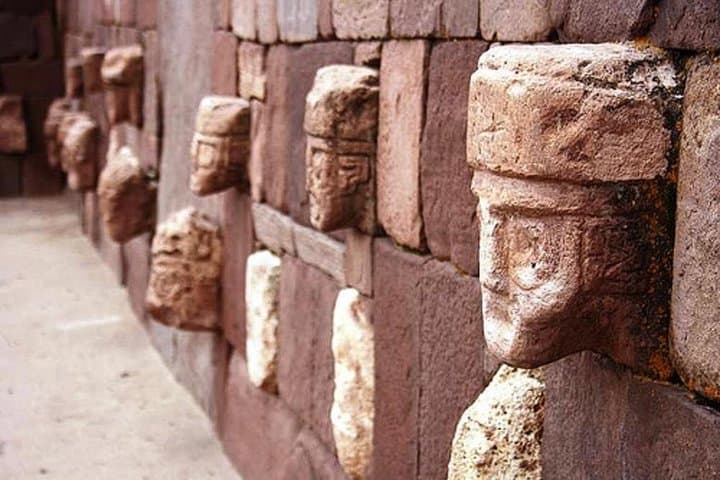
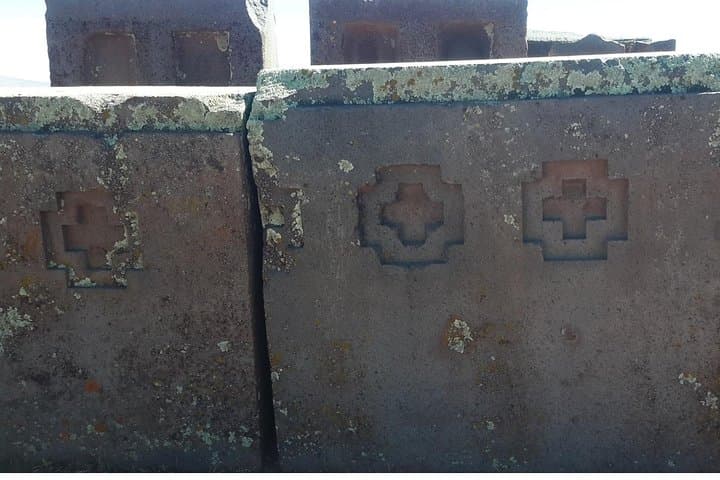
Tiwanaku is a pre-Incan ceremonial center whose monumental platform mounds, kalasasaya courtyard and figurative stonework shaped Andean religion and statecraft centuries before the Inca. Nearby Puma Punku reveals precision-cut andesite and sandstone blocks—massive slabs with exact joints that still puzzle researchers. The art style here emphasizes large, stylized heads and carved iconography linked to the altiplano’s agricultural calendar and cosmology.
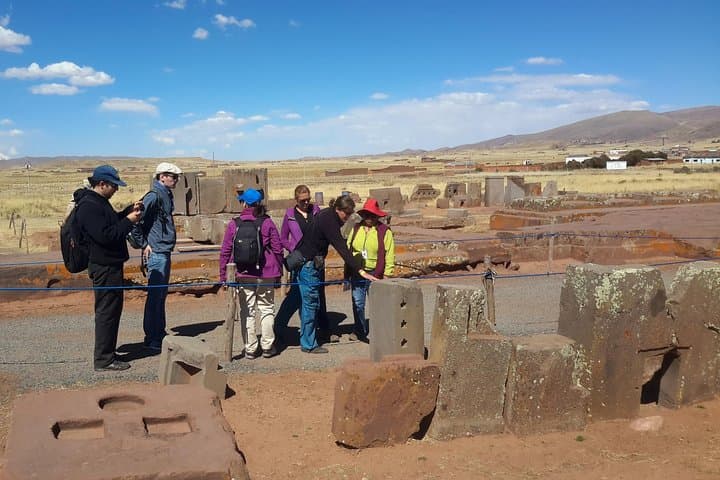
Today’s circuit typically begins with the Ceramic and Lithic museums to contextualize pottery and stone tools, then moves among monoliths, the Semi-Subterranean Temple with its hammered head motifs, and the enigmatic masonry at Puma Punku. A bilingual guide traces archaeological debates—dates, construction techniques and the site’s place in Andean networks—while lunch and transport are usually included.
Practicalities matter: altitude and sun are the real challenges. Footing at the ruins is uneven—expect gravel, compacted earth and occasional carved platforms. Carry water, a sun hat and layered clothing; pace your walk and let the site reveal itself slowly. Visits are best mid-morning for clearer light and calmer winds; allow 6–7 hours from La Paz for pickup, site time and return.
easy.
6–7 hours.
Suitable for average fitness but expect walking on uneven ground at high altitude; light cardiovascular fitness helps.
The full excursion runs about 6–7 hours including hotel pickup, museum time, the archaeological sites, lunch and return to central La Paz.
Yes—most organized tours include entrance fees to Tiwanaku and Puma Punku as part of the package.
Possibly—Tiwanaku sits near 3,800–3,900 m. Acclimatize in La Paz, stay hydrated, avoid alcohol and inform guides if you feel unwell.
Accessibility is limited; paths are uneven and include steps and loose surfaces. Contact tour operators in advance for specific accommodations.
Tiwanaku flourished as a regional ceremonial and administrative center from roughly 500–1000 AD and influenced later Andean polities, including the Incas.
The site faces erosion from tourism and weathering; stick to paths, avoid climbing on carved stones and support local conservation initiatives when possible.
Inti Travel operates guided outdoor trips and adventures with an emphasis on safety, stewardship, and memorable experiences.
Morning light carves the edges of weathered stone as the bus drops you on the high-altitude plateau outside Tiwanaku. Wind moves across flattened grasslands and the Gate of the Sun stands austere, its carved faces watching a landscape that once pulsed with ritual and engineering. You step from the vehicle into thin air—history presses close and the stones seem to answer.
Morning light carves the edges of weathered stone as the bus drops you on the high-altitude plateau outside Tiwanaku. Wind moves across flattened grasslands and the Gate of the Sun stands austere, its carved faces watching a landscape that once pulsed with ritual and engineering. You step from the vehicle into thin air—history presses close and the stones seem to answer.
Tiwanaku is a pre-Incan ceremonial center whose monumental platform mounds, kalasasaya courtyard and figurative stonework shaped Andean religion and statecraft centuries before the Inca. Nearby Puma Punku reveals precision-cut andesite and sandstone blocks—massive slabs with exact joints that still puzzle researchers. The art style here emphasizes large, stylized heads and carved iconography linked to the altiplano’s agricultural calendar and cosmology.
Today’s circuit typically begins with the Ceramic and Lithic museums to contextualize pottery and stone tools, then moves among monoliths, the Semi-Subterranean Temple with its hammered head motifs, and the enigmatic masonry at Puma Punku. A bilingual guide traces archaeological debates—dates, construction techniques and the site’s place in Andean networks—while lunch and transport are usually included.
Practicalities matter: altitude and sun are the real challenges. Footing at the ruins is uneven—expect gravel, compacted earth and occasional carved platforms. Carry water, a sun hat and layered clothing; pace your walk and let the site reveal itself slowly. Visits are best mid-morning for clearer light and calmer winds; allow 6–7 hours from La Paz for pickup, site time and return.