THE ADVENTURE COLLECTIVE® · Independent discovery and booking for outdoor travel

Leave Rome for a private, eight-hour exploration of Tivoli’s Renaissance fountains and Hadrian’s imperial ruins with a local host. This flexible day trip includes transport, a traditional three-course lunch, and a personalized walking itinerary.
Leave Rome for a private, eight-hour exploration of Tivoli’s Renaissance fountains and Hadrian’s imperial ruins with a local host. This flexible day trip includes transport, a traditional three-course lunch, and a personalized walking itinerary.
You step off the commuter train and the air changes: Aniene’s cool current murmurs below the town while plane trees lean over cobbled streets that have hosted Roman footfalls for two millennia. Your host meets you with a practiced ease, and the day unfolds as a private circuit between two UNESCO sites—Villa d’Este’s engineered fountains and the sprawling ruins of Hadrian’s Villa—punctuated by a trattoria lunch that tastes like a local recipe card.
Verified experiences and guided adventures in the surrounding area.
Operated by City Unscripted · Tivoli, Lazio
You step off the commuter train and the air changes: Aniene’s cool current murmurs below the town while plane trees lean over cobbled streets that have hosted Roman footfalls for two millennia. Your host meets you with a practiced ease, and the day unfolds as a private circuit between two UNESCO sites—Villa d’Este’s engineered fountains and the sprawling ruins of Hadrian’s Villa—punctuated by a trattoria lunch that tastes like a local recipe card.
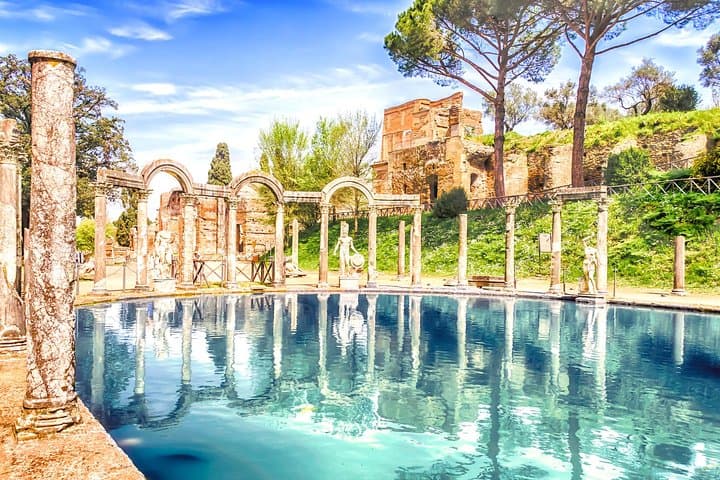
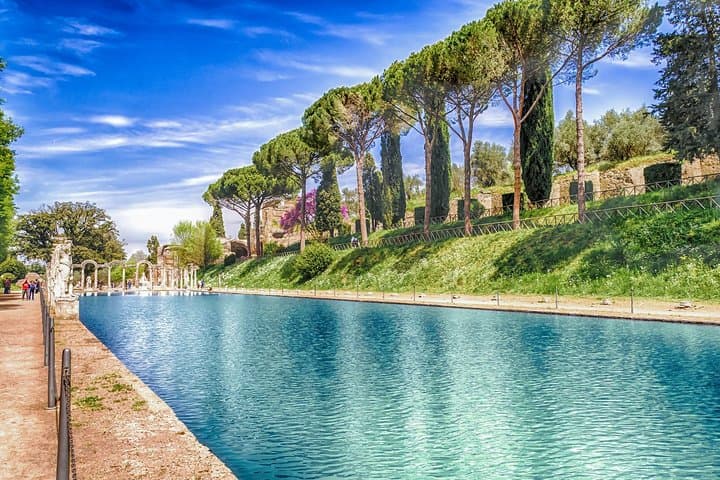
Tivoli sits where the Apennine foothills spill toward the Roman plain. Villa d’Este (16th century) rewrote Renaissance garden design with terraces, cascades and hundreds of jets; Hadrian’s Villa (2nd century CE) spreads Roman imperial ambition across pools, pavilions and broken columns. Geologically, the area is limestone and tuff, carved by streams that created the small gorges and springs the gardens exploit. The town’s rhythm is part municipal market, part archaeological site—expect artisans, strong coffee, and guideable streets that reward a curious eye.
Practical guidance: trains west from Rome Termini take about 40 minutes; the itinerary is private and flexible so bring questions and preferences. Wear sturdy walking shoes—some uneven paths and gravel around ruins—and carry water and sun protection. Lunch is included; confirm dietary needs ahead. Peak season fills quickly; mornings are cooler for walking and quieter at the most photographed fountains. Your host handles local transport (train and bus) and tailors pacing, but plan on eight hours round-trip. This is a day that balances history, landscape, and easy exploration—bring curiosity and a readiness to follow where the water and stones lead.
easy.
8 hours.
Suitable for travelers in average physical condition who can walk several kilometers over mixed surfaces.
Your host will contact you after booking to agree on a meeting point in Rome; they will organize train and bus tickets for the group to and from Tivoli.
The itinerary is personalized and admission is not automatically listed as included—confirm with your host whether site tickets (Villa d'Este, Hadrian's Villa) are covered.
The tour is described as physically easy and stroller/wheelchair accessible in parts, but some ruins and garden terraces have steps—discuss specific mobility needs with your host before booking.
You can cancel for a full refund at least 24 hours before the scheduled departure time; see booking details for exceptions.
Tivoli was a favored retreat for Roman elites—Hadrian built his villa here in the 2nd century CE—and the Renaissance reworked those watery springs into Villa d’Este’s famed fountains.
Both Villa d’Este and Hadrian’s Villa are UNESCO sites; visitors should stick to marked paths, avoid touching fragile masonry, and follow local guidance to minimize wear on ancient structures.
City Unscripted operates guided outdoor trips and adventures with an emphasis on safety, stewardship, and memorable experiences.
You step off the commuter train and the air changes: Aniene’s cool current murmurs below the town while plane trees lean over cobbled streets that have hosted Roman footfalls for two millennia. Your host meets you with a practiced ease, and the day unfolds as a private circuit between two UNESCO sites—Villa d’Este’s engineered fountains and the sprawling ruins of Hadrian’s Villa—punctuated by a trattoria lunch that tastes like a local recipe card.
You step off the commuter train and the air changes: Aniene’s cool current murmurs below the town while plane trees lean over cobbled streets that have hosted Roman footfalls for two millennia. Your host meets you with a practiced ease, and the day unfolds as a private circuit between two UNESCO sites—Villa d’Este’s engineered fountains and the sprawling ruins of Hadrian’s Villa—punctuated by a trattoria lunch that tastes like a local recipe card.
Tivoli sits where the Apennine foothills spill toward the Roman plain. Villa d’Este (16th century) rewrote Renaissance garden design with terraces, cascades and hundreds of jets; Hadrian’s Villa (2nd century CE) spreads Roman imperial ambition across pools, pavilions and broken columns. Geologically, the area is limestone and tuff, carved by streams that created the small gorges and springs the gardens exploit. The town’s rhythm is part municipal market, part archaeological site—expect artisans, strong coffee, and guideable streets that reward a curious eye.
Practical guidance: trains west from Rome Termini take about 40 minutes; the itinerary is private and flexible so bring questions and preferences. Wear sturdy walking shoes—some uneven paths and gravel around ruins—and carry water and sun protection. Lunch is included; confirm dietary needs ahead. Peak season fills quickly; mornings are cooler for walking and quieter at the most photographed fountains. Your host handles local transport (train and bus) and tailors pacing, but plan on eight hours round-trip. This is a day that balances history, landscape, and easy exploration—bring curiosity and a readiness to follow where the water and stones lead.