THE ADVENTURE COLLECTIVE® · Independent discovery and booking for outdoor travel

Spend a half-day on a family coffee finca outside Liberia sampling hand-roasted coffee, fresh cacao, sugarcane juice and making empanadas. This small-group cultural tour combines field walks, tastings and cooking with accessible, hands-on learning.
Spend a half-day on a family coffee finca outside Liberia sampling hand-roasted coffee, fresh cacao, sugarcane juice and making empanadas. This small-group cultural tour combines field walks, tastings and cooking with accessible, hands-on learning.
You step from the shaded veranda into a small family-run finca where the air tastes faintly of roasting beans and sugarcane. Palms and coffee bushes press close to the path, leaves brushing your forearm as if pointing you toward the processing shed; the guide laughs and leads the way.
Verified experiences and guided adventures in the surrounding area.
Operated by Café Tío Leo · Liberia, Guanacaste
You step from the shaded veranda into a small family-run finca where the air tastes faintly of roasting beans and sugarcane. Palms and coffee bushes press close to the path, leaves brushing your forearm as if pointing you toward the processing shed; the guide laughs and leads the way.
This area of Guanacaste sits in the rainshadow of Rincón de la Vieja and is shaped by volcanic outflows and seasonal rivers that have left well-drained, mineral-rich soils—good ground for small-batch coffee and cacao. Coffee traveled across Costa Rica during the 19th century and became a cultural engine; at Tio Leo you encounter that history up close, from plantation practices to the household recipes that use cacao and sugarcane.
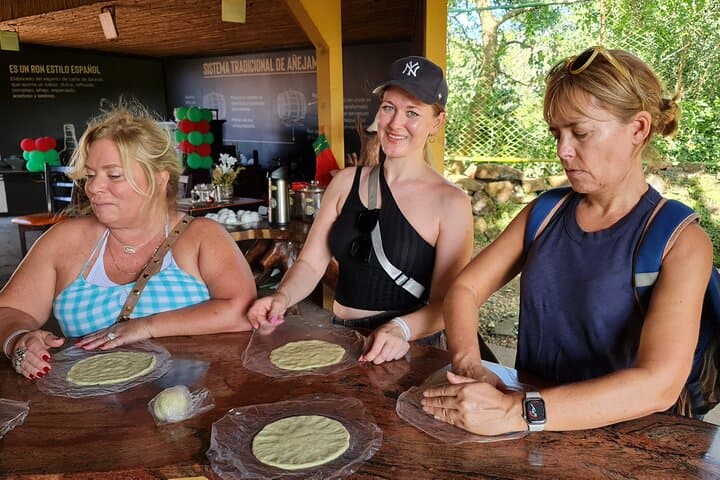
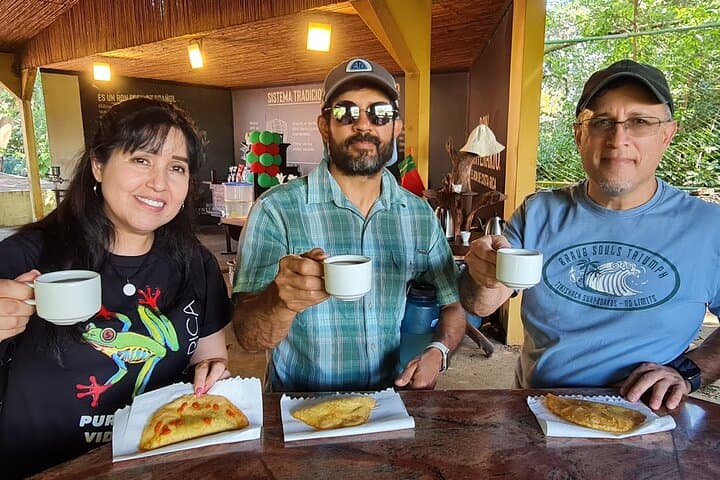
The tour weaves a short field walk with demonstrations: hand-roasting and tasting coffee, cracking cacao and sampling chocolate, a hands-on empanada cooking segment, and a sugarcane press for fresh juice. It’s sensory and practical—expect to smell the roast, feel warm beans, and learn why bean elevation and soil matter.
Practical: the experience runs about 3.5 hours, suits most fitness levels, and operates in small groups (max six). Morning tours avoid midday heat and afternoon rains. Wear closed-toe shoes for the field, sun protection, and bring a refillable bottle; samples and a licensed guide are included. The farm is wheelchair-accessible and family-friendly, but if you have dietary restrictions or mobility questions, notify your booking in advance.
easy.
3–3.5 hours.
Suitable for most fitness levels; involves short, low-gradient walks on farm paths and standing during demos.
The tour lasts about 3 to 3.5 hours (210 minutes) and includes field walks, tastings, a cooking segment and demonstrations.
Yes. The farm reports stroller and wheelchair accessibility and welcomes families; pathways and processing areas are accessible but check specifics with the operator if you need assistance.
Yes. Coffee, chocolate, sugarcane juice and empanada tasting are included in the tour price.
You should note dietary restrictions during booking so the guide can adapt recipes or offer alternatives where possible.
Coffee cultivation shaped Guanacaste’s rural economy in the 19th and 20th centuries; many family farms still use traditional processing alongside modern methods.
Small-scale farms like this often focus on sustainable practices and shade management; visitors are encouraged to avoid single-use plastics and stay on paths to reduce soil compaction.
Café Tío Leo operates guided outdoor trips and adventures with an emphasis on safety, stewardship, and memorable experiences.
You step from the shaded veranda into a small family-run finca where the air tastes faintly of roasting beans and sugarcane. Palms and coffee bushes press close to the path, leaves brushing your forearm as if pointing you toward the processing shed; the guide laughs and leads the way.
You step from the shaded veranda into a small family-run finca where the air tastes faintly of roasting beans and sugarcane. Palms and coffee bushes press close to the path, leaves brushing your forearm as if pointing you toward the processing shed; the guide laughs and leads the way.
This area of Guanacaste sits in the rainshadow of Rincón de la Vieja and is shaped by volcanic outflows and seasonal rivers that have left well-drained, mineral-rich soils—good ground for small-batch coffee and cacao. Coffee traveled across Costa Rica during the 19th century and became a cultural engine; at Tio Leo you encounter that history up close, from plantation practices to the household recipes that use cacao and sugarcane.
The tour weaves a short field walk with demonstrations: hand-roasting and tasting coffee, cracking cacao and sampling chocolate, a hands-on empanada cooking segment, and a sugarcane press for fresh juice. It’s sensory and practical—expect to smell the roast, feel warm beans, and learn why bean elevation and soil matter.
Practical: the experience runs about 3.5 hours, suits most fitness levels, and operates in small groups (max six). Morning tours avoid midday heat and afternoon rains. Wear closed-toe shoes for the field, sun protection, and bring a refillable bottle; samples and a licensed guide are included. The farm is wheelchair-accessible and family-friendly, but if you have dietary restrictions or mobility questions, notify your booking in advance.