THE ADVENTURE COLLECTIVE® · Independent discovery and booking for outdoor travel

A full‑day cultural drive from Marrakech into the High Atlas to visit the 12th‑century Tinmel Mosque. Expect mountain roads, guided village walks, and a close look at Almohad architecture and rural life.
A full‑day cultural drive from Marrakech into the High Atlas to visit the 12th‑century Tinmel Mosque. Expect mountain roads, guided village walks, and a close look at Almohad architecture and rural life.
The road opens and the High Atlas rises: olive terraces give way to stony folds, and the village of Tinmel appears like an argument between stone and sky. On this day trip from Marrakech you approach the mosque through narrow alleys, the air carrying the scent of wood smoke and fresh bread, while the mountains loom and keep watch over a forgotten Almohad capital.
Verified experiences and guided adventures in the surrounding area.
The road opens and the High Atlas rises: olive terraces give way to stony folds, and the village of Tinmel appears like an argument between stone and sky. On this day trip from Marrakech you approach the mosque through narrow alleys, the air carrying the scent of wood smoke and fresh bread, while the mountains loom and keep watch over a forgotten Almohad capital.
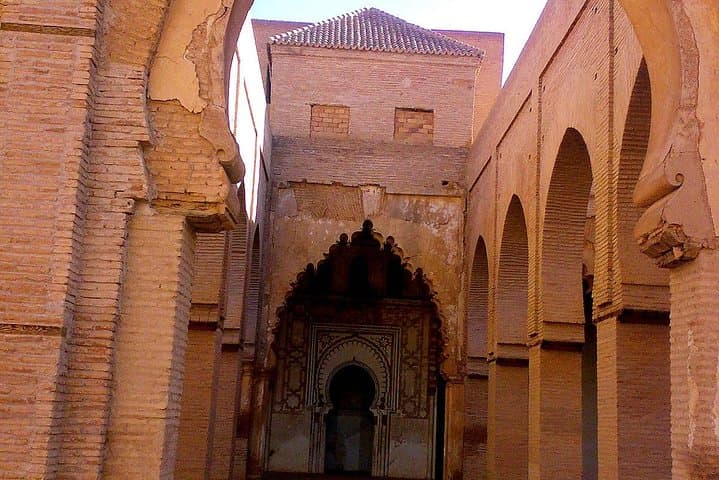
Tinmel’s mosque dates to the 12th century and was built by the Almohad dynasty as a spiritual hub for a reform movement that shaped Morocco’s medieval politics. Geologically, the mosque sits on uplifted limestone and schist of the central High Atlas; the surrounding valleys were carved by seasonal streams that still dare the hills each spring. The settlement’s earthen houses, small kasbah ruins and newer art galleries speak to a town that mixes pastoral life with a growing cultural curiosity.
Visitors can expect a mix of walking and short drives, guided storytelling about local crafts and agriculture, and a chance to meet families whose livelihoods range from goat herding to running tiny guesthouses. Photography is welcome but respectful behavior inside religious sites is required.
Practical guidance: dress in layers and sturdy shoes for uneven paths, carry at least 2 liters of water, and plan an early start to avoid the heat and to allow time for the 2–3 hour drive each way. Local guides typically arrange a simple tea or lunch; bring cash for small purchases. The route rewards curiosity—quiet courtyards, stonework details and mountain views make the journey as valuable as the destination.
moderate.
8–10 hours.
Moderate fitness for walking short uneven paths and tolerating a several-hour round trip drive
The drive typically takes about 2–3 hours each way depending on traffic and road conditions.
Access policies can vary; exterior visits and guided explanations are common, while entry into active prayer areas should be approached with respect and by local guidance.
Many day trips include a simple local lunch or tea arranged by the guide, but it’s wise to confirm beforehand and bring snacks as backup.
Yes, with caution—there is light walking on uneven ground; plan for rest and shorter distances if mobility is limited.
Built in the 12th century by the Almohads, the Tinmel Mosque served as a religious and political center during the dynasty’s rise and is one of the few Almohad mosques historically open to only certain communities.
The region faces erosion and pressure from increased visitation; support local guides and small businesses, stick to paths, and avoid removing architectural fragments or stones.
The road opens and the High Atlas rises: olive terraces give way to stony folds, and the village of Tinmel appears like an argument between stone and sky. On this day trip from Marrakech you approach the mosque through narrow alleys, the air carrying the scent of wood smoke and fresh bread, while the mountains loom and keep watch over a forgotten Almohad capital.
The road opens and the High Atlas rises: olive terraces give way to stony folds, and the village of Tinmel appears like an argument between stone and sky. On this day trip from Marrakech you approach the mosque through narrow alleys, the air carrying the scent of wood smoke and fresh bread, while the mountains loom and keep watch over a forgotten Almohad capital.
Tinmel’s mosque dates to the 12th century and was built by the Almohad dynasty as a spiritual hub for a reform movement that shaped Morocco’s medieval politics. Geologically, the mosque sits on uplifted limestone and schist of the central High Atlas; the surrounding valleys were carved by seasonal streams that still dare the hills each spring. The settlement’s earthen houses, small kasbah ruins and newer art galleries speak to a town that mixes pastoral life with a growing cultural curiosity.
Visitors can expect a mix of walking and short drives, guided storytelling about local crafts and agriculture, and a chance to meet families whose livelihoods range from goat herding to running tiny guesthouses. Photography is welcome but respectful behavior inside religious sites is required.
Practical guidance: dress in layers and sturdy shoes for uneven paths, carry at least 2 liters of water, and plan an early start to avoid the heat and to allow time for the 2–3 hour drive each way. Local guides typically arrange a simple tea or lunch; bring cash for small purchases. The route rewards curiosity—quiet courtyards, stonework details and mountain views make the journey as valuable as the destination.