THE ADVENTURE COLLECTIVE® · Independent discovery and booking for outdoor travel

Spend a private day exploring Suzhou’s classical gardens, a 1,200-year-old canal, a bustling wet market, and a riverside tea house. This full-day tour blends compact cultural highlights with practical logistics—admissions, boat ride and private transport included.
Spend a private day exploring Suzhou’s classical gardens, a 1,200-year-old canal, a bustling wet market, and a riverside tea house. This full-day tour blends compact cultural highlights with practical logistics—admissions, boat ride and private transport included.
Morning light slices across tile roofs as your private car eases out of the modern sprawl and into Suzhou’s low-lying waterways. Narrow canals push reflections of willows and carved eaves past your boat; the water seems to insist you slow down. By foot, the day unfolds through ordered gardens, a leaning tower cloaked in bamboo, a temple with resident cats, and a wet market where stallholders call out the catch of the morning.
Verified experiences and guided adventures in the surrounding area.
Operated by Eastbound and Beyond · Suzhou, Jiangsu
Morning light slices across tile roofs as your private car eases out of the modern sprawl and into Suzhou’s low-lying waterways. Narrow canals push reflections of willows and carved eaves past your boat; the water seems to insist you slow down. By foot, the day unfolds through ordered gardens, a leaning tower cloaked in bamboo, a temple with resident cats, and a wet market where stallholders call out the catch of the morning.
Suzhou sits on the Yangtze Delta — a flat, sediment-rich plain shaped by centuries of river silt and human engineering. Its famous classical gardens evolved from scholar-official culture in the Ming and Qing dynasties, compressing mountains, ponds and rock into compact landscapes. The Grand Canal, part of a 1,200-year-old transport network, threaded commerce and culture between Suzhou and the wider Jiangnan region.
Culturally, the city rewards patient observation: garden courtyards reveal symbolic plantings; teahouses teach restraint and technique; local legends gather around Tiger Hill’s leaning tower. Expect sensory contrasts — the sharp smells of a wet market, the hush of a temple, and lantern-lit alleys after dusk.
Practically: this private itinerary runs about 7–9 hours with roughly 3–4 km of walking and a 4-km canal boat segment. Elevation gain is negligible; terrain is paved and stepped in gardens. Wear comfortable shoes, carry a refillable bottle, and schedule mornings or late afternoons to avoid the busiest heat. The guide handles admissions and navigation; bring small bills for market snacks and temple offerings. With simple preparation, the trip is an efficient, lively preview of historic Jiangnan life.
easy.
7–9 hours.
Suitable for most fitness levels; minimal elevation and low-intensity walking over paved surfaces.
Yes — the tour offers private pickup from Shanghai or Suzhou; travel time from central Shanghai is about 1–1.5 hours depending on traffic.
All garden admissions, the canal boat ride and temple entries listed in the itinerary are included in the price.
Yes; the day involves gentle walking and seated breaks, but note there are steps in gardens and at some historic sites—notify the guide of mobility needs.
Lunch is not included; the guide will take you to a wet market to choose local foods—vegetarian options are available if requested in advance.
Suzhou’s classical gardens developed from private scholar estates in the Ming and Qing periods and reflect Chinese landscape design principles compressed into small plots.
Heavy tourism puts pressure on fragile garden features and canals; stick to paths, avoid feeding wildlife, and consider reusable bottles to reduce plastic waste.
Eastbound and Beyond operates guided outdoor trips and adventures with an emphasis on safety, stewardship, and memorable experiences.
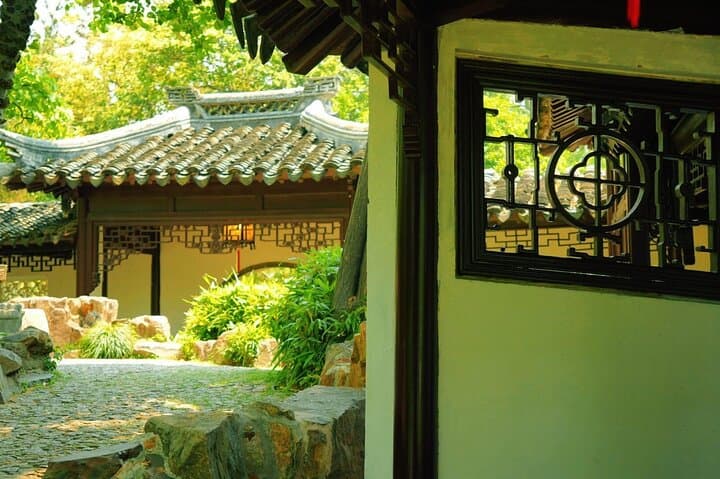
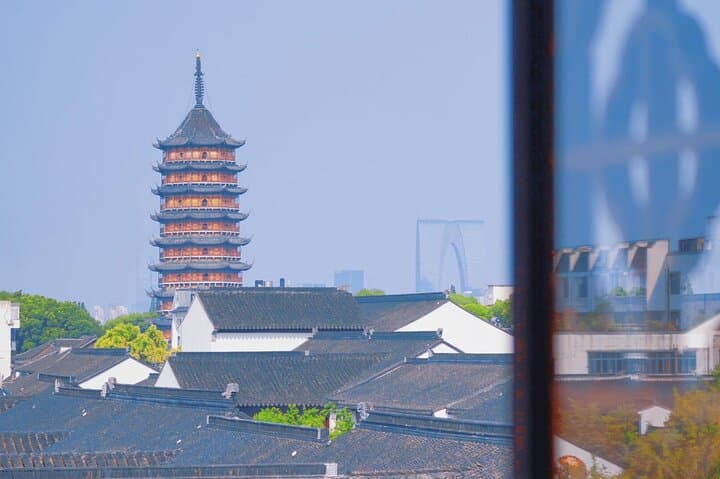
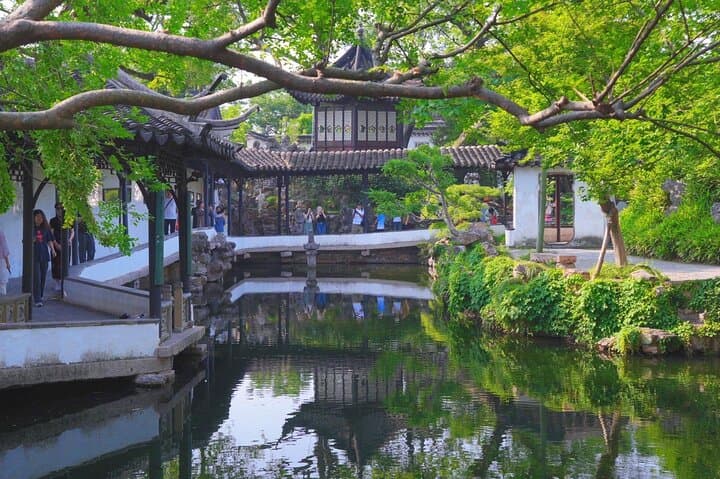
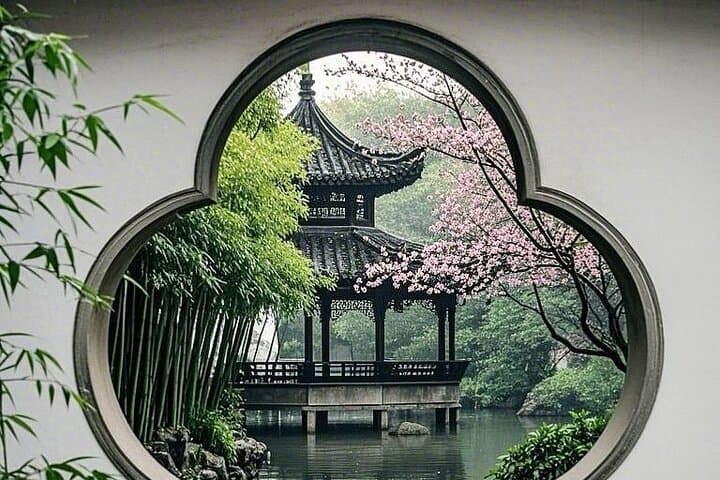
Morning light slices across tile roofs as your private car eases out of the modern sprawl and into Suzhou’s low-lying waterways. Narrow canals push reflections of willows and carved eaves past your boat; the water seems to insist you slow down. By foot, the day unfolds through ordered gardens, a leaning tower cloaked in bamboo, a temple with resident cats, and a wet market where stallholders call out the catch of the morning.
Morning light slices across tile roofs as your private car eases out of the modern sprawl and into Suzhou’s low-lying waterways. Narrow canals push reflections of willows and carved eaves past your boat; the water seems to insist you slow down. By foot, the day unfolds through ordered gardens, a leaning tower cloaked in bamboo, a temple with resident cats, and a wet market where stallholders call out the catch of the morning.
Suzhou sits on the Yangtze Delta — a flat, sediment-rich plain shaped by centuries of river silt and human engineering. Its famous classical gardens evolved from scholar-official culture in the Ming and Qing dynasties, compressing mountains, ponds and rock into compact landscapes. The Grand Canal, part of a 1,200-year-old transport network, threaded commerce and culture between Suzhou and the wider Jiangnan region.
Culturally, the city rewards patient observation: garden courtyards reveal symbolic plantings; teahouses teach restraint and technique; local legends gather around Tiger Hill’s leaning tower. Expect sensory contrasts — the sharp smells of a wet market, the hush of a temple, and lantern-lit alleys after dusk.
Practically: this private itinerary runs about 7–9 hours with roughly 3–4 km of walking and a 4-km canal boat segment. Elevation gain is negligible; terrain is paved and stepped in gardens. Wear comfortable shoes, carry a refillable bottle, and schedule mornings or late afternoons to avoid the busiest heat. The guide handles admissions and navigation; bring small bills for market snacks and temple offerings. With simple preparation, the trip is an efficient, lively preview of historic Jiangnan life.