THE ADVENTURE COLLECTIVE® · Independent discovery and booking for outdoor travel

Explore Plovdiv at your own pace with a 48-hour audio and e-guide that maps Roman ruins, Ottoman houses and Kapana’s creative streets. Perfect for independent walkers who want local stories, route flexibility and practical tips.
Explore Plovdiv at your own pace with a 48-hour audio and e-guide that maps Roman ruins, Ottoman houses and Kapana’s creative streets. Perfect for independent walkers who want local stories, route flexibility and practical tips.
You step off the tram and the city answers: cobbled streets curve up gentle hills, a river murmurs just out of sight, and the Roman theatre watches from its stone perch.
Verified experiences and guided adventures in the surrounding area.
Operated by VisitBulgariaOn Bespoke Experiences · Plovdiv, Plovdiv Province
You step off the tram and the city answers: cobbled streets curve up gentle hills, a river murmurs just out of sight, and the Roman theatre watches from its stone perch.
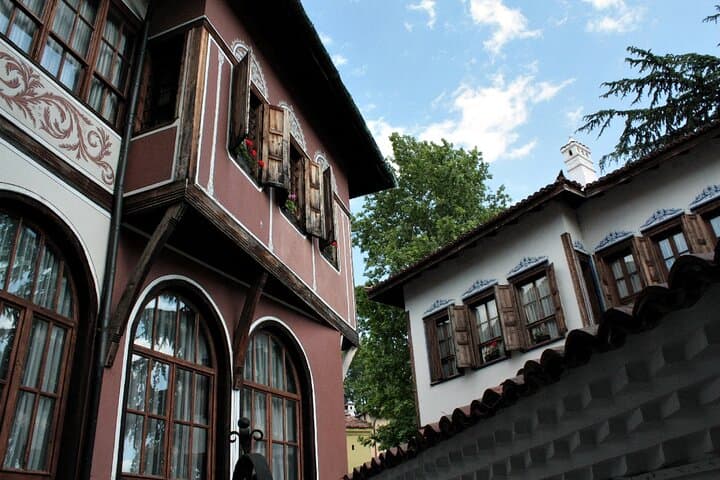
This 48-hour audio and e-guide places Plovdiv’s layered past—Thracian hilltop settlements, Roman civic power, Ottoman-era houses—within earshot as you walk. The Old Town’s narrow lanes reveal wooden revival homes and museums; Kapana’s creative blocks trade in cafés, murals and artisan shops; the Roman Stadium runs under modern buildings like an archaeological secret. Geologically, the city is built on seven low hills of compacted loess and limestone which give short climbs and consistent views rather than alpine exposure.
Culturally, Plovdiv is a living crossroads: bilingual signage, vibrant street life and a compact center where history and contemporary Bulgarian culture meet. The guide lines routes to the Roman Theatre, Nebet Tepe, the Ethnographic Museum and quieter vantage points along the Maritsa’s banks.
Practically, expect paved and cobblestone streets, short stair sections and modest elevation changes (tens to a few hundred meters cumulatively over the day). The download-based audio lets you pause, skip or linger—ideal for photographers, food stops and museum visits. Carry a charged phone, portable battery and comfortable shoes; plan walks for morning or late afternoon to avoid summer heat. Accessibility-friendly options exist for much of the route, and the guide supports English, Bulgarian and Russian. For an urban outdoor experience that blends history with easy walking, this guide gives structure without stealing the city’s pace.
easy.
Up to 48 hours.
Suitable for most fitness levels; requires steady walking on paved and cobbled surfaces and negotiating short stair sections.
You can use the audio and e-guide for up to 48 hours from activation, allowing flexible, multi-stop exploration.
Many central routes and highlights are wheelchair accessible; however, some Old Town lanes and steps are not—check the guide’s accessibility notes for specific segments.
The guide and e-guide are available in English, Bulgarian and Russian; request your preferred language when booking if needed.
No—audio files and maps can be downloaded in advance so you can use the guide offline, though some features may require occasional connectivity.
Plovdiv is one of Europe’s oldest continuously inhabited cities, with visible layers from Thracian settlements through Roman civic life and Ottoman-era revival houses.
The city balances preservation of archaeological sites with tourism; stick to marked paths, avoid touching ruins and support local conservation-minded businesses.
VisitBulgariaOn Bespoke Experiences operates guided outdoor trips and adventures with an emphasis on safety, stewardship, and memorable experiences.
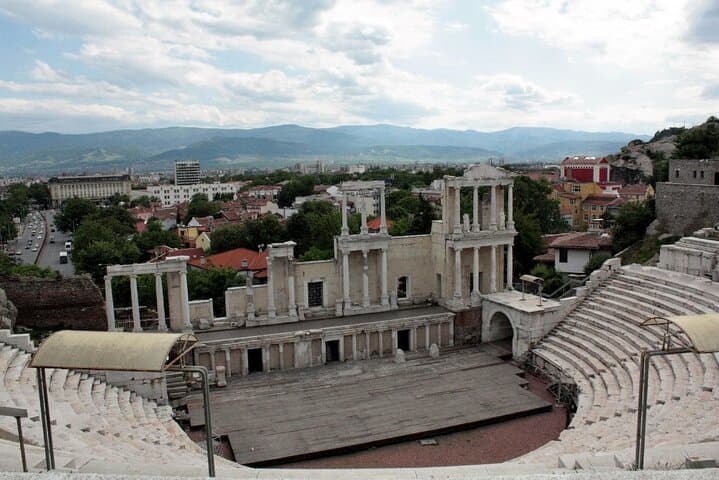
You step off the tram and the city answers: cobbled streets curve up gentle hills, a river murmurs just out of sight, and the Roman theatre watches from its stone perch.
You step off the tram and the city answers: cobbled streets curve up gentle hills, a river murmurs just out of sight, and the Roman theatre watches from its stone perch.
This 48-hour audio and e-guide places Plovdiv’s layered past—Thracian hilltop settlements, Roman civic power, Ottoman-era houses—within earshot as you walk. The Old Town’s narrow lanes reveal wooden revival homes and museums; Kapana’s creative blocks trade in cafés, murals and artisan shops; the Roman Stadium runs under modern buildings like an archaeological secret. Geologically, the city is built on seven low hills of compacted loess and limestone which give short climbs and consistent views rather than alpine exposure.
Culturally, Plovdiv is a living crossroads: bilingual signage, vibrant street life and a compact center where history and contemporary Bulgarian culture meet. The guide lines routes to the Roman Theatre, Nebet Tepe, the Ethnographic Museum and quieter vantage points along the Maritsa’s banks.
Practically, expect paved and cobblestone streets, short stair sections and modest elevation changes (tens to a few hundred meters cumulatively over the day). The download-based audio lets you pause, skip or linger—ideal for photographers, food stops and museum visits. Carry a charged phone, portable battery and comfortable shoes; plan walks for morning or late afternoon to avoid summer heat. Accessibility-friendly options exist for much of the route, and the guide supports English, Bulgarian and Russian. For an urban outdoor experience that blends history with easy walking, this guide gives structure without stealing the city’s pace.