THE ADVENTURE COLLECTIVE® · Independent discovery and booking for outdoor travel

Climb ancient stone temples and move through jungle-canopied plazas on a full-day tour of Tikal. This one-day excursion combines archaeological highlights, jungle wildlife and practical logistics for crossing the Belize–Guatemala border.
Climb ancient stone temples and move through jungle-canopied plazas on a full-day tour of Tikal. This one-day excursion combines archaeological highlights, jungle wildlife and practical logistics for crossing the Belize–Guatemala border.
The morning begins with the jungle breathing around you — mist lifting off the Petén canopy, songbirds sketching the air and the tops of stone pyramids cutting through the green like old sentinels. By mid‑day the sun presses down and the plazas open, revealing broad stone causeways, steep stairways and the carved masks and glyphs of a city once home to tens of thousands.
Verified experiences and guided adventures in the surrounding area.
Operated by UNTAME BELIZE · Flores, Petén
The morning begins with the jungle breathing around you — mist lifting off the Petén canopy, songbirds sketching the air and the tops of stone pyramids cutting through the green like old sentinels. By mid‑day the sun presses down and the plazas open, revealing broad stone causeways, steep stairways and the carved masks and glyphs of a city once home to tens of thousands.
Tikal grew into a regional power between the 3rd and 9th centuries CE; its plazas, temples and the Mundo Perdido complex reflect a Maya world tied to astronomy, agriculture and political rivalry across what is now Belize and Guatemala. Geologically the site sits on low limestone karst of the Petén plateau; the porous ground and seasonal ponds supported dense tropical forest that reclaimed the ruins until archaeologists began clearing them in the 20th century.
Culturally, skilled stonework and hieroglyphic inscriptions tell a story of dynasties, warfare and ritual. Today guides read those marks aloud and point out alignments used for tracking solstices and planetary cycles. Wildlife mingles with ruins: howler monkeys call from the canopy and toucans flash color between columns.
Practical guidance: this is a long day (roughly 14–15 hours door to door on tours leaving from Belize or Flores). Bring passport for border crossings, at least 2–3 liters of water, sun protection, sturdy shoes for uneven stone stairways and insect repellent. Start early to avoid peak heat, follow your guide on restricted sections, and budget time for border fees and transport. The route combines easy walking around plazas with short steep climbs; expect heat, humidity and rewarding views from the higher temple platforms.
moderate.
14–15 hours.
Moderate fitness — able to walk several kilometers over uneven ground and climb stone steps repeatedly
Yes — tours that cross the Belize–Guatemala border require a valid passport and you may need to pay a border fee; check visa requirements for your nationality.
Most full‑day tours include lunch and bottled water; confirm with your operator if dietary restrictions need prior notice.
Expect several kilometers of walking on packed trails and stone causeways plus climbs up steep pyramidal stairways; pacing is moderate but repeated stairs can be strenuous.
Yes — common sightings include howler monkeys, toucans, and coatis near plazas and in the surrounding forest, especially during quieter morning hours.
Tikal was a dominant Maya city from approx. 200–900 CE with monumental construction linked to dynastic rulers and astronomical observation.
The site sits within Guatemala's protected Maya Biosphere Reserve; visitors should stick to paths, avoid touching masonry and follow guide instructions to limit erosion and disturbance.
UNTAME BELIZE operates guided outdoor trips and adventures with an emphasis on safety, stewardship, and memorable experiences.
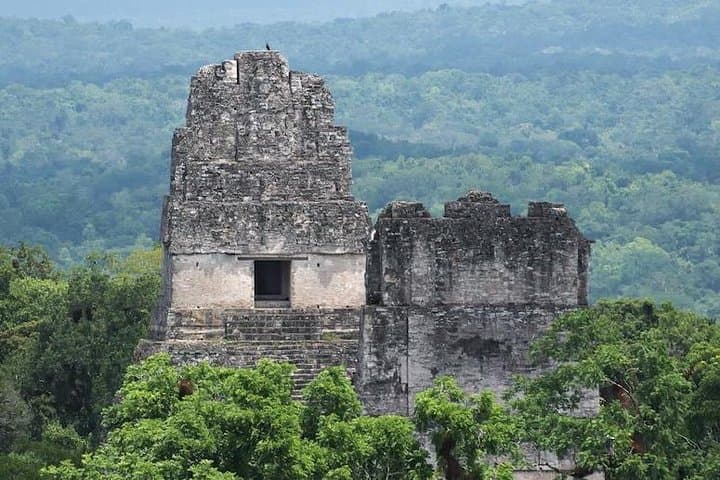
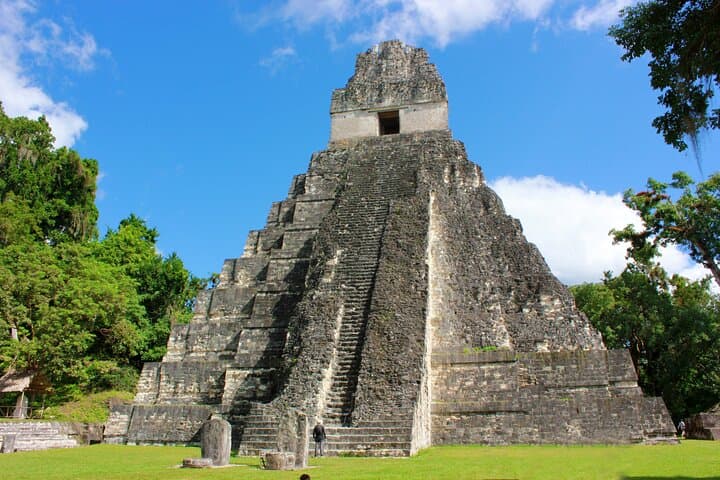
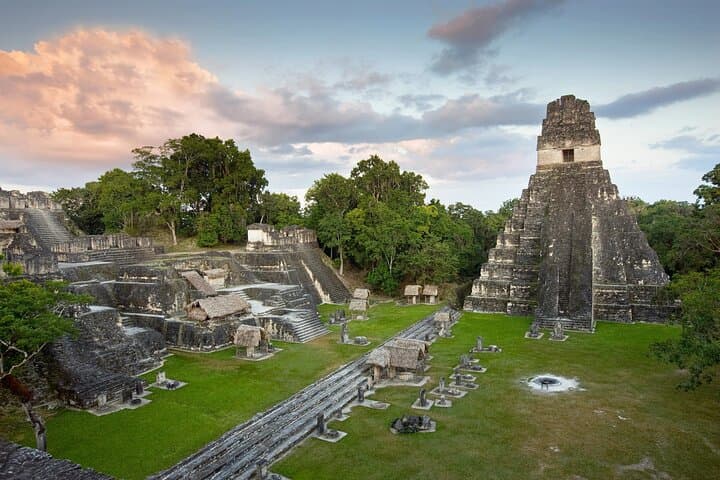
The morning begins with the jungle breathing around you — mist lifting off the Petén canopy, songbirds sketching the air and the tops of stone pyramids cutting through the green like old sentinels. By mid‑day the sun presses down and the plazas open, revealing broad stone causeways, steep stairways and the carved masks and glyphs of a city once home to tens of thousands.
The morning begins with the jungle breathing around you — mist lifting off the Petén canopy, songbirds sketching the air and the tops of stone pyramids cutting through the green like old sentinels. By mid‑day the sun presses down and the plazas open, revealing broad stone causeways, steep stairways and the carved masks and glyphs of a city once home to tens of thousands.
Tikal grew into a regional power between the 3rd and 9th centuries CE; its plazas, temples and the Mundo Perdido complex reflect a Maya world tied to astronomy, agriculture and political rivalry across what is now Belize and Guatemala. Geologically the site sits on low limestone karst of the Petén plateau; the porous ground and seasonal ponds supported dense tropical forest that reclaimed the ruins until archaeologists began clearing them in the 20th century.
Culturally, skilled stonework and hieroglyphic inscriptions tell a story of dynasties, warfare and ritual. Today guides read those marks aloud and point out alignments used for tracking solstices and planetary cycles. Wildlife mingles with ruins: howler monkeys call from the canopy and toucans flash color between columns.
Practical guidance: this is a long day (roughly 14–15 hours door to door on tours leaving from Belize or Flores). Bring passport for border crossings, at least 2–3 liters of water, sun protection, sturdy shoes for uneven stone stairways and insect repellent. Start early to avoid peak heat, follow your guide on restricted sections, and budget time for border fees and transport. The route combines easy walking around plazas with short steep climbs; expect heat, humidity and rewarding views from the higher temple platforms.