THE ADVENTURE COLLECTIVE® · Independent discovery and booking for outdoor travel

Hike into the world’s largest urban rainforest on a five‑hour guided tour that threads waterfalls, a 100‑m bat cave, and panoramic lookouts overlooking Rio. Expect 4–6 km of varied trails, wildlife sightings, and easy to moderate footing.
Hike into the world’s largest urban rainforest on a five‑hour guided tour that threads waterfalls, a 100‑m bat cave, and panoramic lookouts overlooking Rio. Expect 4–6 km of varied trails, wildlife sightings, and easy to moderate footing.
You step off the air‑conditioned van and the city's noise thins into leaf chatter—Tijuca’s canopy folds overhead, humid air pressing like a warm hand. The first overlook opens onto São Conrado and Pedra da Gávea; farther down, Rio’s skyline waits under a blue smear. Trails thread between basalt outcrops, waterfalls tumble in clear ribbons, and a cool cave mouth offers a dim, echoing pause.
Verified experiences and guided adventures in the surrounding area.
Operated by Tropical Ecotours · Rio de Janeiro, Rio de Janeiro
You step off the air‑conditioned van and the city's noise thins into leaf chatter—Tijuca’s canopy folds overhead, humid air pressing like a warm hand. The first overlook opens onto São Conrado and Pedra da Gávea; farther down, Rio’s skyline waits under a blue smear. Trails thread between basalt outcrops, waterfalls tumble in clear ribbons, and a cool cave mouth offers a dim, echoing pause.
Tijuca National Park is the world’s largest urban tropical forest, largely replanted in the 19th century after widespread clearing for coffee and pasture. Geology here is urban granite and gneiss, carved by tropical rain into steep ridgelines and hidden ravines; the park's caves and cascades are the slow work of water on fractured rock. Culturally, the park has long been a public escape for Cariocas and an important refuge for Atlantic Forest species—capuchin monkeys and toucans are common sights if you keep quiet.
On this guided five‑hour outing expect 4–6 km of walking on uneven dirt paths and stone steps, with cumulative elevation gains of roughly 200–300 m. The itinerary includes a 40‑m waterfall, a 100‑m long bat cave, and the Mirante da Vista Chinesa for panoramic photos of Christ the Redeemer and Sugarloaf. Trails range from flat approach segments to short, stair‑climbed viewpoints; footwear with good grip is essential.
Practical tips: go early to avoid midafternoon showers, carry water and insect repellent, and keep to the trail to protect fragile understory. The experience balances easy nature observation with short stretches of steady hiking—enough adventure to feel away from the city, yet accessible for most travelers.
moderate.
5 hours.
Suitable for travelers in regular walking shape—able to manage several kilometers, stairs, and short uneven sections.
Trails are generally easy to moderate—mostly well‑trodden dirt paths with short stair sections; expect 4–6 km total and modest elevation gain, suitable for most active travelers.
Facilities are limited inside the park; use restrooms at meeting points if provided by the operator and bring a small towel or extra clothing for post‑swim changes.
Yes—capuchin monkeys, toucans, and a variety of birdlife are commonly seen, though sightings depend on time of day and noise levels; avoid feeding wildlife to prevent habituation.
Round‑trip pickup from neighborhoods like Copacabana, Ipanema, Leblon, Botafogo, and São Conrado is included per the tour description—confirm your pickup point at booking.
Much of Tijuca was replanted in the 19th century after agricultural clearing; the park is an early example of large‑scale reforestation adjacent to a major city.
As a national park, Tijuca enforces trail limits and visitor rules—pack out trash, avoid feeding animals, and stay on marked paths to protect fragile Atlantic Forest habitats.
Tropical Ecotours operates guided outdoor trips and adventures with an emphasis on safety, stewardship, and memorable experiences.

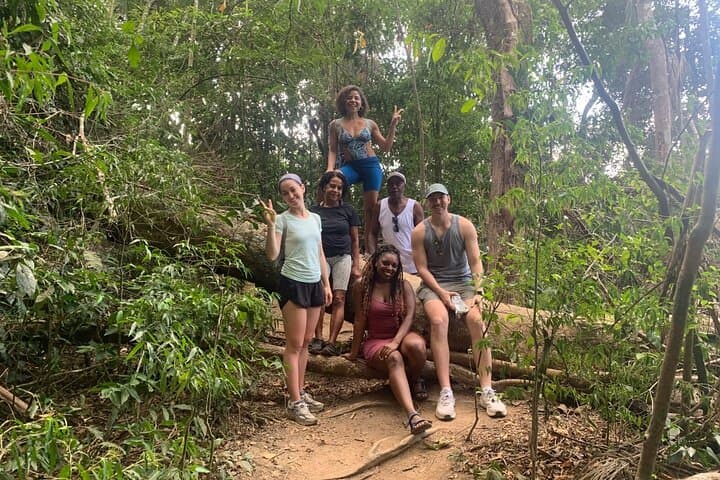
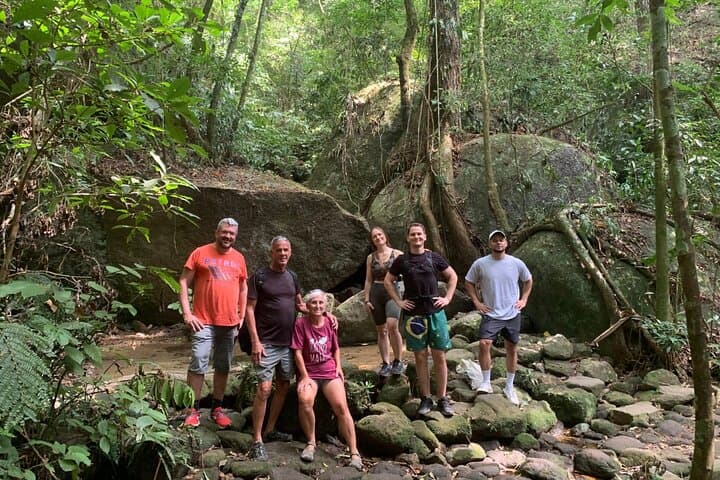
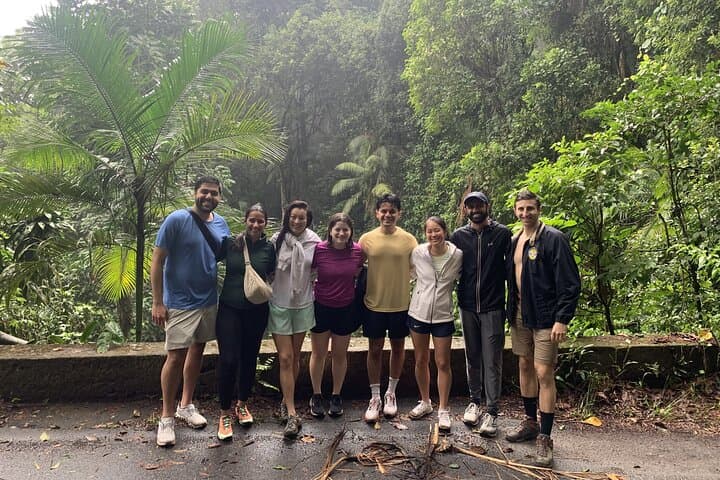
You step off the air‑conditioned van and the city's noise thins into leaf chatter—Tijuca’s canopy folds overhead, humid air pressing like a warm hand. The first overlook opens onto São Conrado and Pedra da Gávea; farther down, Rio’s skyline waits under a blue smear. Trails thread between basalt outcrops, waterfalls tumble in clear ribbons, and a cool cave mouth offers a dim, echoing pause.
You step off the air‑conditioned van and the city's noise thins into leaf chatter—Tijuca’s canopy folds overhead, humid air pressing like a warm hand. The first overlook opens onto São Conrado and Pedra da Gávea; farther down, Rio’s skyline waits under a blue smear. Trails thread between basalt outcrops, waterfalls tumble in clear ribbons, and a cool cave mouth offers a dim, echoing pause.
Tijuca National Park is the world’s largest urban tropical forest, largely replanted in the 19th century after widespread clearing for coffee and pasture. Geology here is urban granite and gneiss, carved by tropical rain into steep ridgelines and hidden ravines; the park's caves and cascades are the slow work of water on fractured rock. Culturally, the park has long been a public escape for Cariocas and an important refuge for Atlantic Forest species—capuchin monkeys and toucans are common sights if you keep quiet.
On this guided five‑hour outing expect 4–6 km of walking on uneven dirt paths and stone steps, with cumulative elevation gains of roughly 200–300 m. The itinerary includes a 40‑m waterfall, a 100‑m long bat cave, and the Mirante da Vista Chinesa for panoramic photos of Christ the Redeemer and Sugarloaf. Trails range from flat approach segments to short, stair‑climbed viewpoints; footwear with good grip is essential.
Practical tips: go early to avoid midafternoon showers, carry water and insect repellent, and keep to the trail to protect fragile understory. The experience balances easy nature observation with short stretches of steady hiking—enough adventure to feel away from the city, yet accessible for most travelers.