THE ADVENTURE COLLECTIVE® · Independent discovery and booking for outdoor travel

Explore 5.5 miles of Tijuca National Park with waterfalls, caves and Atlantic Rainforest canopy. This guided 4–5 hour loop blends natural history, easy cave visits and multiple swimming falls—bring solid footwear and rain protection.
Explore 5.5 miles of Tijuca National Park with waterfalls, caves and Atlantic Rainforest canopy. This guided 4–5 hour loop blends natural history, easy cave visits and multiple swimming falls—bring solid footwear and rain protection.
Morning light filters through towering fig and palm as you step onto a leaf-strewn trail in Tijuca National Park, Rio de Janeiro’s urban rainforest. The path smells of wet earth; a distant cascade calls you forward.
Verified experiences and guided adventures in the surrounding area.
Operated by Hike in Rio · Rio de Janeiro, Rio de Janeiro
Morning light filters through towering fig and palm as you step onto a leaf-strewn trail in Tijuca National Park, Rio de Janeiro’s urban rainforest. The path smells of wet earth; a distant cascade calls you forward.
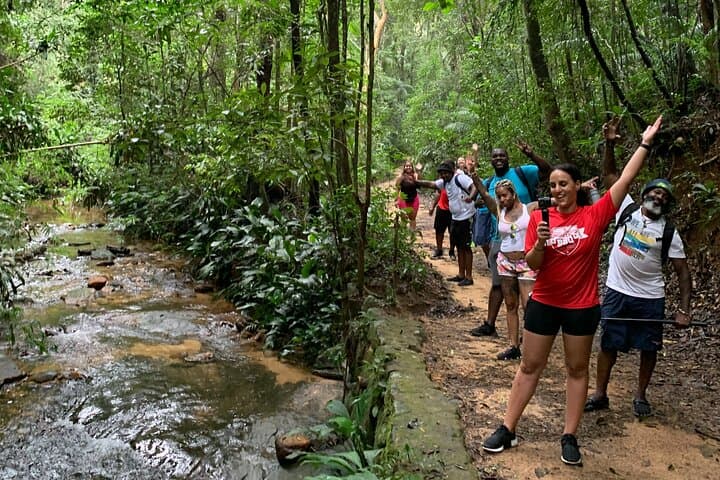
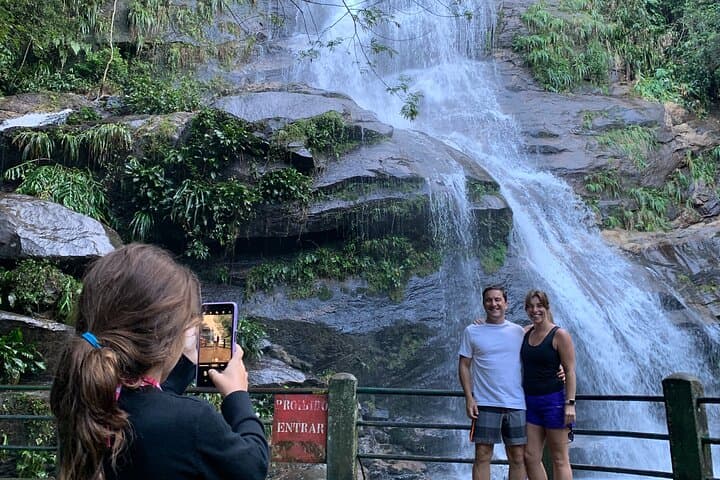
This guided hike covers roughly 5.5 miles of mixed dirt and rock trails and takes about 4–5 hours, looping past Taunay Waterfall (approximately 35 m) and stops at Cachoeira das Almas, Cristalina and Baronesa. Granite ridges and boulder outcrops frame narrow valleys; caves such as Belmiro and Bats opened where fractures widened and constant seepage sculpted pockets in the rock. The area is core Atlantic Rainforest — biologically rich and historically significant — and local guides weave stories of 19th‑century reforestation, waterworks that supply the city, and the park’s role in Rio’s cultural landscape.
Expect humid, shaded sections, intermittent steep steps and short slippery stretches after rain. Guides typically pause at Floresta restaurant ruins and Gabriela Falls for snacks and wildlife spotting; capuchin monkeys and toucans are commonly seen. The route is mostly straightforward but requires moderate fitness and stable footwear.
Practical essentials: carry 1–2 liters of water, a light rain shell, insect repellent and sturdy trail shoes; a trekking pole is useful on wet descents. Start early to avoid the midday heat and crowds. Guides provide first aid and optional walking sticks; allow at least 4–5 hours to enjoy the full loop. Buy a local SIM or download offline maps before heading in.
moderate.
4–5 hours.
Good steady walking fitness; comfortable on uneven trails and several short climbs.
Moderate: about 5.5 miles with some short climbs and uneven, occasionally slippery terrain—suitable for those with regular walking fitness.
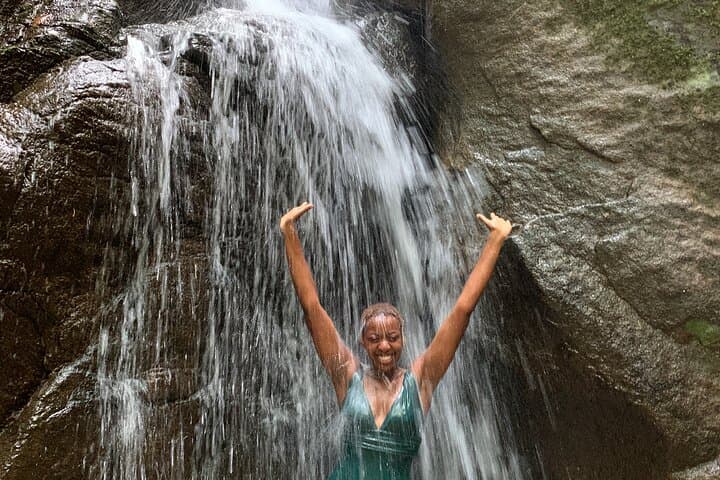
Yes, many falls have natural pools for cooling off, but always follow your guide’s safety instructions about current and depth.
Meeting is typically at the park access point in Tijuca; check your confirmation for exact meeting details—public transport is available nearby.
The caves on this route are shallow and guided; they’re considered safe for visitors but not recommended for those with claustrophobia or serious mobility issues.
Tijuca was heavily altered in the 19th century and later replanted to restore watersheds for Rio; the park preserves both natural and reforestation history.
Stay on marked trails, pack out trash and avoid bathing with soap—local guides support low-impact practices to protect fragile streams and endemic species.
Hike in Rio operates guided outdoor trips and adventures with an emphasis on safety, stewardship, and memorable experiences.
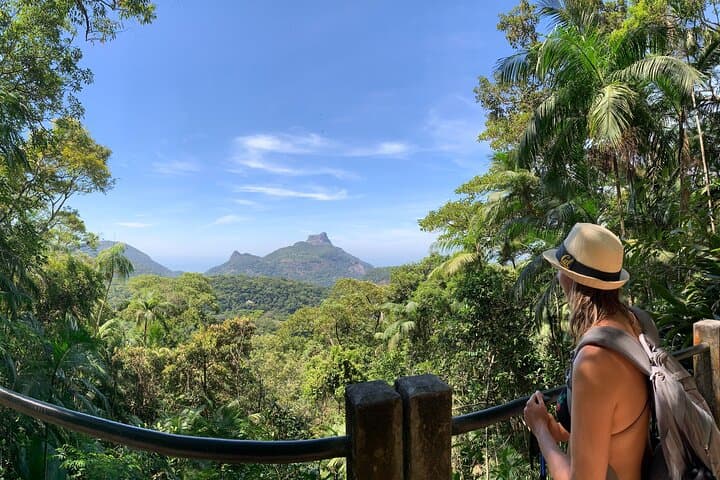
Morning light filters through towering fig and palm as you step onto a leaf-strewn trail in Tijuca National Park, Rio de Janeiro’s urban rainforest. The path smells of wet earth; a distant cascade calls you forward.
Morning light filters through towering fig and palm as you step onto a leaf-strewn trail in Tijuca National Park, Rio de Janeiro’s urban rainforest. The path smells of wet earth; a distant cascade calls you forward.
This guided hike covers roughly 5.5 miles of mixed dirt and rock trails and takes about 4–5 hours, looping past Taunay Waterfall (approximately 35 m) and stops at Cachoeira das Almas, Cristalina and Baronesa. Granite ridges and boulder outcrops frame narrow valleys; caves such as Belmiro and Bats opened where fractures widened and constant seepage sculpted pockets in the rock. The area is core Atlantic Rainforest — biologically rich and historically significant — and local guides weave stories of 19th‑century reforestation, waterworks that supply the city, and the park’s role in Rio’s cultural landscape.
Expect humid, shaded sections, intermittent steep steps and short slippery stretches after rain. Guides typically pause at Floresta restaurant ruins and Gabriela Falls for snacks and wildlife spotting; capuchin monkeys and toucans are commonly seen. The route is mostly straightforward but requires moderate fitness and stable footwear.
Practical essentials: carry 1–2 liters of water, a light rain shell, insect repellent and sturdy trail shoes; a trekking pole is useful on wet descents. Start early to avoid the midday heat and crowds. Guides provide first aid and optional walking sticks; allow at least 4–5 hours to enjoy the full loop. Buy a local SIM or download offline maps before heading in.